The 1987–88 Liverpool F.C. team is renowned for its attacking flair and dominance in English football. Managed by Kenny Dalglish, they played an attractive, possession-based style characterized by quick passing, fluid movement, and creativity, especially with new signing John Barnes and striker John Aldridge. Liverpool went unbeaten in their first 29 league games, finishing as First Division champions with 90 points, scoring 87 goals and conceding only 24, reflecting both offensive prowess and defensive solidity.
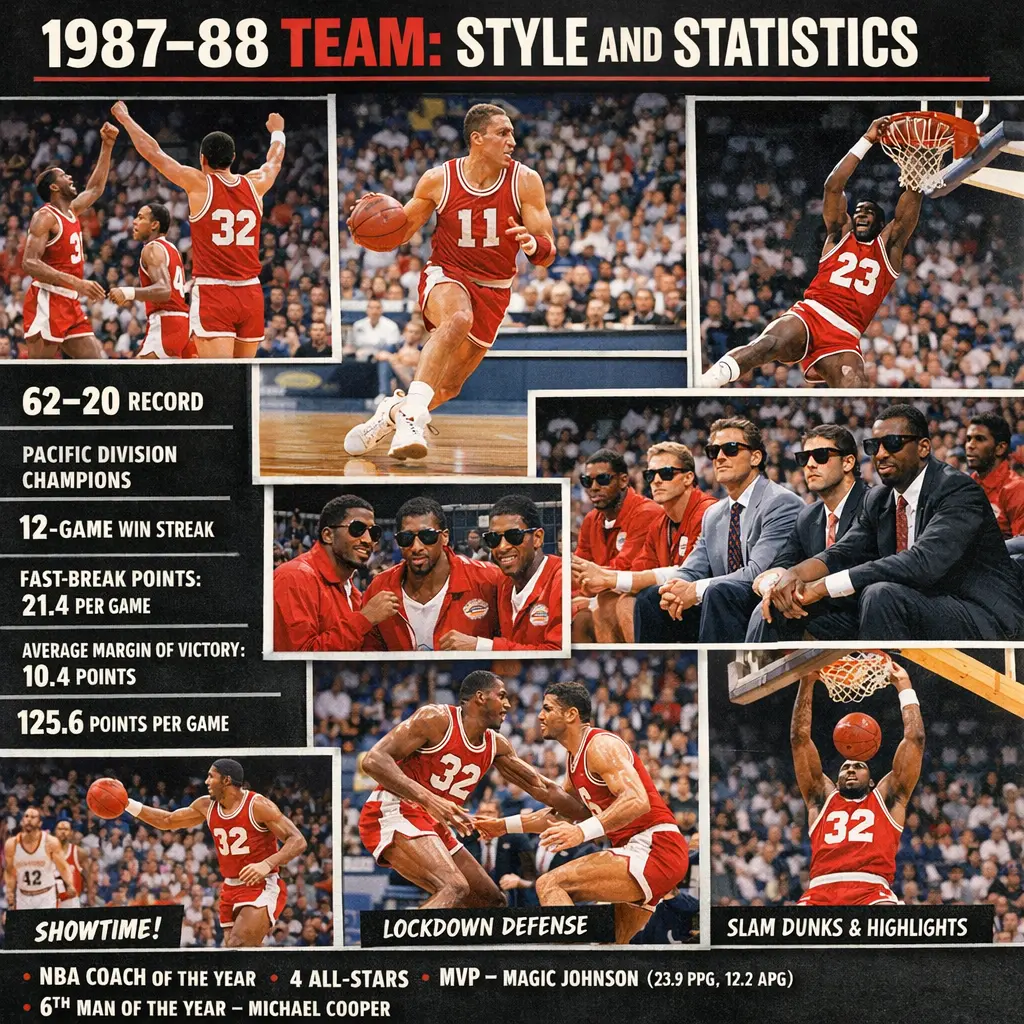
1987–88 Team: Style and Statistics
The 1987–88 Liverpool F.C. team is renowned for its attacking flair and dominance in English football. Managed by Kenny Dalglish, they played an attractive, possession-based style characterized by quick passing, fluid movement, and creativity, especially with new signing John Barnes and striker John Aldridge. Liverpool went unbeaten in their first 29 league games, finishing as First Division champions with 90 points, scoring 87 goals and conceding only 24, reflecting both offensive prowess and defensive solidity.
💡 Key Takeaways
- Understand how to identify a team's on-court style using pace, spacing, and defensive schemes in the 1987-88 season.
- Learn to interpret traditional statistics (points, rebounds, assists) and team-level metrics (pace, offensive/defensive efficiency) to evaluate performance from that era.
- Explore how the 1987-88 team's style compared to league trends and notable players of the time.
- Analyze how coaching decisions and roster composition influenced both style and statistics in the season.
❓ Frequently Asked Questions
What does "team style" mean in this quiz?
It describes the typical way the team played—tempo, offensive approach, and defensive strategy—helping explain why their stats look the way they do.
Which statistics best capture a team's performance in the 1987–88 season?
Key metrics include points per game, points allowed per game, pace, and efficiency measures such as offensive rating and defensive rating. Shooting and rebounding stats are also useful.
What are offensive and defensive efficiency, and why are they useful?
Offensive rating (ORtg) shows points scored per 100 possessions; defensive rating (DRtg) shows points allowed per 100 possessions. They compare teams with different paces on a common scale.
How should pace influence how I read the stats?
Pace is the number of possessions per 48 minutes. A faster pace can boost points and shot attempts; efficiency metrics help determine the quality of play independent of pace.