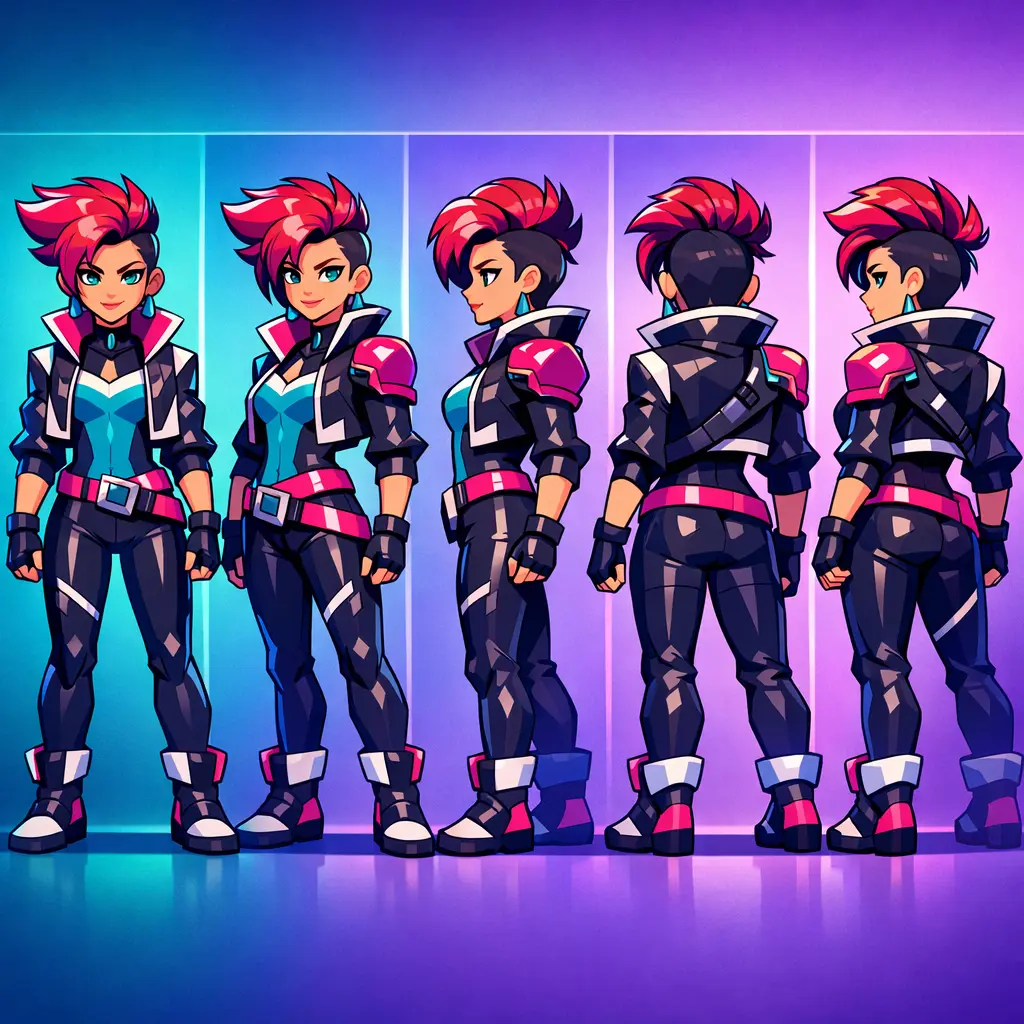
"3D Fundamentals for Designers (Visual Arts & Design Skills)" refers to the essential principles and techniques required to create and manipulate three-dimensional forms in visual arts and design. This includes understanding concepts like volume, depth, perspective, lighting, and spatial relationships. Mastery of these fundamentals enables designers to visualize, model, and render objects realistically or creatively, enhancing their ability to communicate ideas and produce compelling visual content across various media.
3D Fundamentals for Designers
"3D Fundamentals for Designers (Visual Arts & Design Skills)" refers to the essential principles and techniques required to create and manipulate three-dimensional forms in visual arts and design. This includes understanding concepts like volume, depth, perspective, lighting, and spatial relationships. Mastery of these fundamentals enables designers to visualize, model, and render objects realistically or creatively, enhancing their ability to communicate ideas and produce compelling visual content across various media.
💡 Key Takeaways
- Grasp the core 3D design workflow (concept, modeling, UVs/texturing, lighting, and rendering) to plan projects efficiently.
- Compare major modeling approaches (polygonal vs NURBS/spline) and know when to use each for design tasks.
- Master 3D space basics: units, scale, orientation, and camera setup to ensure accurate proportions and presentation.
- Learn how lighting, materials, and simple rendering settings shape mood, realism, and visual storytelling in 3D designs.
❓ Frequently Asked Questions
What do 3D fundamentals cover for designers?
Core concepts include 3D space, geometry and meshes, modeling, UV mapping and texturing, lighting, materials, and rendering, all used to create believable or stylized objects.
What is the difference between 3D modeling and 3D rendering?
Modeling builds the digital shapes of objects; rendering computes the final 2D image from the model using lights, materials, and cameras.
Why is topology important in 3D design?
Topology is the edge and vertex flow of a model. Good topology enables smooth deformations, efficient rendering, and easier editing.
What are common 3D workflows for designers?
Block out shapes, refine with detailed modeling, unwrap UVs, texture and shade, set up lighting and cameras, then render or export for production.
How do lighting and materials affect a 3D look?
Lighting defines mood, depth, and shadows; materials control color, texture, reflectivity, and roughness—together shaping realism or style.