Setting up a 3D printer involves assembling its components, leveling the print bed, and installing necessary software and filament. Proper calibration ensures precise prints. Safety is crucial; users should operate printers in well-ventilated areas to avoid inhaling fumes, keep the workspace free of flammable materials, and avoid touching hot surfaces or moving parts. Regular maintenance and following manufacturer guidelines help prevent accidents and ensure reliable, high-quality printing.
3D Printers: Setup and Safety
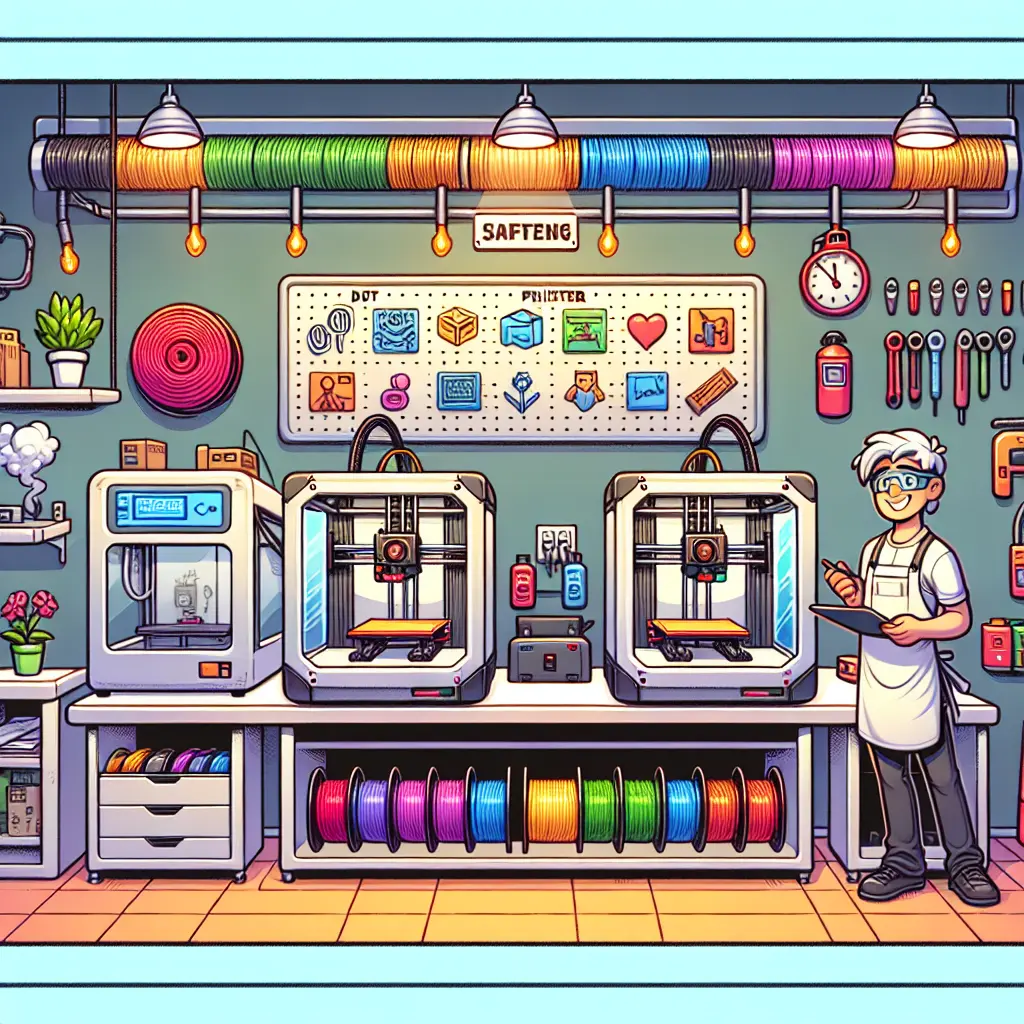
Setting up a 3D printer involves assembling its components, leveling the print bed, and installing necessary software and filament. Proper calibration ensures precise prints. Safety is crucial; users should operate printers in well-ventilated areas to avoid inhaling fumes, keep the workspace free of flammable materials, and avoid touching hot surfaces or moving parts. Regular maintenance and following manufacturer guidelines help prevent accidents and ensure reliable, high-quality printing.
💡 Key Takeaways
- Assemble the printer components and understand the basic setup.
- Level the bed and calibrate nozzle height for a reliable first layer.
- Install a slicer and other essential software, then load filament for printing.
- Calibrate and test prints to maintain consistent quality and troubleshoot common issues.
- Operate safely by printing in a well-ventilated area and keeping the workspace free of clutter and hazards.
❓ Frequently Asked Questions
What are the main steps to set up a 3D printer?
Unbox and assemble the components, install firmware/software, level the print bed, load filament, and run a calibration/test print.
Why is bed leveling and calibration important for 3D prints?
They ensure proper first-layer adhesion and dimensional accuracy; level the bed across corners and center and set the correct nozzle distance (Z-offset).
What software do you typically need to print with a 3D printer?
A slicer (e.g., Cura or PrusaSlicer) to convert models into G-code, plus any necessary printer drivers or firmware updates and a connection method (USB/SD).
What safety practices should you follow when using a 3D printer?
Operate in a well-ventilated area to avoid fumes, keep the workspace free of clutter and flammable materials, supervise prints, and avoid touching hot components.
What should you consider when loading filament into a 3D printer?
Use the correct filament type and diameter, ensure it’s dry and clean, feed it smoothly into the extruder, and verify temperatures match the filament requirements.