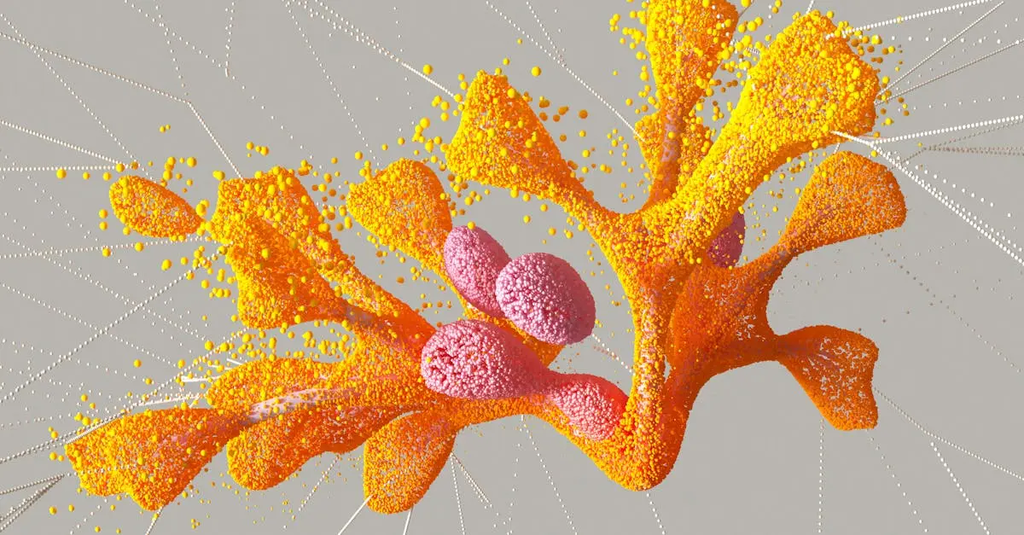
3D Visualization & Transformations involve the graphical representation and manipulation of objects in three-dimensional space. Visualization refers to creating images or animations that help users understand spatial relationships and structures. Transformations include operations such as translation, rotation, and scaling, which alter the position, orientation, or size of 3D objects. Together, these concepts are fundamental in computer graphics, CAD, gaming, and simulations, enabling realistic and interactive digital environments.
3D Visualization & Transformations
3D Visualization & Transformations involve the graphical representation and manipulation of objects in three-dimensional space. Visualization refers to creating images or animations that help users understand spatial relationships and structures. Transformations include operations such as translation, rotation, and scaling, which alter the position, orientation, or size of 3D objects. Together, these concepts are fundamental in computer graphics, CAD, gaming, and simulations, enabling realistic and interactive digital environments.
💡 Key Takeaways
- Grasp how translation, rotation, and scaling transform 3D points.
- Learn to compose multiple transformations with matrices using homogeneous coordinates.
- Understand projection methods (orthographic vs perspective) for rendering 3D scenes to 2D.
- Get an overview of the 3D visualization pipeline: modeling, transformation, projection, and rendering.
❓ Frequently Asked Questions
What is 3D visualization?
3D visualization is creating and displaying three‑dimensional objects on a 2D screen using geometry, lighting, shading, and camera setup to produce realistic or stylized scenes.
What are the basic 3D transformations and what do they do?
Translation moves an object in space; rotation turns it around an axis; scaling changes its size. They are applied with 4×4 matrices in homogeneous coordinates, and the order matters (commonly scale → rotate → translate).
What is the 3D transformation pipeline?
A sequence that converts object coordinates to screen coordinates: model (object to world), view/camera (world to camera), projection (to clip space), then viewport mapping to the screen.
What is the difference between Euler angles and quaternions for rotations?
Euler angles rotate around three axes and can suffer from gimbal lock; quaternions represent rotation with four numbers and are more stable for smooth, combined rotations.