5D Cost Control and Change Management refers to the integration of cost data with 3D digital models in construction projects, enabling real-time tracking of expenses and budget impacts as designs evolve. By using digital applications, stakeholders can visualize, analyze, and manage financial aspects alongside physical project changes, improving accuracy, transparency, and decision-making. This approach streamlines cost estimation, change orders, and forecasting, ultimately enhancing project efficiency and reducing financial risks.
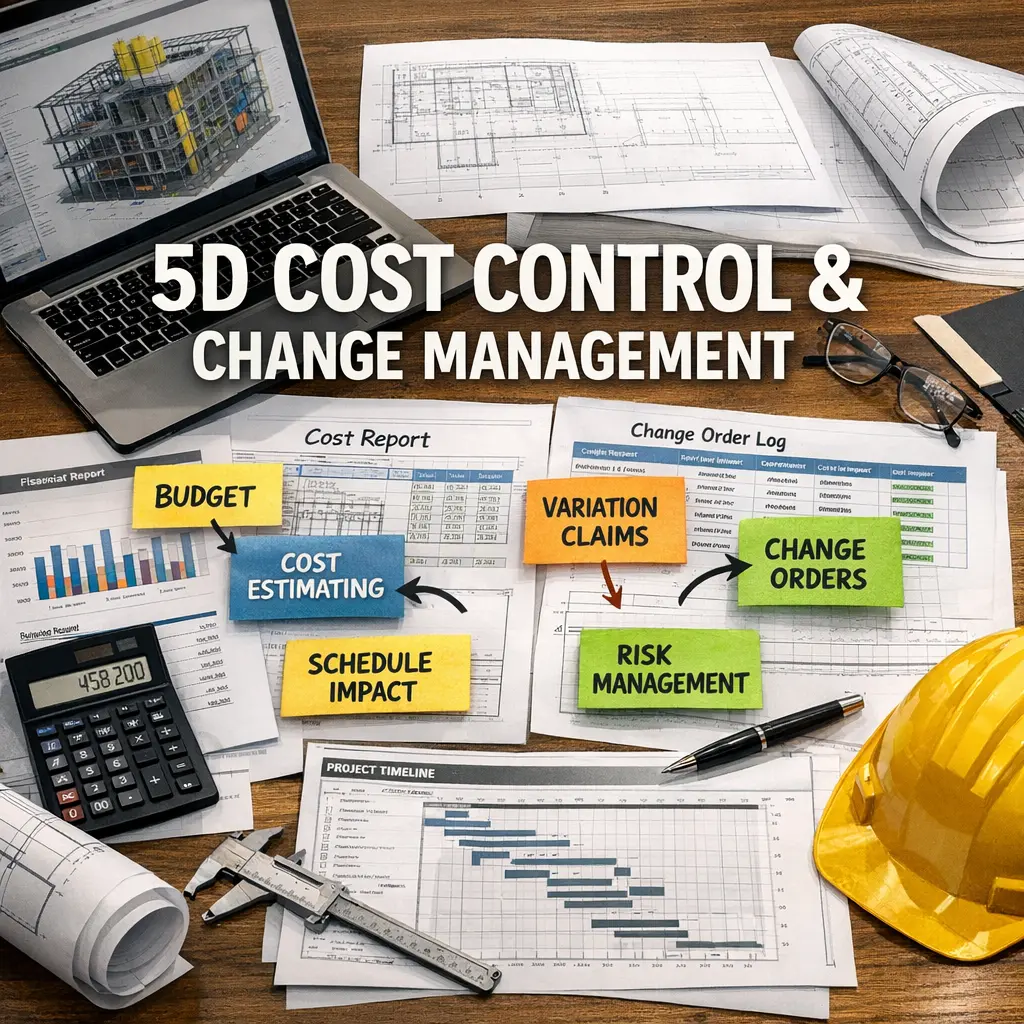
5D Cost Control and Change Management
5D Cost Control and Change Management refers to the integration of cost data with 3D digital models in construction projects, enabling real-time tracking of expenses and budget impacts as designs evolve. By using digital applications, stakeholders can visualize, analyze, and manage financial aspects alongside physical project changes, improving accuracy, transparency, and decision-making. This approach streamlines cost estimation, change orders, and forecasting, ultimately enhancing project efficiency and reducing financial risks.
💡 Key Takeaways
- Understand the 5D framework for cost control and change management and how to apply it to projects.
- Learn budgeting, forecasting, and variance analysis to monitor and control costs effectively.
- Evaluate the financial impact of changes and prioritize initiatives that deliver the best value.
- Implement a formal change control process with clear requests, approvals, and documentation to govern scope and cost changes.
❓ Frequently Asked Questions
What is cost control in project management?
Cost control is the process of keeping a project’s spending within the approved budget by monitoring expenditures, comparing them to the baseline, and forecasting future costs.
What is change management in the context of projects?
Change management is a structured process for handling requests to change a project’s scope, schedule, or budget, including assessment, approval, and tracking of the change.
How do cost control and change management affect a project’s budget?
Change requests can increase or decrease costs; effective change management ensures costs are evaluated, approved, and reflected in the plan to prevent budget overruns.
What tools or techniques support cost control and change management?
Techniques include budgeting, variance analysis, earned value management, formal change requests, impact assessments, and a Change Control Board.
What does the '5D' in 5D Cost Control and Change Management signify?
The title suggests a five-dimensional approach to cost control and change management, representing five stages or perspectives (e.g., Define/Plan, Design/Estimate, Decide/Approve, Deploy/Implement, Review/Deliver); exact mappings vary by organization.