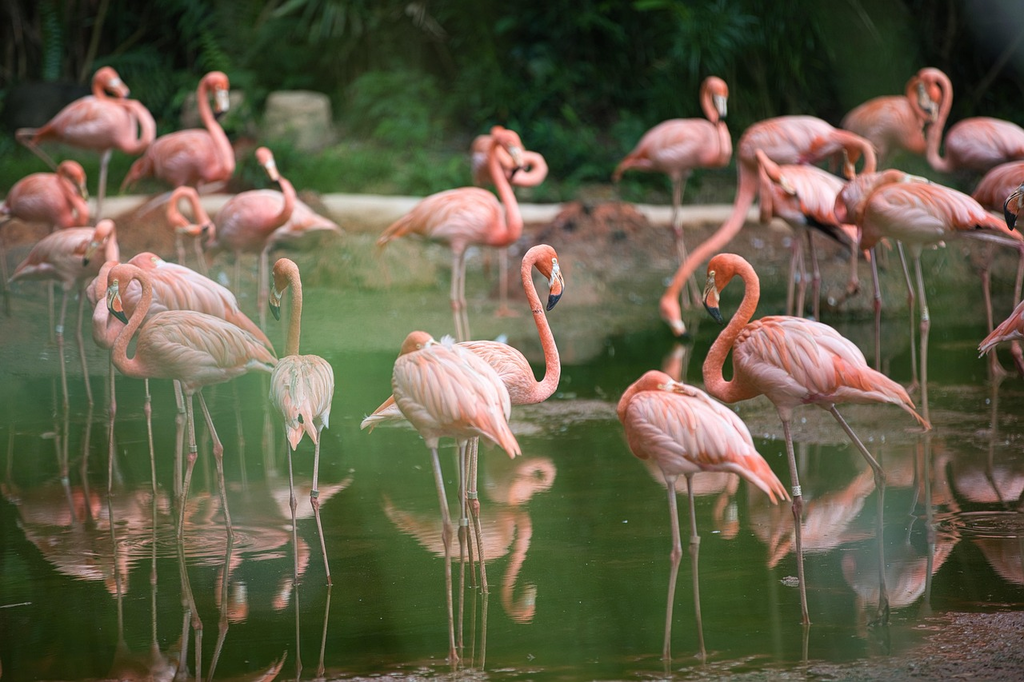
A group of flamingos is uniquely called a "flamboyance," a term that fittingly captures their striking appearance and vibrant pink coloring. This collective noun sounds almost whimsical or invented, but it’s an actual term used to describe these elegant birds when gathered together. The word reflects both their social nature and the dazzling spectacle they create as a group, making it a fun and memorable fact.
A group of flamingos is called a 'flamboyance'+50
A group of flamingos is uniquely called a "flamboyance," a term that fittingly captures their striking appearance and vibrant pink coloring. This collective noun sounds almost whimsical or invented, but it’s an actual term used to describe these elegant birds when gathered together. The word reflects both their social nature and the dazzling spectacle they create as a group, making it a fun and memorable fact.
💡 Key Takeaways
- Know that a group of flamingos is called a flamboyance.
- Understand why flamingos form large groups and how it aids safety, mating, and feeding.
- Learn why flamingos have pink coloration and the role of diet in color.
- Identify basic flamingo feeding style (filter-feeding) and preferred habitats.
❓ Frequently Asked Questions
What is a group of flamingos called?
A flamboyance.
Why are flamingos pink?
Their pink color comes from carotenoid pigments in their diet (algae and crustaceans); these pigments color their feathers.
Where do flamingos typically live and form large groups?
They inhabit warm, shallow waters—lakes, lagoons, and coastal flats—in regions across Africa, the Americas, Asia, and Europe, often in large colonies.
How do flamingos feed?
They feed by filter-feeding with their specialized beaks, often with their heads upside down to strain small organisms from the water.