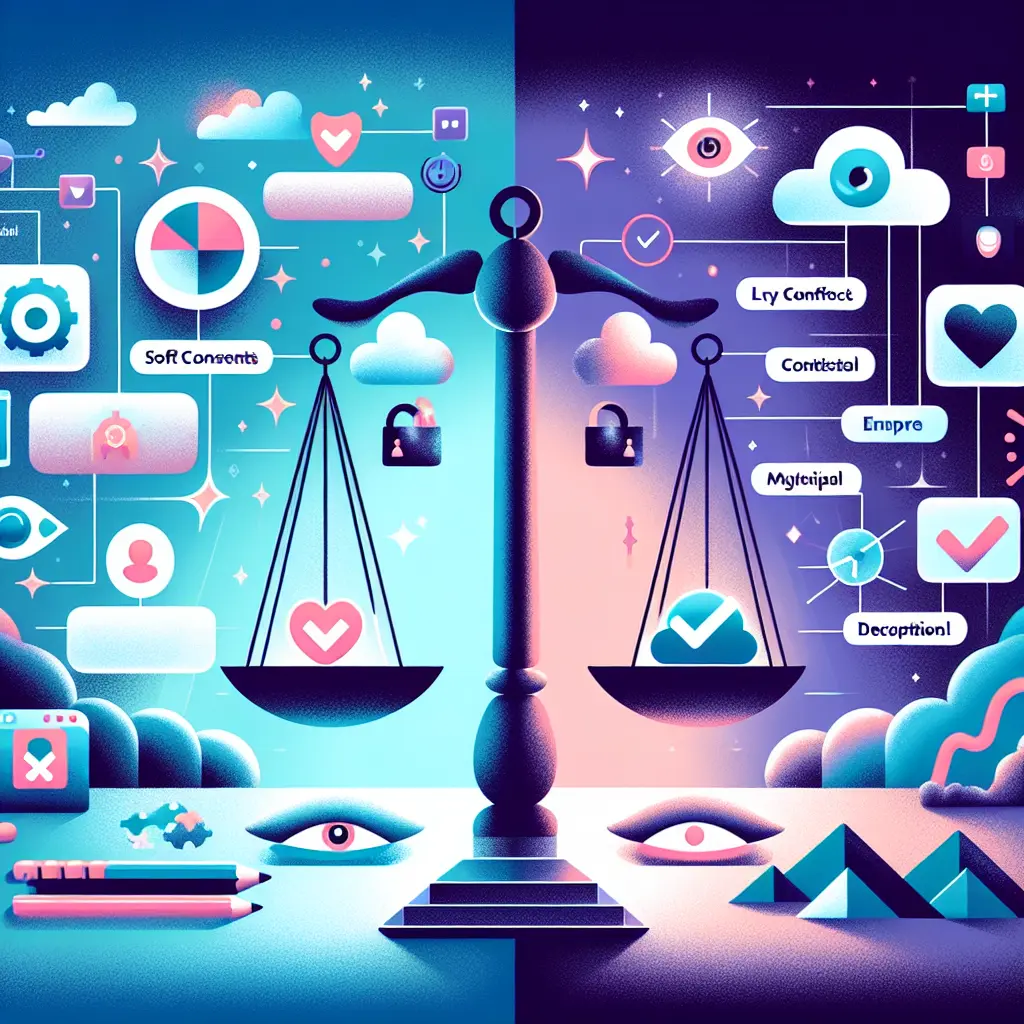
A/B testing ethics involve conducting experiments transparently, respecting user consent, and avoiding manipulation. Dark patterns are deceptive design choices that trick users into actions they might not otherwise take, such as subscribing unintentionally or sharing more data. Ethical A/B testing ensures users are not misled or harmed, maintaining trust and integrity. It requires balancing business goals with user rights, avoiding practices that exploit cognitive biases or obscure information for profit.
A/B Testing Ethics and Dark Patterns
A/B testing ethics involve conducting experiments transparently, respecting user consent, and avoiding manipulation. Dark patterns are deceptive design choices that trick users into actions they might not otherwise take, such as subscribing unintentionally or sharing more data. Ethical A/B testing ensures users are not misled or harmed, maintaining trust and integrity. It requires balancing business goals with user rights, avoiding practices that exploit cognitive biases or obscure information for profit.
💡 Key Takeaways
- Define ethical A/B testing: transparency, informed consent, and minimizing user disruption.
- Identify and avoid dark patterns: design choices that deceive, mislead, or trap users into actions.
- Use responsible experimentation practices: pre-register hypotheses, obtain consent where appropriate, and disclose results.
- Protect user privacy: limit data collection, anonymize data, and ensure opt-out options and easy revert.
❓ Frequently Asked Questions
What is A/B testing in tech?
A method that randomly assigns users to two variants (A and B) to compare outcomes like clicks or sign-ups and determine which version performs better.
What makes A/B testing ethical?
Transparency, informed consent where feasible, privacy protection, minimizing harm, and using results to improve user welfare rather than manipulate users.
What are dark patterns in design?
Deceptive UI/UX tricks that steer users into actions they wouldn’t choose, such as unintentional subscriptions or sharing more data.
How can organizations conduct ethical A/B testing and avoid dark patterns?
Pre-register hypotheses, obtain consent when required, disclose experiments, use clear language, provide easy opt-out, and design for user welfare rather than exploitation.