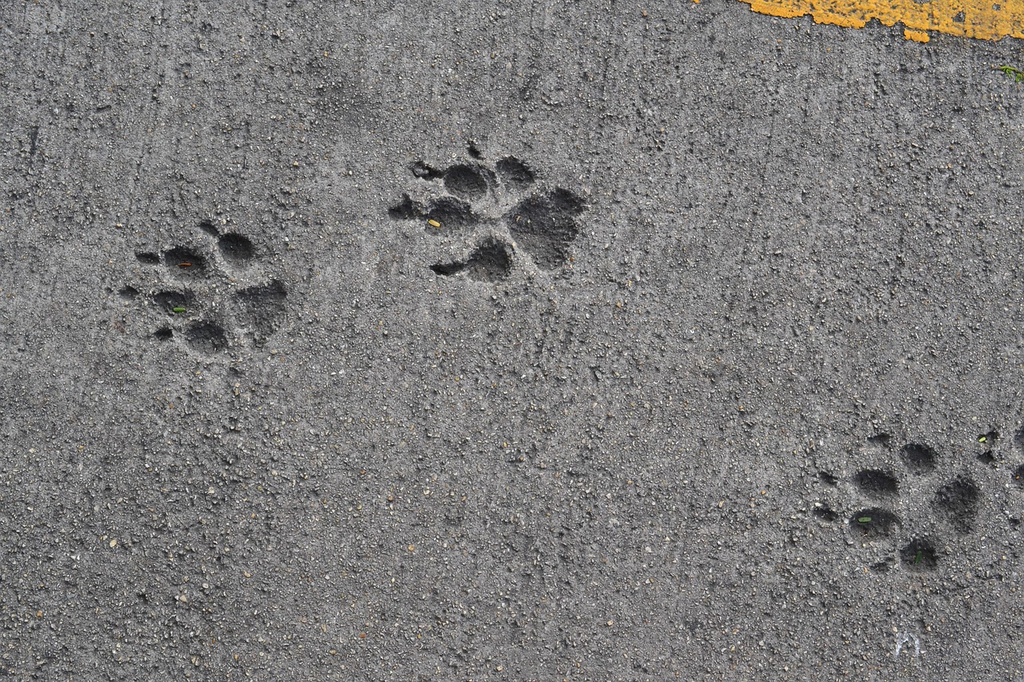
Abstract Pattern Classification (Visual Challenge Vault) refers to the process of identifying and categorizing complex, non-representational visual patterns stored within a specialized repository or collection. This task often involves recognizing recurring shapes, colors, or structures that lack clear, concrete imagery. The “Visual Challenge Vault” suggests a curated set of intricate visual puzzles or datasets designed to test and advance pattern recognition abilities, often used in fields like computer vision, psychology, or design research.
Abstract Pattern Classification
Abstract Pattern Classification (Visual Challenge Vault) refers to the process of identifying and categorizing complex, non-representational visual patterns stored within a specialized repository or collection. This task often involves recognizing recurring shapes, colors, or structures that lack clear, concrete imagery. The “Visual Challenge Vault” suggests a curated set of intricate visual puzzles or datasets designed to test and advance pattern recognition abilities, often used in fields like computer vision, psychology, or design research.

💡 Key Takeaways
- Identify core elements of abstract patterns, including shapes, lines, colors, and textures.
- Differentiate between geometric and organic abstract patterns and common motifs used in each.
- Use simple criteria to categorize patterns by similarity and difference.
- Understand how repetition, symmetry, and rhythm affect pattern perception and classification.
- Practice labeling abstract patterns with concise, meaningful categories based on visual features.
❓ Frequently Asked Questions
What does abstract pattern classification mean?
It refers to sorting data into categories based on non-semantic patterns—textures, shapes, rhythms, or frequency content—rather than recognizable objects.
What features are commonly used for abstract pattern classification?
Texture features (e.g., Haralick/GLCM), gradient/edge features (e.g., HOG), frequency-based features (e.g., Gabor, Fourier), and learned features from CNNs.
How is performance evaluated in abstract pattern classification?
Using a train/test split with metrics like accuracy, precision, recall, F1, or ROC-AUC; cross-validation and confusion matrices help diagnose performance.
What are common approaches to solving these tasks?
Traditional approaches with hand-crafted features and classifiers (SVM, k-NN) or deep learning with CNNs that automatically learn discriminative patterns.