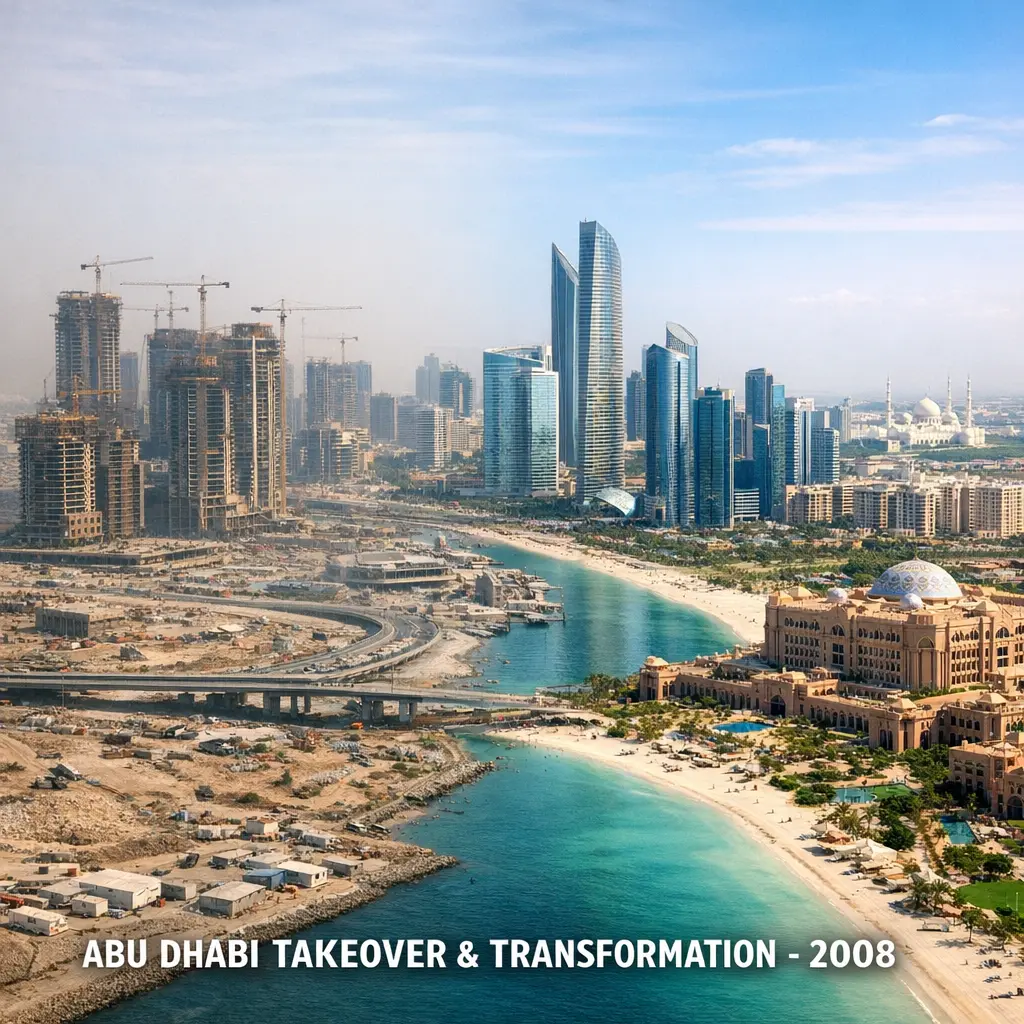
The Abu Dhabi Takeover and Transformation (2008) refers to the acquisition of Manchester City F.C. by the Abu Dhabi United Group, led by Sheikh Mansour bin Zayed Al Nahyan. This marked a turning point for the club, bringing substantial financial investment, world-class players, and renowned managers. The transformation elevated Manchester City from a mid-table side to a dominant force in English and European football, reshaping its identity and global stature.
Abu Dhabi Takeover and Transformation (2008)
The Abu Dhabi Takeover and Transformation (2008) refers to the acquisition of Manchester City F.C. by the Abu Dhabi United Group, led by Sheikh Mansour bin Zayed Al Nahyan. This marked a turning point for the club, bringing substantial financial investment, world-class players, and renowned managers. The transformation elevated Manchester City from a mid-table side to a dominant force in English and European football, reshaping its identity and global stature.
💡 Key Takeaways
- Understand the strategic reasons behind the 2008 Abu Dhabi takeover and the resulting transformation.
- Identify the key stakeholders, governance structures, and decision-making processes involved.
- Analyze the short- and long-term economic and social impacts on Abu Dhabi’s economy and workforce.
- Explore the challenges, risk management, and change-management practices used during large-scale transformation.
❓ Frequently Asked Questions
What does the term "takeover" refer to in this context?
In this article, 'takeover' is a metaphor for a deliberate, government-led shift in strategy and control over economic development, rather than a hostile or external takeover.
What is meant by the 2008 transformation in Abu Dhabi?
It refers to Abu Dhabi’s plan to diversify its economy, reduce oil dependence, and modernize infrastructure and institutions through long-term strategic planning initiated around 2008.
What were the main goals of Abu Dhabi's transformation around 2008?
Key goals included diversifying the economy into non-oil sectors, developing infrastructure, investing in human capital, and creating a sustainable, knowledge-based economy.
What roles did planning and investment play in this transformation?
Planning provided the blueprint (e.g., long-term plans like Plan Abu Dhabi 2030), while investments—funded by oil revenue and sovereign wealth funds—funded large projects to accelerate diversification and modernization.