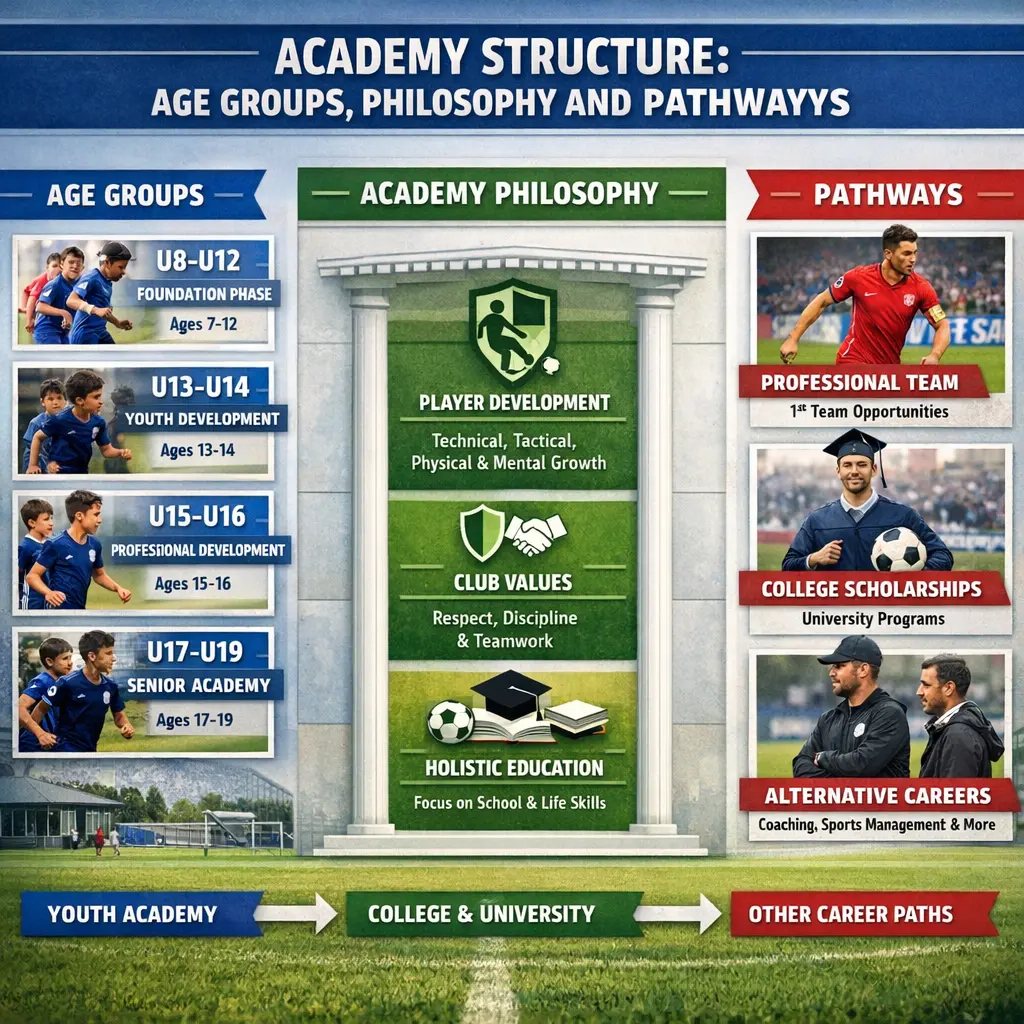
Liverpool F.C.’s Academy structure is organized into specific age groups, ensuring tailored development for each stage, from youth to professional levels. The Academy’s philosophy emphasizes technical skill, tactical understanding, and personal growth, fostering a supportive environment. Clear pathways are established for progression, guiding talented players from grassroots to the first team. This holistic approach aims to nurture well-rounded footballers aligned with Liverpool’s values and playing style.
Academy Structure: Age Groups, Philosophy and Pathways
Liverpool F.C.’s Academy structure is organized into specific age groups, ensuring tailored development for each stage, from youth to professional levels. The Academy’s philosophy emphasizes technical skill, tactical understanding, and personal growth, fostering a supportive environment. Clear pathways are established for progression, guiding talented players from grassroots to the first team. This holistic approach aims to nurture well-rounded footballers aligned with Liverpool’s values and playing style.
💡 Key Takeaways
- Explain how the academy segments students by age groups and why this matters for learning.
- Describe the academy's educational philosophy and how it shapes teaching, culture, and expectations.
- Identify the available learning pathways and how students progress along them.
- Understand how assessments, feedback, and progression align with age groups and pathways.
❓ Frequently Asked Questions
What does 'academy structure' refer to?
It describes how the school is organized—age-based groups, teams or sections, and how learning and schedules are arranged.
How are age groups typically defined in an academy?
By student age or grade level, grouping cohorts to match development and curriculum expectations so learning pace and support fit each group.
What is the academy philosophy?
The core beliefs about teaching and learning that guide the school, such as curiosity, inclusivity, collaboration, and holistic development.
What are 'pathways' in an academy?
Structured routes of study and opportunities that lead to specific outcomes, like academic tracks, vocational training, internships, or certifications.
How do age groups relate to pathways?
Age groups ensure content suits developmental stages, while pathways provide progression options as students mature toward their goals.