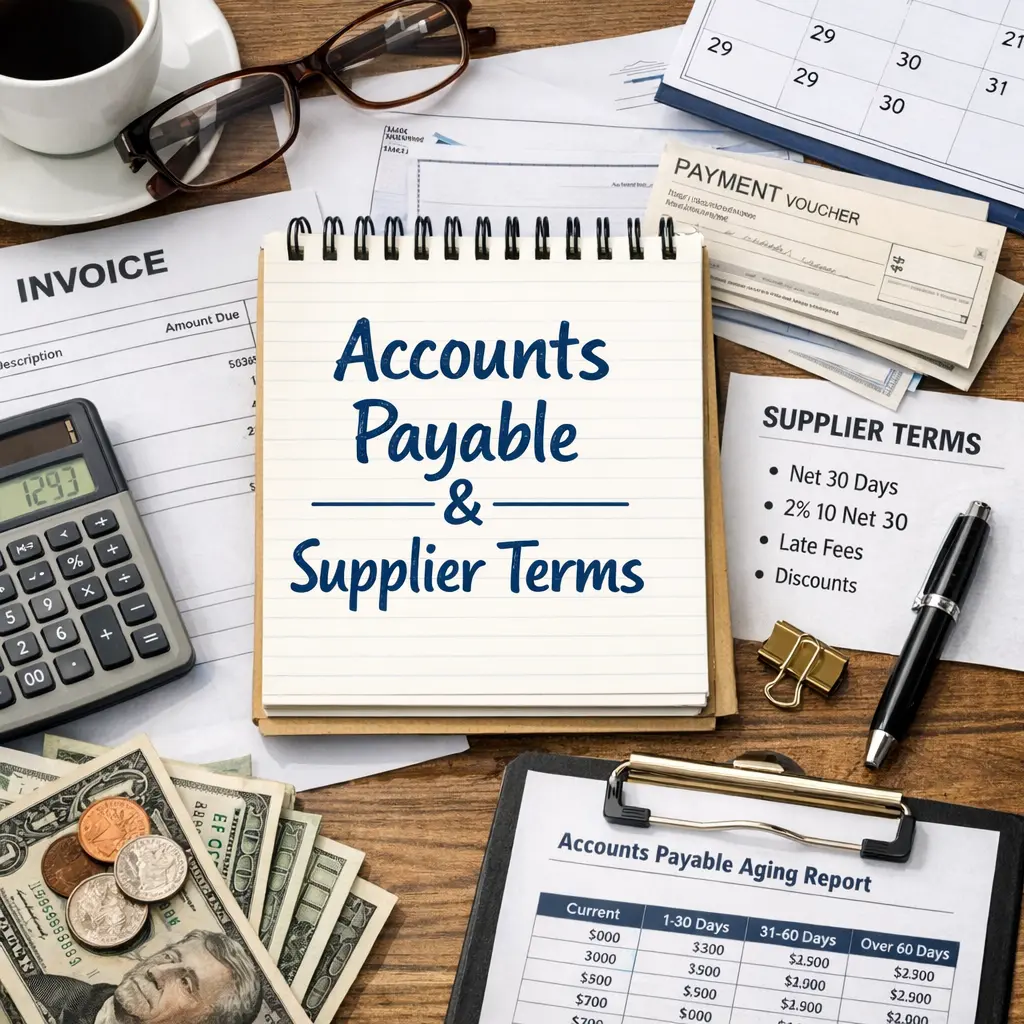
Accounts Payable refers to the money a business owes to its suppliers for goods or services received but not yet paid for. Supplier Terms are the agreed-upon conditions, such as payment deadlines and discounts, under which these transactions occur. Effective management of accounts payable and supplier terms is crucial for maintaining healthy cash flow, building strong supplier relationships, and optimizing a company’s financial operations within its overall business practices.
Accounts Payable & Supplier Terms
Accounts Payable refers to the money a business owes to its suppliers for goods or services received but not yet paid for. Supplier Terms are the agreed-upon conditions, such as payment deadlines and discounts, under which these transactions occur. Effective management of accounts payable and supplier terms is crucial for maintaining healthy cash flow, building strong supplier relationships, and optimizing a company’s financial operations within its overall business practices.
💡 Key Takeaways
- Understand the accounts payable workflow from invoice to payment, including matching invoices to POs and receipts.
- Recognize common supplier terms (Net 30, 2/10 Net 30) and how early payment discounts affect costs.
- Learn how to calculate Days Payable Outstanding (DPO) and its effect on working capital and cash flow.
- Know best practices for managing supplier terms, avoiding late payments, and negotiating favorable terms.
❓ Frequently Asked Questions
What is accounts payable?
Accounts payable is a liability representing money a company owes suppliers for goods or services purchased on credit. It records obligations the business must pay by agreed terms.
What are supplier terms and why do they matter?
Supplier terms are the payment conditions a supplier offers (for example, net 30 or 2/10 net 30). They determine when you must pay, whether discounts apply, and they impact cash flow and supplier relationships.
What does 2/10 net 30 mean, and how are the payments calculated?
2/10 net 30 means you can take a 2% discount if you pay within 10 days; otherwise the full invoice is due in 30 days. If you pay within 10 days, you pay invoice × 0.98. The standard due date without the discount is 30 days from the invoice date.
How can you manage accounts payable to optimize cash flow?
Maintain an accurate payable aging, take early payment discounts when beneficial, avoid late payments to preserve supplier relationships, and use cash-flow planning or AP automation to schedule payments that fit available funds.