Administrative law governs the actions and procedures of government agencies. Rulemaking refers to the process by which agencies create regulations that have the force of law, often involving public notice and comment. Adjudication involves agencies resolving disputes or making decisions in individual cases, similar to court proceedings. Both rulemaking and adjudication ensure agencies act within their authority and provide transparency, accountability, and fairness in government and public service operations.
Administrative Law: Rulemaking & Adjudication
Administrative law governs the actions and procedures of government agencies. Rulemaking refers to the process by which agencies create regulations that have the force of law, often involving public notice and comment. Adjudication involves agencies resolving disputes or making decisions in individual cases, similar to court proceedings. Both rulemaking and adjudication ensure agencies act within their authority and provide transparency, accountability, and fairness in government and public service operations.
💡 Key Takeaways
- Distinguish rulemaking from adjudication (what an agency issues and its purpose).
- Learn APA rulemaking basics (notice-and-comment, informal procedures; when public input matters).
- Understand agency adjudication processes (formal hearings, evidence, due process, and final orders).
- Know how courts review agency actions (arbitrary and capricious standard; substantial evidence for findings).
- Recognize key concepts (interpretive vs legislative rules, public participation, and restrictions on ex parte contacts).
❓ Frequently Asked Questions
What is administrative rulemaking?
The process by which government agencies create general rules to regulate conduct and implement statutes, usually through notice-and-comment rulemaking under the Administrative Procedure Act, including a proposed rule, public comments, and a final rule.
What is administrative adjudication?
Agency-led resolution of specific disputes or enforcement actions, typically involving hearings, evidence, findings of fact, and a binding final order.
How do rulemaking and adjudication differ?
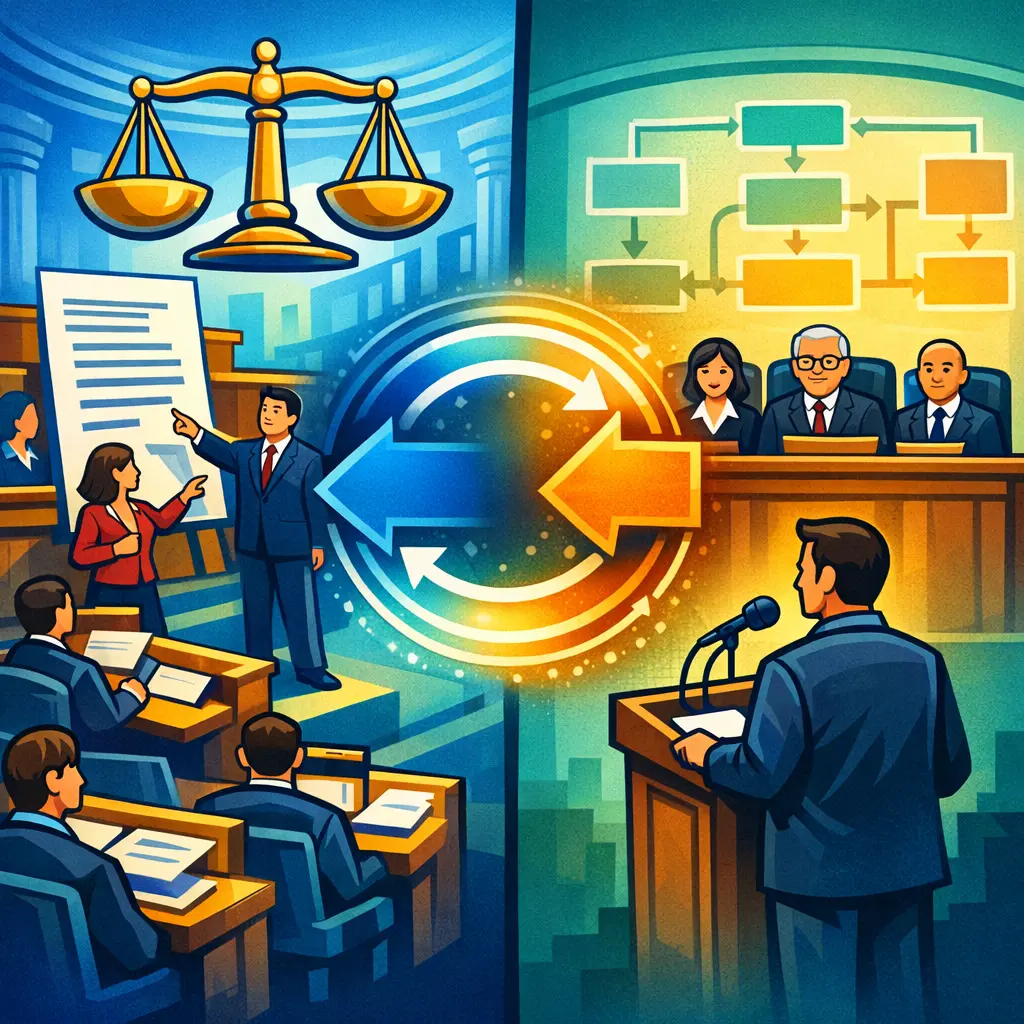
Rulemaking creates broad, general rules for future cases; adjudication decides particular disputes; rulemaking uses notice-and-comment procedures, while adjudication relies on hearing-based procedures and case-specific determinations.
What is the notice-and-comment process?
A rulemaking step where proposed rules are published for public comment, agencies consider significant comments, and publish a final rule with explanations.
What standards govern court review of agency actions?
Courts judge legality and reasonableness under the APA, typically reviewing for arbitrary or capricious decisions, within statutory authority, and supported by evidence or rational reasoning.