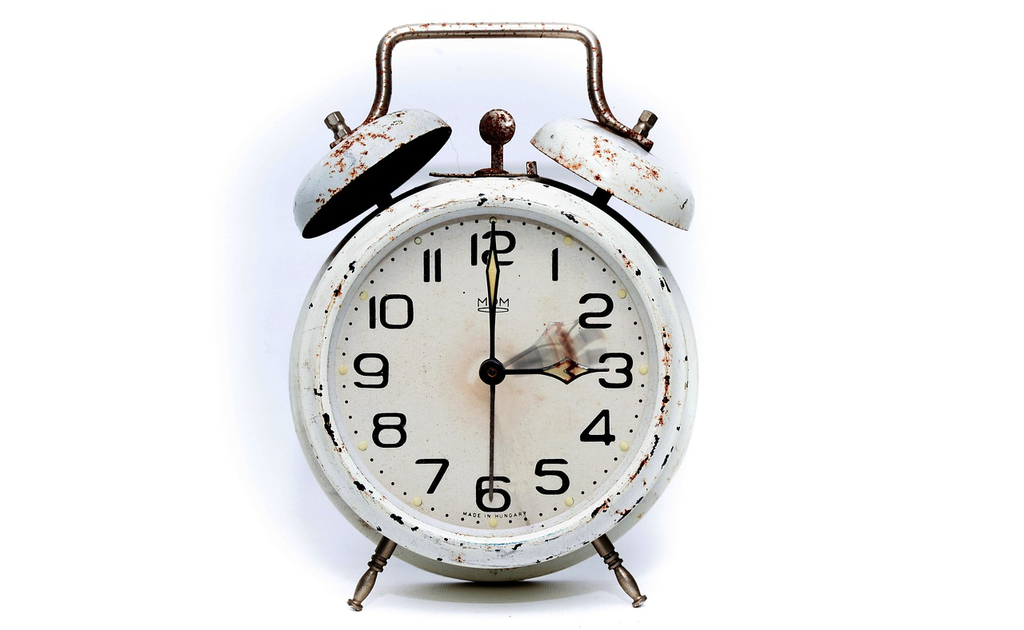
"Advanced Estimation (Puzzles for All Ages)" refers to a collection of engaging puzzles designed to challenge and improve estimation skills across various age groups. These puzzles encourage critical thinking by asking participants to make educated guesses about quantities, measurements, or outcomes. Suitable for children and adults alike, the puzzles adapt in complexity, making them accessible yet stimulating. They foster mathematical reasoning, problem-solving, and a deeper understanding of numbers in everyday contexts.
Advanced Estimation
"Advanced Estimation (Puzzles for All Ages)" refers to a collection of engaging puzzles designed to challenge and improve estimation skills across various age groups. These puzzles encourage critical thinking by asking participants to make educated guesses about quantities, measurements, or outcomes. Suitable for children and adults alike, the puzzles adapt in complexity, making them accessible yet stimulating. They foster mathematical reasoning, problem-solving, and a deeper understanding of numbers in everyday contexts.

💡 Key Takeaways
- Understand advanced estimation methods like maximum likelihood and Bayesian estimation and when to use them
- Assess estimator quality by examining bias, variance, consistency, and efficiency
- Construct and interpret confidence or credible intervals to quantify uncertainty
- Apply estimation techniques to real data with regression, bootstrapping, and model comparison
❓ Frequently Asked Questions
What is the difference between point estimation and interval estimation?
Point estimation provides a single best guess of a parameter; interval estimation gives a range (e.g., a confidence interval) that would contain the parameter a certain proportion of the time if we repeated the study.
How does Maximum Likelihood Estimation (MLE) work?
MLE selects parameter values that maximize the likelihood of observing the given data under the assumed model, often leading to desirable large-sample properties under regularity conditions.
What is bias in estimation and why does it matter?
Bias is the difference between the estimator's expected value and the true parameter (Bias = E[estimator] − theta). An unbiased estimator has zero bias; bias affects long-run accuracy and may trade off with variance.
What is Bayesian Estimation and how does it differ from frequentist methods?
Bayesian estimation combines prior beliefs with data via Bayes' rule to form a posterior distribution. Estimates can be the posterior mean, median, or mode, and uncertainty is quantified by the posterior rather than just long-run frequency properties.