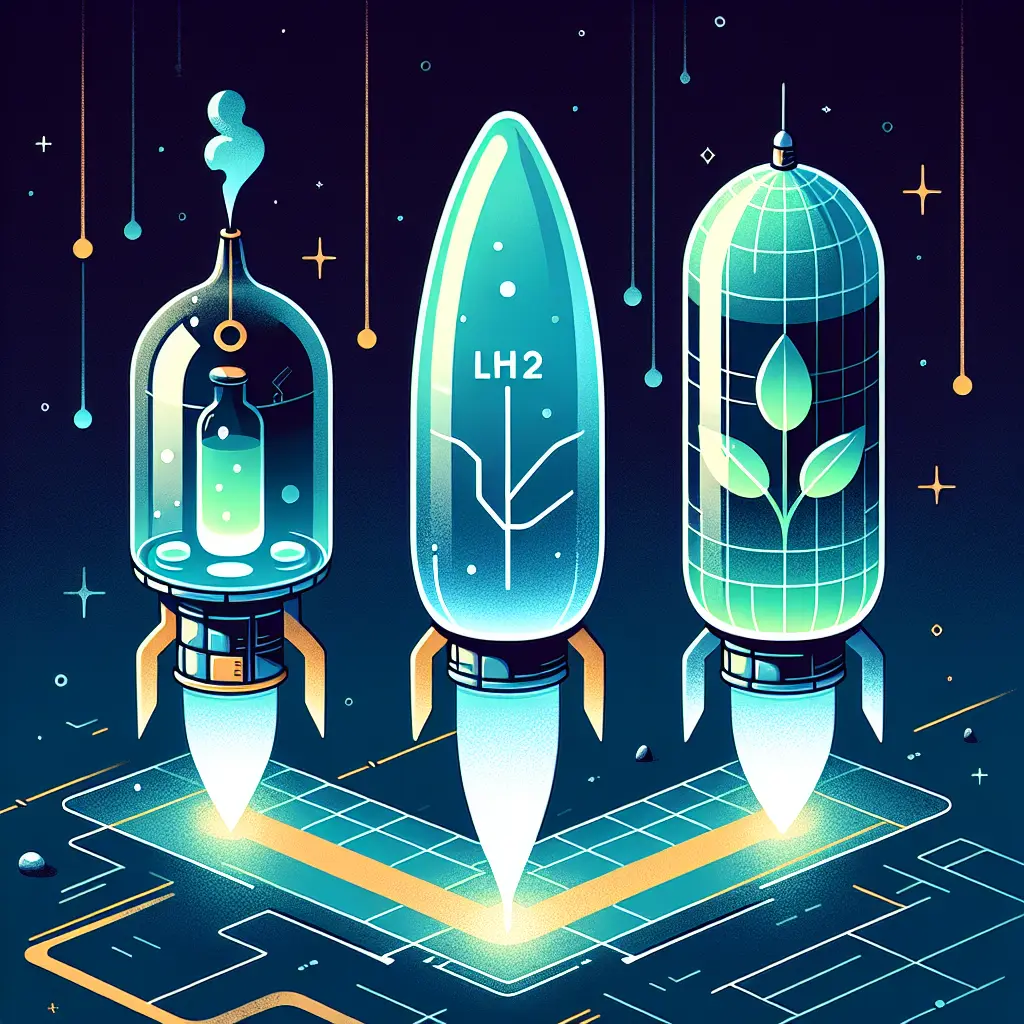
Advanced propellants such as methane, liquid hydrogen (LH2), and green alternatives represent the next generation of rocket fuels. Methane offers easier storage and potential for in-situ production on Mars, while LH2 provides high efficiency due to its low molecular weight. Green alternatives focus on reducing environmental impact and toxicity, aiming for safer handling and sustainable sourcing, which is crucial for future space missions and minimizing ecological footprints.
Advanced Propellants: Methane, LH2, and Green Alternatives
Advanced propellants such as methane, liquid hydrogen (LH2), and green alternatives represent the next generation of rocket fuels. Methane offers easier storage and potential for in-situ production on Mars, while LH2 provides high efficiency due to its low molecular weight. Green alternatives focus on reducing environmental impact and toxicity, aiming for safer handling and sustainable sourcing, which is crucial for future space missions and minimizing ecological footprints.
💡 Key Takeaways
- Compare methane and liquid hydrogen propellants in terms of performance, storage, and mission practicality.
- Describe how methane enables in-situ resource utilization (ISRU) on Mars and its implications for mission design.
- Explain why LH2 offers high efficiency (specific impulse) and discuss engineering tradeoffs like boil-off and insulation.
- Define green propellants and summarize why they matter for environmental impact, safety, and future launch systems.
❓ Frequently Asked Questions
What are methane and LH2 propellants?
Methane (CH4) and liquid hydrogen (LH2) are cryogenic rocket fuels used with liquid oxygen (LOX). Methane is denser and easier to store than LH2 and can potentially be produced on Mars; LH2 provides very high efficiency due to its light molecules but requires very cold storage and careful handling.
What makes these propellants 'green' or more sustainable?
Green alternatives aim to reduce environmental impact. Methane and LH2 can burn with fewer soot and toxic byproducts than kerosene, and methane can be produced from renewable energy or in-situ resources. The overall green potential depends on production methods and energy sources.
How do methane and LH2 compare in performance?
LH2/LOX generally yields higher specific impulse than CH4/LOX due to hydrogen's low molecular weight, but methane offers higher density and easier storage, which can simplify tank design. The best choice depends on mission needs and system constraints.
What are the main challenges for using methane/LH2 in rockets?
Key challenges include cryogenic storage and insulation, boil-off losses, engine materials that tolerate extreme temperatures, and overall system complexity and cost. Green propellants must also prove scalable and cost-effective at large engines.