Advanced Seafood Preparations (Food & Global Flavors) refers to sophisticated culinary techniques and methods used to prepare seafood, emphasizing both skillful handling and innovative presentation. This approach incorporates diverse global influences, utilizing spices, marinades, and cooking styles from various cultures. The focus is on enhancing natural flavors, ensuring optimal texture, and creating visually appealing dishes that celebrate seafood’s versatility within an international context.
Advanced Seafood Preparations
Advanced Seafood Preparations (Food & Global Flavors) refers to sophisticated culinary techniques and methods used to prepare seafood, emphasizing both skillful handling and innovative presentation. This approach incorporates diverse global influences, utilizing spices, marinades, and cooking styles from various cultures. The focus is on enhancing natural flavors, ensuring optimal texture, and creating visually appealing dishes that celebrate seafood’s versatility within an international context.
💡 Key Takeaways
- Master advanced seafood techniques (poaching, sous-vide, grilling) to control texture and doneness.
- Precisely prepare seafood: filleting, skinning, cleaning, and portioning across species.
- Craft sauces and emulsions that complement delicate seafood flavors without overpowering them.
- Safely handle, store, and thaw seafood to preserve freshness and minimize waste.
❓ Frequently Asked Questions
What is the difference between poaching and simmering seafood?
Poaching uses very gentle heat (about 160–180°F / 71–82°C) with the seafood fully submerged to preserve tenderness; simmering is hotter (around 185–205°F / 85–96°C) with small bubbles and can toughen delicate flesh.
How does sous‑vide cooking change seafood texture and safety?
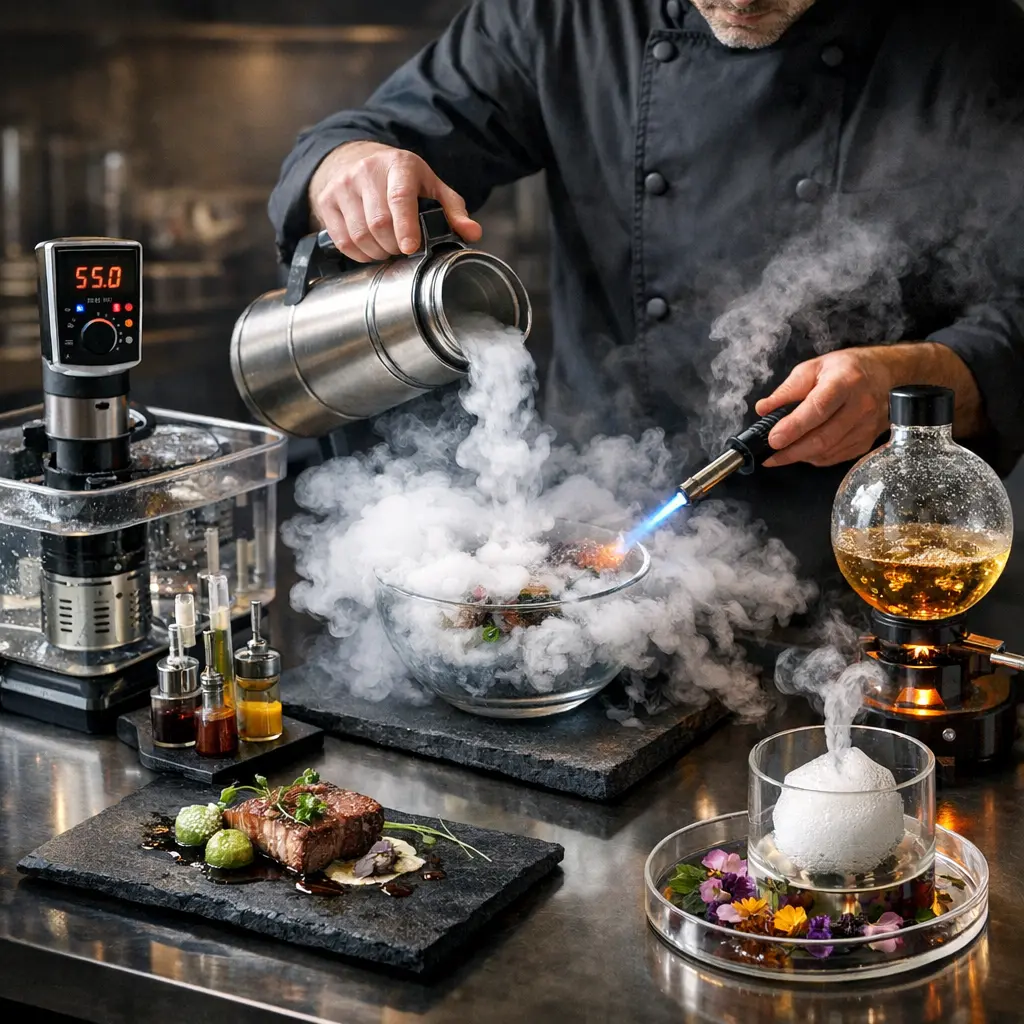
Sous‑vide cooks seafood in vacuum bags at precise, low temperatures for even doneness and moisture retention; follow recommended time/temperature to ensure pasteurization, then sear if desired.
What are key safety and handling tips for raw seafood?
Keep seafood cold (≤4°C / 39°F), separate raw from cooked, thaw in the fridge, marinate in the fridge, discard used marinade or boil it before reuse, and sanitize surfaces and hands.
How can you judge doneness for common seafood items?
Fish should be opaque and flake easily; shrimp turn pink/opaque and curl loosely; scallops are firm and slightly opaque; shellfish like clams/mussels open; avoid overcooking to prevent dryness.