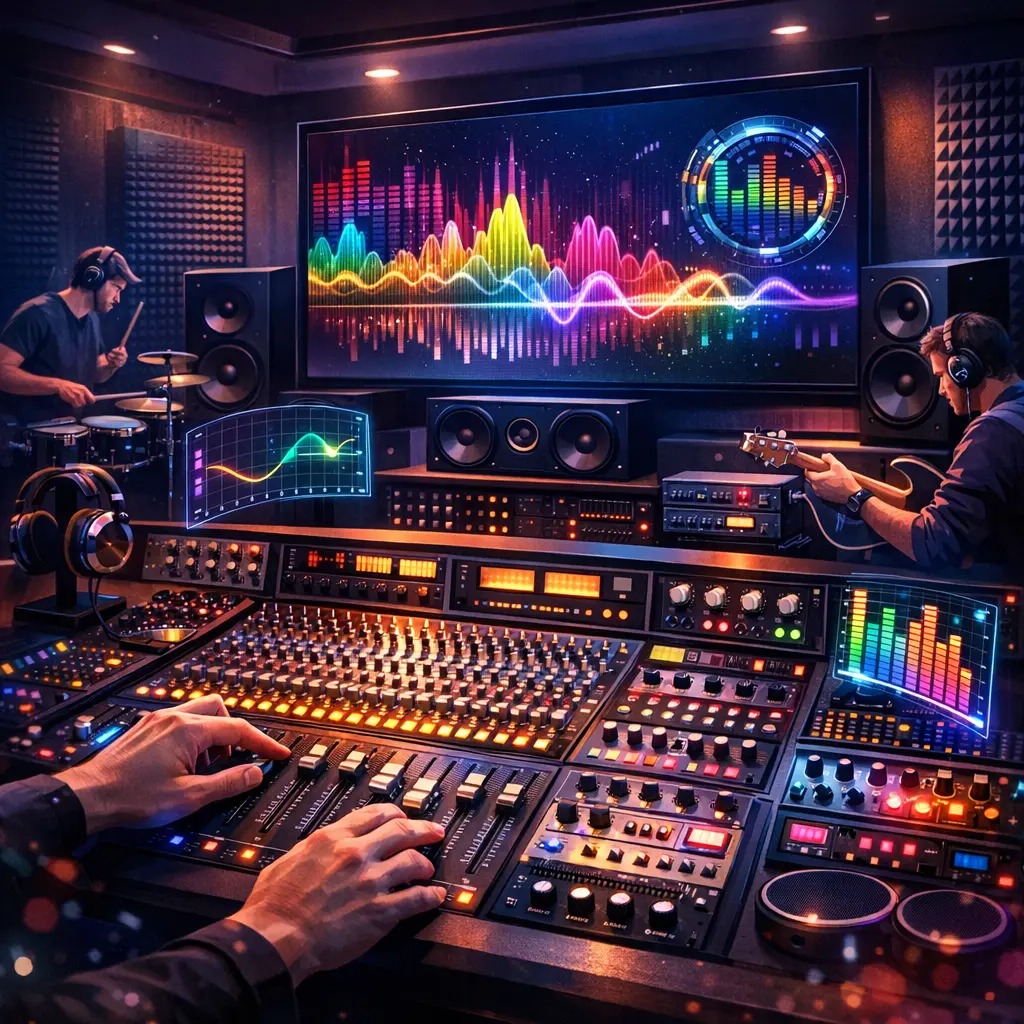
Advanced Sound Design & Foley in Performing Arts & Music involves creating and manipulating audio elements to enhance storytelling and evoke emotions. It includes the use of sophisticated techniques and technology to produce original sounds, layer effects, and synchronize audio with visual media. Foley specifically refers to the art of reproducing everyday sound effects in real-time, adding realism to performances, films, or music productions. Together, they elevate the overall sensory experience for audiences.
Advanced Sound Design & Foley
Advanced Sound Design & Foley in Performing Arts & Music involves creating and manipulating audio elements to enhance storytelling and evoke emotions. It includes the use of sophisticated techniques and technology to produce original sounds, layer effects, and synchronize audio with visual media. Foley specifically refers to the art of reproducing everyday sound effects in real-time, adding realism to performances, films, or music productions. Together, they elevate the overall sensory experience for audiences.
💡 Key Takeaways
- Understand the role of Foley in enhancing on-screen action and realism.
- Learn techniques for recording and designing common Foley assets (footsteps, cloth, props).
- Compare synthesis-based design with field recordings and know when to use each.
- Practice effective layering, EQ, and panning to place Foley in a believable space.
- Apply spatial audio and dynamic range strategies to keep Foley immersive in the mix.
❓ Frequently Asked Questions
What is advanced sound design?
The art of creating and sculpting sounds using synthesis, layering, and processing to support mood, action, and realism in media.
What is Foley?
The live recreation of everyday sounds (footsteps, clothing, props) added in post-production to improve realism and timing.
What are some common techniques in advanced sound design?
Layering multiple sound sources, using synthesis and granular/convolution effects, spectral editing, dynamic processing, and precise spatialization.
How does Foley differ from production sound?
Production sound is captured on set; Foley is added later and crafted to match visuals with controlled texture and timing.
What tools do experts use in advanced sound design?
DAWs (e.g., Pro Tools), synthesizers/samplers, field recorders, Foley props, and plugins for EQ, compression, reverb, and spatial effects.