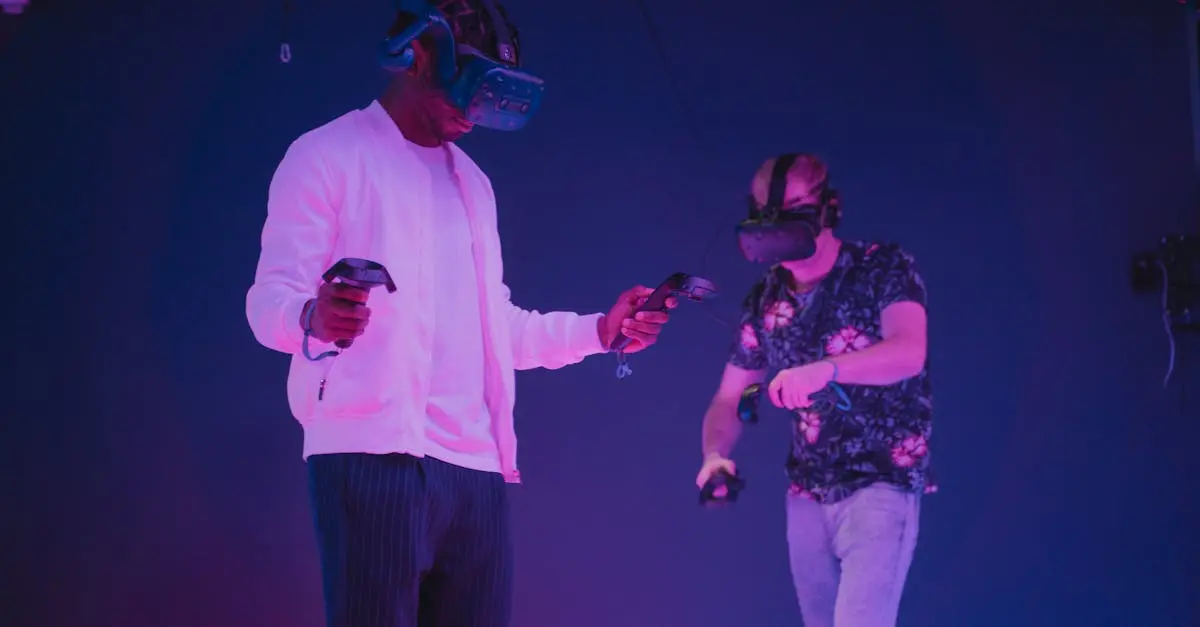
Advanced Virtual Reality refers to highly sophisticated immersive technologies that create interactive, lifelike digital environments, often indistinguishable from the real world. Utilizing cutting-edge hardware and software, such as high-resolution headsets, precise motion tracking, and realistic haptic feedback, advanced VR enables users to engage deeply with simulated worlds for entertainment, training, education, and professional applications, enhancing the sense of presence and realism beyond basic virtual experiences.
Advanced Virtual Reality
Advanced Virtual Reality refers to highly sophisticated immersive technologies that create interactive, lifelike digital environments, often indistinguishable from the real world. Utilizing cutting-edge hardware and software, such as high-resolution headsets, precise motion tracking, and realistic haptic feedback, advanced VR enables users to engage deeply with simulated worlds for entertainment, training, education, and professional applications, enhancing the sense of presence and realism beyond basic virtual experiences.
💡 Key Takeaways
- Understand the architecture of advanced VR apps (graphics, input, physics) to create immersive experiences.
- Optimize performance and reduce latency using techniques like reprojection and foveated rendering.
- Implement precise motion tracking and natural interactions (controllers, hand tracking, gaze).
- Develop cross-platform VR software with common SDKs (OpenXR, Unity/Unreal integration).
- Design VR UX for comfort and presence (locomotion, UI in 3D space, user testing).
❓ Frequently Asked Questions
What is advanced virtual reality?
Advanced VR refers to highly immersive digital environments created with high‑end hardware and software to deliver lifelike interactivity and presence.
What hardware components are commonly used in advanced VR development?
High‑resolution VR headsets, precise motion controllers or tracking systems, performance‑oriented GPUs, and sometimes haptic devices and external sensors.
How does motion tracking affect VR realism?
Motion tracking maps user movements to the virtual world in real time, enabling natural interactions and reducing latency to enhance immersion.
What do software developers do to create advanced VR experiences?
They design and implement immersive environments, optimize rendering and latency, create interaction models, and integrate hardware APIs for seamless performance.