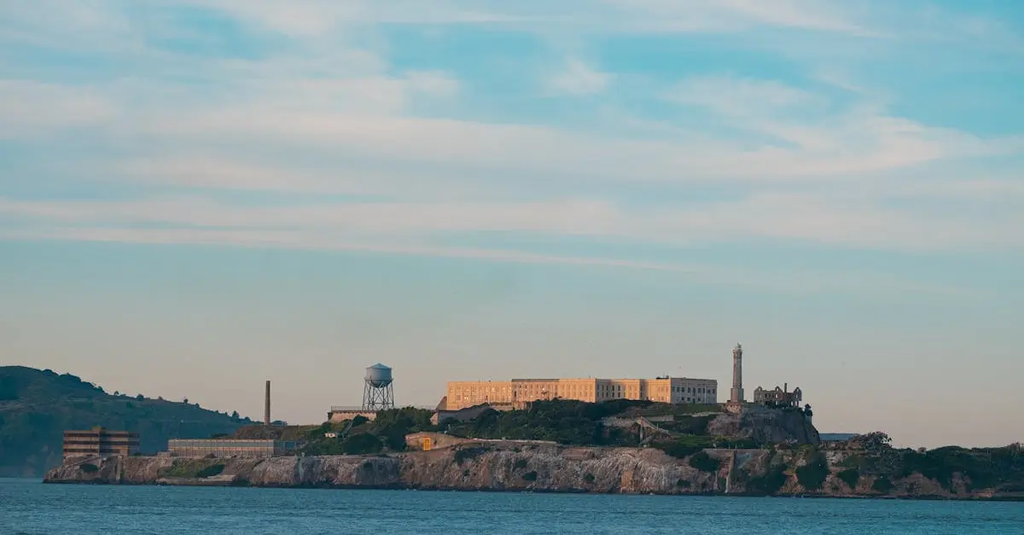
Alcatraz Island, located in San Francisco Bay, has a rich history as a military fortification, infamous federal prison, and site of Native American protest. Initially built as a fort in the mid-1800s, it later became a notorious penitentiary housing criminals like Al Capone. In 1969, Native American activists occupied Alcatraz, drawing attention to indigenous rights. These overlapping legacies make Alcatraz a symbol of defense, incarceration, and social justice movements.
Alcatraz Island: Fort, Prison, and Protest Legacies
Alcatraz Island, located in San Francisco Bay, has a rich history as a military fortification, infamous federal prison, and site of Native American protest. Initially built as a fort in the mid-1800s, it later became a notorious penitentiary housing criminals like Al Capone. In 1969, Native American activists occupied Alcatraz, drawing attention to indigenous rights. These overlapping legacies make Alcatraz a symbol of defense, incarceration, and social justice movements.
💡 Key Takeaways
- Understand how Alcatraz evolved from a mid-1800s military fort to a federal prison and how its island location influenced its use.
- Learn about notable inmates and escape attempts that contributed to Alcatraz’s notorious reputation.
- Explore the 1969 Native American occupation and its lasting impact on Indigenous rights and federal policy.
- Recognize Alcatraz Island’s status today as a National Historic Landmark and its ongoing role in preservation, memory, and tourism.
❓ Frequently Asked Questions
What were the main roles of Alcatraz Island throughout history?
It began as a mid-1800s military fortification, later housed a federal penitentiary from 1934 to 1963, and became a Native American protest site from 1969 to 1971.
Which famous criminal was housed on Alcatraz and helped shape its legend?
Al Capone, the notorious gangster, was imprisoned there.
What is notable about the Native American protest on Alcatraz?
In 1969, activists occupied the island to highlight Indigenous rights and sovereignty; the occupation lasted about 19 months.
How is Alcatraz Island managed today and how can people visit?
Today it’s part of the Golden Gate National Recreation Area and a National Historic Landmark, managed by the National Park Service. Visitors reach it by ferry from San Francisco and can take guided tours.