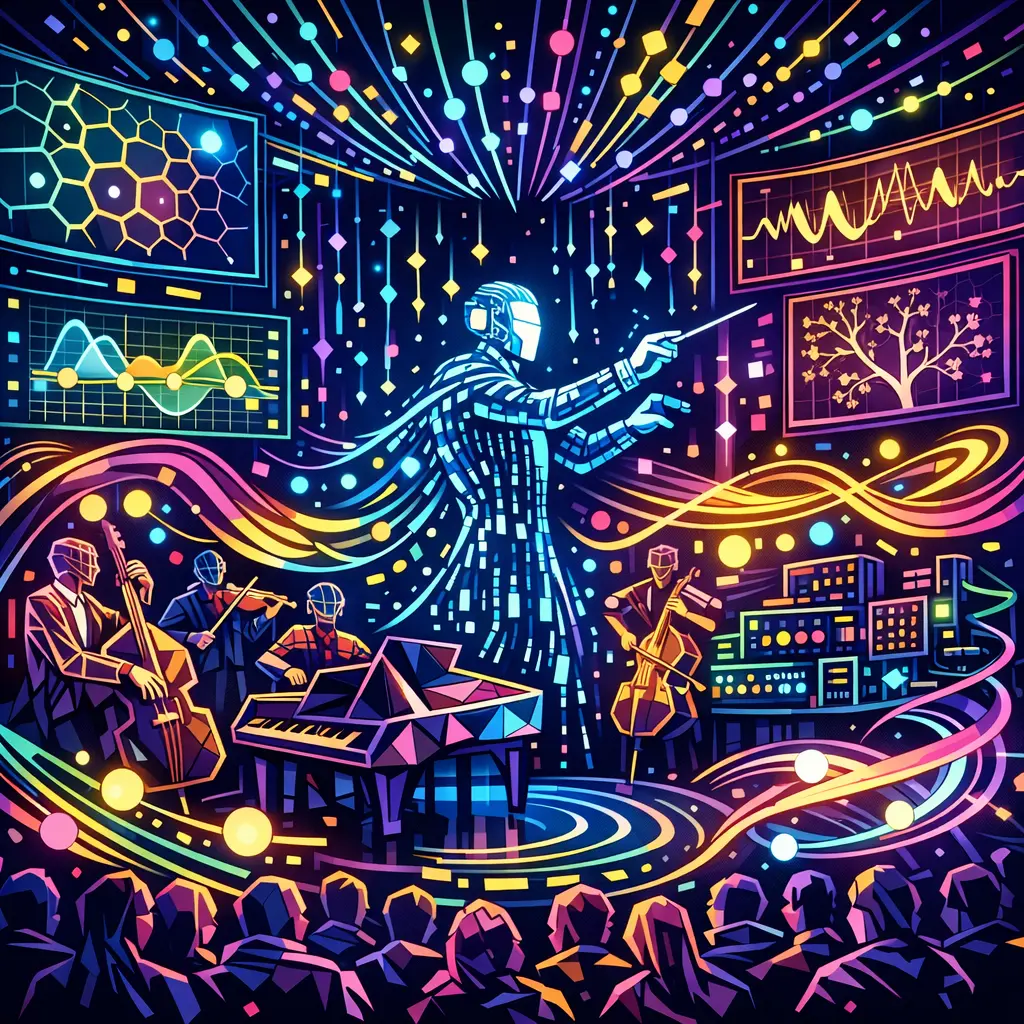
Algorithmic composition and generative music refer to the use of computer algorithms and artificial intelligence to create music, often without direct human intervention. In the performing arts and music, these methods enable composers and artists to explore new creative possibilities, producing unique, dynamic, and sometimes unpredictable musical works. This approach can involve real-time generation or structured compositions, expanding the boundaries of traditional music-making and performance.
Algorithmic Composition & Generative Music
Algorithmic composition and generative music refer to the use of computer algorithms and artificial intelligence to create music, often without direct human intervention. In the performing arts and music, these methods enable composers and artists to explore new creative possibilities, producing unique, dynamic, and sometimes unpredictable musical works. This approach can involve real-time generation or structured compositions, expanding the boundaries of traditional music-making and performance.
💡 Key Takeaways
- Define algorithmic composition and generative music and how they relate.
- Describe common techniques: rule-based systems, stochastic methods, and procedural generation.
- Explain how parameters, feedback, and randomness shape evolving musical material.
- Name popular tools and languages used for algorithmic composition (e.g., SuperCollider, TidalCycles, Pure Data).
❓ Frequently Asked Questions
What is algorithmic composition?
Algorithmic composition uses rules, models, or procedures to create music automatically or with minimal human input, generating melodies, rhythms, and textures.
What is generative music?
Generative music is produced by a system that, once started, continues to generate music over time based on predefined rules, inputs, or chance.
What techniques are commonly used in algorithmic composition?
Common techniques include rule-based systems, Markov chains, stochastic processes, cellular automata, fractals, procedural generation, and AI models.
How does randomness influence generative music?
Randomness adds variation; designers control it with seeds, probability distributions, and constraints to balance novelty with coherence.