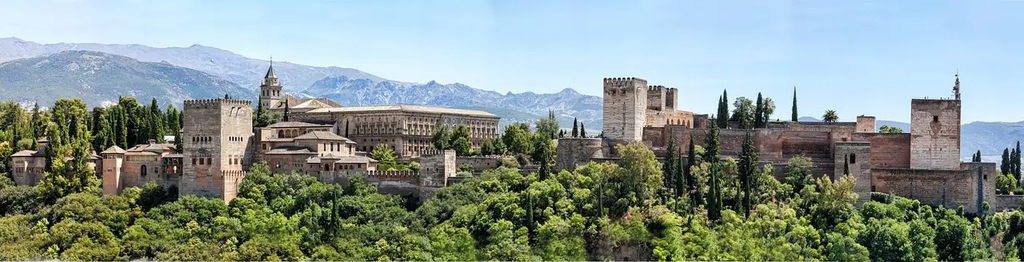
The Alhambra is a stunning palace and fortress complex located in Granada, Spain, renowned for its exquisite Islamic architecture and intricate decorative art. Built primarily in the 13th and 14th centuries by the Nasrid dynasty, it features ornate courtyards, lush gardens, and detailed tilework. As a UNESCO World Heritage Site, the Alhambra stands as a symbol of Moorish culture in Spain and is celebrated as one of the world’s greatest architectural wonders.
Alhambra
The Alhambra is a stunning palace and fortress complex located in Granada, Spain, renowned for its exquisite Islamic architecture and intricate decorative art. Built primarily in the 13th and 14th centuries by the Nasrid dynasty, it features ornate courtyards, lush gardens, and detailed tilework. As a UNESCO World Heritage Site, the Alhambra stands as a symbol of Moorish culture in Spain and is celebrated as one of the world’s greatest architectural wonders.
💡 Key Takeaways
- Identify the main sections of the Alhambra (Alcazaba, Nasrid Palaces, and Generalife) and their purposes.
- Explain how Moorish architecture features—like horseshoe arches, muqarnas, and intricate tilework—shape the site's design.
- Describe the role of water, fountains, and garden layouts in the Alhambra's aesthetics and symbolism.
- Understand the historical context of the Nasrid dynasty, the site's evolution, and its UNESCO World Heritage significance.
❓ Frequently Asked Questions
What is the Alhambra?
A palace and fortress complex in Granada, Spain, built by the Moorish Nasrid rulers in the 13th–14th centuries, famed for its Islamic architecture and gardens.
Where is the Alhambra located and what was its purpose?
It sits on a hill above Granada's old town and served as a fortress, royal residence, and administrative center, featuring palaces, courtyards, and the Generalife gardens.
When was the Alhambra built and who built it?
Construction began in the mid-13th century under the Nasrid dynasty and continued into the 14th century, with later additions before the Reconquista.
What are some signature features of the Alhambra?
The Palace of the Lions, Court of the Myrtles, intricate tilework and stucco carvings, Arabic calligraphy, and the Generalife gardens.