Ancestral Puebloan cliff dwellings, exemplified by Mesa Verde, are remarkable stone and adobe structures built into steep canyon walls in the American Southwest. Constructed between the 12th and 13th centuries, these dwellings provided shelter, defense, and community space for the Puebloan people. Beyond Mesa Verde, similar sites like Bandelier and Gila Cliff Dwellings showcase the ingenuity, adaptability, and cultural legacy of these ancient Native American societies.
Ancestral Puebloan Cliff Dwellings: Mesa Verde and Beyond
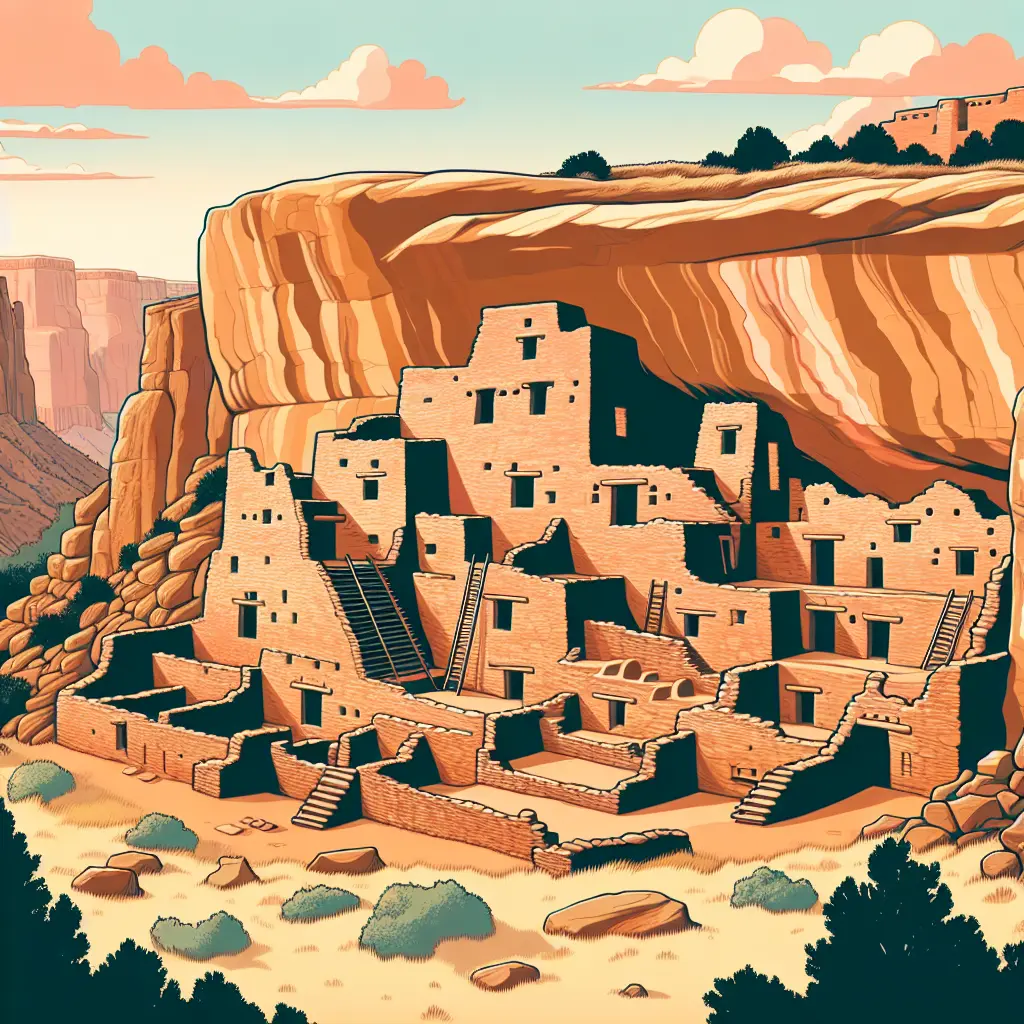
Ancestral Puebloan cliff dwellings, exemplified by Mesa Verde, are remarkable stone and adobe structures built into steep canyon walls in the American Southwest. Constructed between the 12th and 13th centuries, these dwellings provided shelter, defense, and community space for the Puebloan people. Beyond Mesa Verde, similar sites like Bandelier and Gila Cliff Dwellings showcase the ingenuity, adaptability, and cultural legacy of these ancient Native American societies.
💡 Key Takeaways
- Locate Mesa Verde and other Ancestral Puebloan cliff dwellings in the Southwest and their canyon settings.
- Explain construction with stone and adobe and how buildings are integrated into cliff faces for stability and climate control.
- Explore the purposes of cliff dwellings: shelter, defense, and community/ceremonial spaces.
- Reflect on what these sites reveal about Ancestral Puebloan daily life, social organization, and regional connections beyond Mesa Verde.
❓ Frequently Asked Questions
Who built the cliff dwellings highlighted in this article?
The Ancestral Puebloans (also known as Anasazi) of the American Southwest.
When were Mesa Verde's cliff dwellings constructed?
They were built between the 12th and 13th centuries.
What materials were used to build these dwellings?
Stone and adobe (mud brick) integrated into the canyon walls.
What were the main purposes of these cliff dwellings?
Shelter, defense, and community spaces, often with ceremonial kivas for gatherings.
Where can similar cliff dwellings be found beyond Mesa Verde?
Other Southwest sites include Bandelier National Monument (New Mexico), Canyon de Chelly National Monument (Arizona), and Chaco Culture National Historical Park (New Mexico).