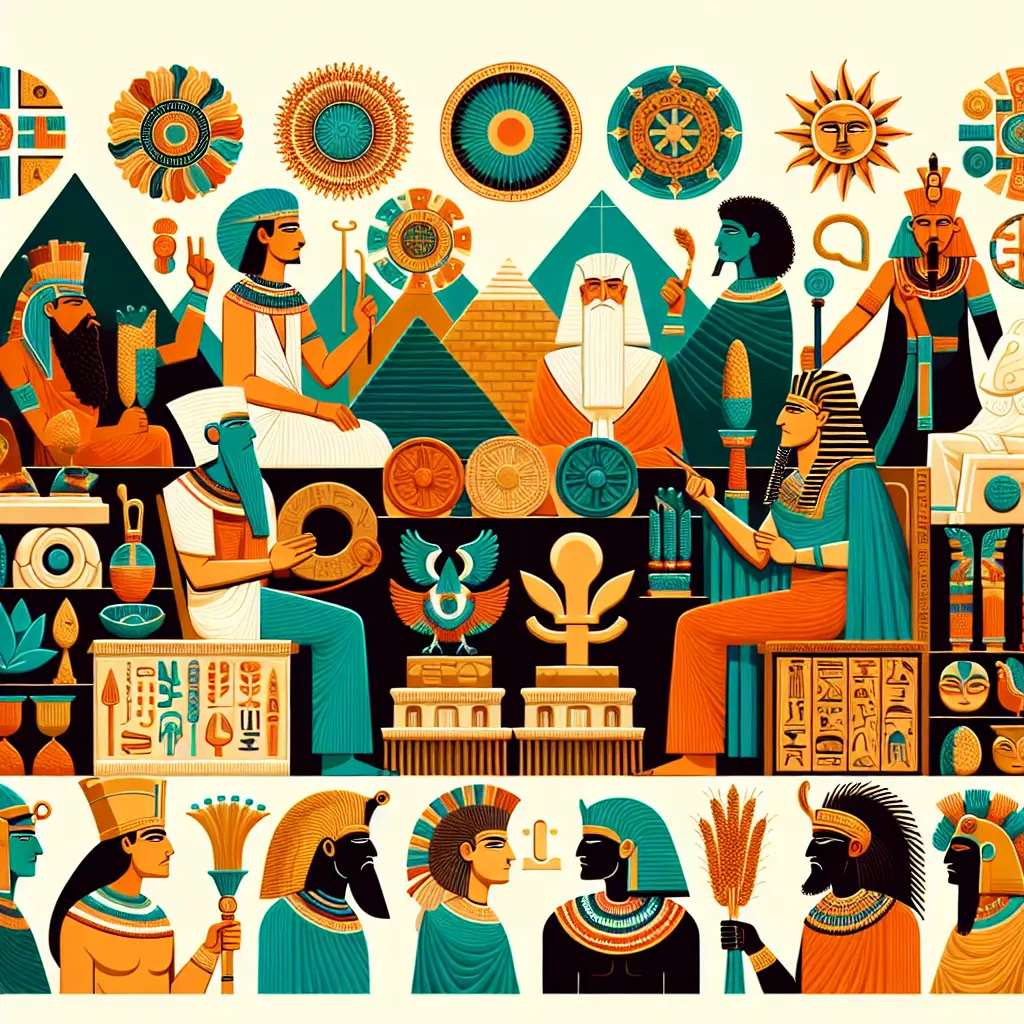
"Ancient Civilizations: Key Figures, Features & Motifs" refers to the study of early societies, focusing on influential leaders, thinkers, and rulers who shaped their eras. It explores defining characteristics such as architecture, governance, religion, and social structures. Motifs include recurring symbols, myths, and artistic styles that reflect cultural values and beliefs. Together, these elements provide insight into the development, achievements, and legacies of civilizations like Egypt, Mesopotamia, Greece, and Rome.
Ancient Civilizations: Key Figures, Features & Motifs
"Ancient Civilizations: Key Figures, Features & Motifs" refers to the study of early societies, focusing on influential leaders, thinkers, and rulers who shaped their eras. It explores defining characteristics such as architecture, governance, religion, and social structures. Motifs include recurring symbols, myths, and artistic styles that reflect cultural values and beliefs. Together, these elements provide insight into the development, achievements, and legacies of civilizations like Egypt, Mesopotamia, Greece, and Rome.
💡 Key Takeaways
- Identify influential leaders, thinkers, and rulers from ancient civilizations and their impact
- Describe key features: architecture, governance, religion, and social structure
- Recognize recurring motifs and patterns across different civilizations and regions
- Explain how geography shaped development and interactions in the ancient world
❓ Frequently Asked Questions
What defines an ancient civilization in this quiz?
An ancient civilization is a complex society with urban centers, organized governance, social hierarchies, and developed writing or record-keeping and shared cultural traits.
Who are some key figures in ancient civilizations and what roles did they play?
Examples include Hammurabi (Babylon) for a codified law system; Pericles (Athens) for democracy and culture; Ashoka (Maurya) for Buddhist patronage and welfare projects; and Qin Shi Huang (China) for unifying and expanding early imperial governance.
What architectural and urban features are common in ancient civilizations?
Monumental structures (pyramids, temples, ziggurats), planned cities with organized streets, public works and drainage systems, fortifications, and inscriptions that commemorate leaders or events.
What motifs recur in religion and governance across ancient civilizations?
Divine or sacred authority, codified laws, religious institutions shaping public life, writing used for administration and record-keeping, and distinct social hierarchies.