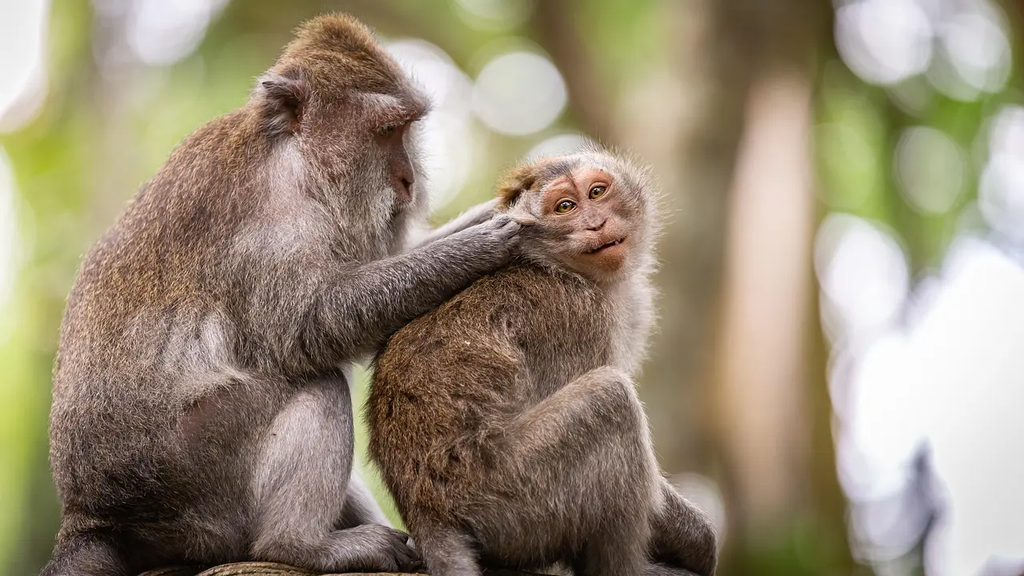
Animal Cognitive Ecology explores how animals think, learn, and solve problems in relation to their natural environments. It examines how intelligence, memory, and decision-making help animals survive and thrive, revealing surprising adaptations and behaviors. By uncovering nature’s wildest secrets, this field highlights the complex minds behind animal actions, showing that many creatures use clever strategies to find food, avoid predators, and interact socially within their ecosystems.
Animal Cognitive Ecology
Animal Cognitive Ecology explores how animals think, learn, and solve problems in relation to their natural environments. It examines how intelligence, memory, and decision-making help animals survive and thrive, revealing surprising adaptations and behaviors. By uncovering nature’s wildest secrets, this field highlights the complex minds behind animal actions, showing that many creatures use clever strategies to find food, avoid predators, and interact socially within their ecosystems.
💡 Key Takeaways
- Understand how cognition shapes foraging strategies and resource use in the wild.
- Learn how memory, perception, and learning guide navigation and spatial decision-making.
- Explore how ecological pressures drive problem-solving, tool use, and innovation across species.
- Discover the role of social learning and communication in transmitting information within animal groups.
❓ Frequently Asked Questions
What is animal cognitive ecology?
The study of how animals' thinking abilities—memory, learning, perception, and problem-solving—interact with their environment to influence foraging, social behavior, and survival.
What cognitive abilities are commonly studied in animals?
Memory (spatial and working), learning and conditioning, problem solving and innovation, perception and attention, and social learning or imitation.
How do ecological factors shape animal cognition?
Ecological pressures such as resource availability, predation risk, social structure, and lifespan select for different cognitive traits; for example, caching birds tend to have strong spatial memory.
How do researchers study cognition in animals?
Researchers combine field observations with controlled tasks, using puzzles, mazes, foraging challenges, and learning trials to assess memory, problem solving, and social learning.