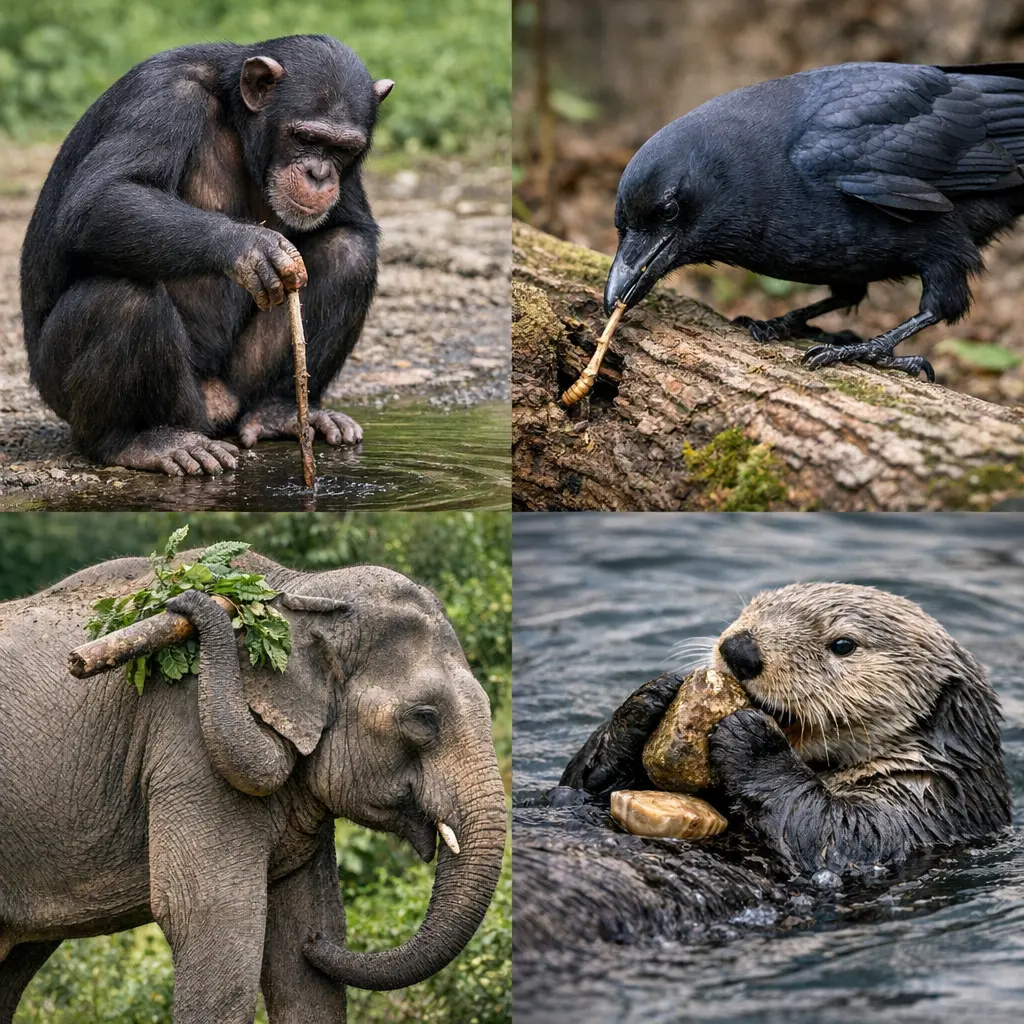
Animal Cognitive Ethology is the scientific study of animal minds, focusing on how animals think, solve problems, and experience emotions in their natural environments. By observing animal behavior and intelligence in the wild, researchers uncover fascinating insights—like elephants recognizing themselves in mirrors or crows using tools. These discoveries reveal nature's wildest secrets, showing that animals possess remarkable cognitive abilities once thought unique to humans.
Animal Cognitive Ethology
Animal Cognitive Ethology is the scientific study of animal minds, focusing on how animals think, solve problems, and experience emotions in their natural environments. By observing animal behavior and intelligence in the wild, researchers uncover fascinating insights—like elephants recognizing themselves in mirrors or crows using tools. These discoveries reveal nature's wildest secrets, showing that animals possess remarkable cognitive abilities once thought unique to humans.

💡 Key Takeaways
- Define cognitive ethology and how it differs from traditional animal behavior studies.
- Explore examples of animal cognition such as problem-solving, tool use, memory, and social learning.
- Learn about ethical, naturalistic and controlled methods researchers use to test cognition in animals.
- Consider how animal cognition informs welfare, conservation, and ethical decision-making.
❓ Frequently Asked Questions
What is animal cognitive ethology?
Animal cognitive ethology studies how animals think, learn, remember, and solve problems in natural, ecologically relevant settings.
How does cognitive ethology differ from comparative psychology?
Cognitive ethology emphasizes natural behavior and real-world contexts, while comparative psychology often uses controlled lab experiments to study cognitive mechanisms.
What cognitive abilities are commonly studied in animal cognition?
Memory, perception, problem solving, learning, tool use, spatial navigation, social cognition, and communication.
Can you name classic examples of animal cognition research?
Tool use by chimpanzees and corvids, problem solving in octopuses, and studies of social learning or self-recognition in various species.