Anti-Corruption and Anti-Collusion Measures in tender and procurement processes are policies and practices designed to prevent unethical behavior, such as bribery, favoritism, and secret agreements among bidders. These measures ensure transparency, fairness, and competition by requiring open bidding, clear evaluation criteria, and regular monitoring. They help protect public funds, maintain trust in procurement systems, and promote equal opportunities for all qualified suppliers or contractors.
Anti-Corruption and Anti-Collusion Measures
Anti-Corruption and Anti-Collusion Measures in tender and procurement processes are policies and practices designed to prevent unethical behavior, such as bribery, favoritism, and secret agreements among bidders. These measures ensure transparency, fairness, and competition by requiring open bidding, clear evaluation criteria, and regular monitoring. They help protect public funds, maintain trust in procurement systems, and promote equal opportunities for all qualified suppliers or contractors.
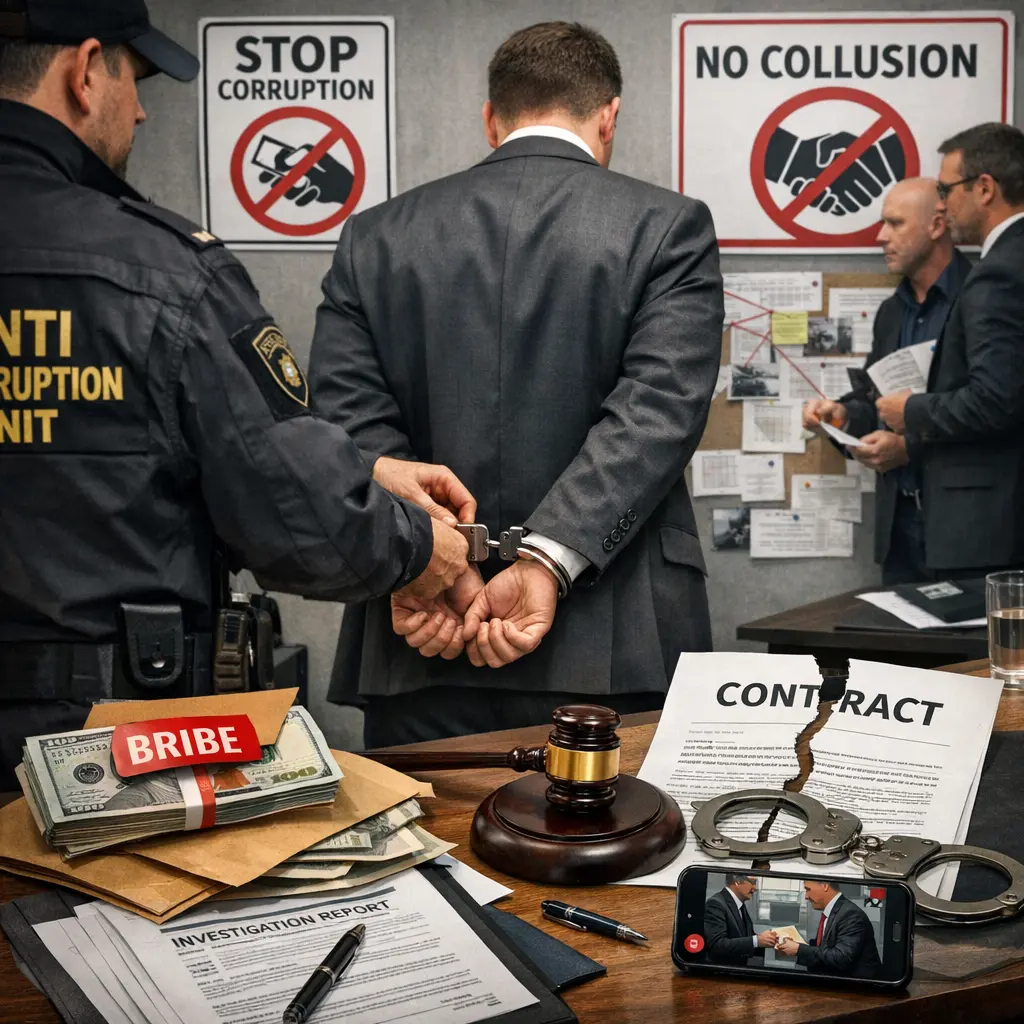
💡 Key Takeaways
- Define what anti-corruption and anti-collusion mean and why they matter for integrity and trust.
- Recognize common forms of corruption and collusion (bribery, kickbacks, bid-rigging) and their impact.
- Implement strong controls (ethics policies, conflict-of-interest disclosures, separation of duties, transparent procurement).
- Detect, investigate, and enforce through audits, whistleblower channels, and clear sanctions.
❓ Frequently Asked Questions
What are anti-corruption measures?
Policies and practices that prevent bribery, kickbacks, and abuse of power, such as transparent procurement, due diligence, and independent oversight.
What is anti-collusion in procurement?
Efforts to prevent bidders from secretly coordinating to fix prices, rig bids, or limit competition; examples include sealed bids, independent evaluation, and disclosure of relationships.
Which controls help deter corruption in organizations?
Segregation of duties, approved spend limits, regular audits, conflict-of-interest disclosures, employee training, and robust procurement rules.
How can you spot red flags of corruption or collusion?
Unexplained bid patterns, identical or suspiciously similar bids, unusual pricing, lack of transparency, or relationships between bidders and decision-makers.
What is the role of whistleblower protections?
Providing safe reporting channels, anonymity, and protection against retaliation to encourage reporting of suspected misconduct and prompt investigations.