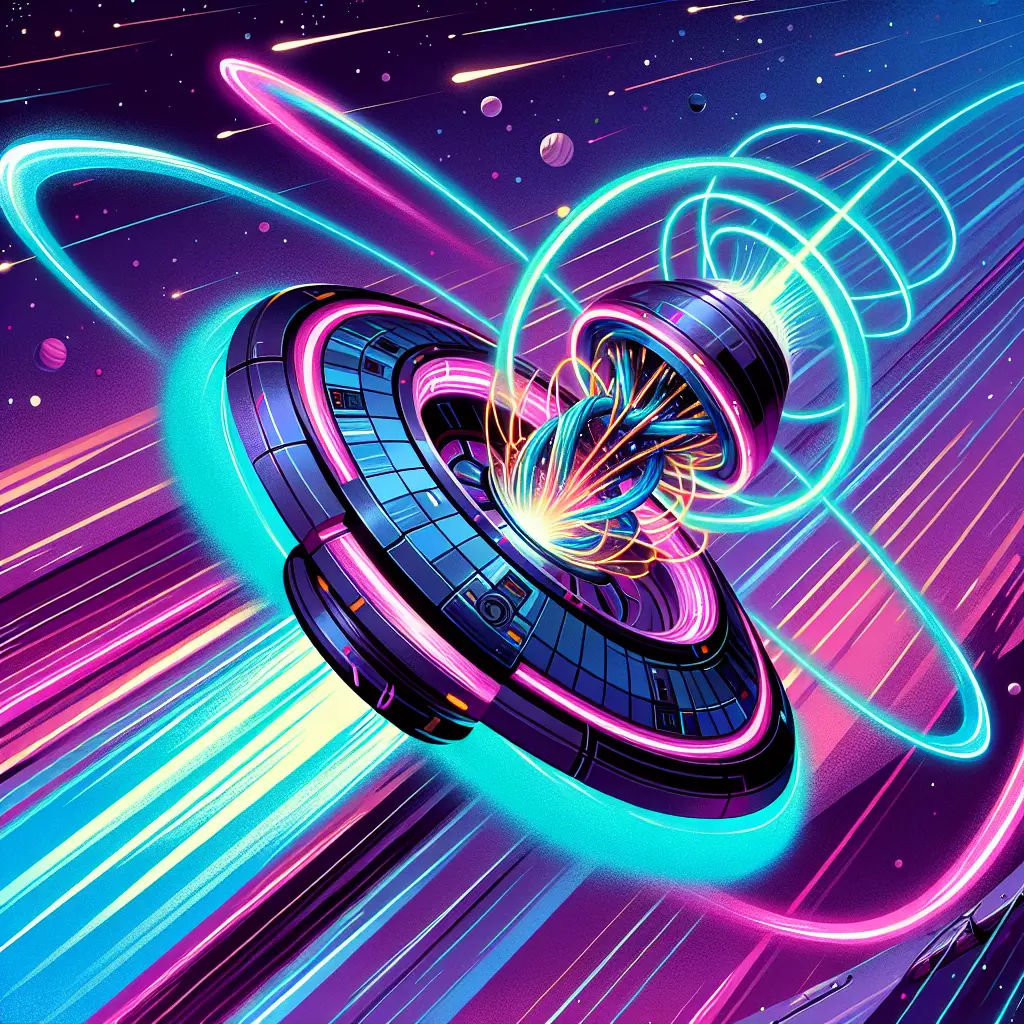
Antimatter and exotic propulsion refer to advanced theoretical concepts in space travel. Antimatter, the counterpart to normal matter, can release immense energy when combined with matter, potentially powering highly efficient spacecraft engines. Exotic propulsion covers unconventional methods, such as warp drives or wormholes, that could enable faster-than-light travel. Together, these ideas represent the frontier of propulsion technology, promising revolutionary changes in how humanity explores and navigates the cosmos.
Antimatter & Exotic Propulsion
Antimatter and exotic propulsion refer to advanced theoretical concepts in space travel. Antimatter, the counterpart to normal matter, can release immense energy when combined with matter, potentially powering highly efficient spacecraft engines. Exotic propulsion covers unconventional methods, such as warp drives or wormholes, that could enable faster-than-light travel. Together, these ideas represent the frontier of propulsion technology, promising revolutionary changes in how humanity explores and navigates the cosmos.
💡 Key Takeaways
- Understand antimatter as the counterpart to ordinary matter and how annihilation releases large energy for propulsion.
- Know what exotic propulsion means and examples of unconventional ideas used in sci-fi (e.g., beamed propulsion, speculative spacetime drives).
- Recognize the main technical challenges: production, storage, containment, and radiation management.
- See how these concepts inspire sci-fi narratives and future cyber-tech visions, and where science fact vs fiction lies.
❓ Frequently Asked Questions
What is antimatter and how could it power a spacecraft?
Antimatter is the counterpart to normal matter. When antimatter meets matter, they annihilate and release energy (E=mc^2), which could power highly efficient engines. Real-world use is speculative due to limited production, storage challenges, and safety concerns.
Why is storing antimatter so challenging?
Antimatter must be kept away from any normal matter. Engineers use magnetic or electrostatic containment in vacuum (magnetic bottles) and shielding to manage radiation. Any contact causes annihilation and energy release.
What does exotic propulsion mean in sci-fi?
Exotic propulsion refers to hypothetical, unconventional methods outside conventional chemical or nuclear engines, such as warp drives or wormholes. These ideas are speculative and rely on physics beyond established technology.
Are antimatter and exotic propulsion currently feasible?
Antimatter production exists for research but at tiny scales; large-scale propulsion is not feasible today. Exotic propulsion remains theoretical with no experimental proof and would require major breakthroughs in physics.