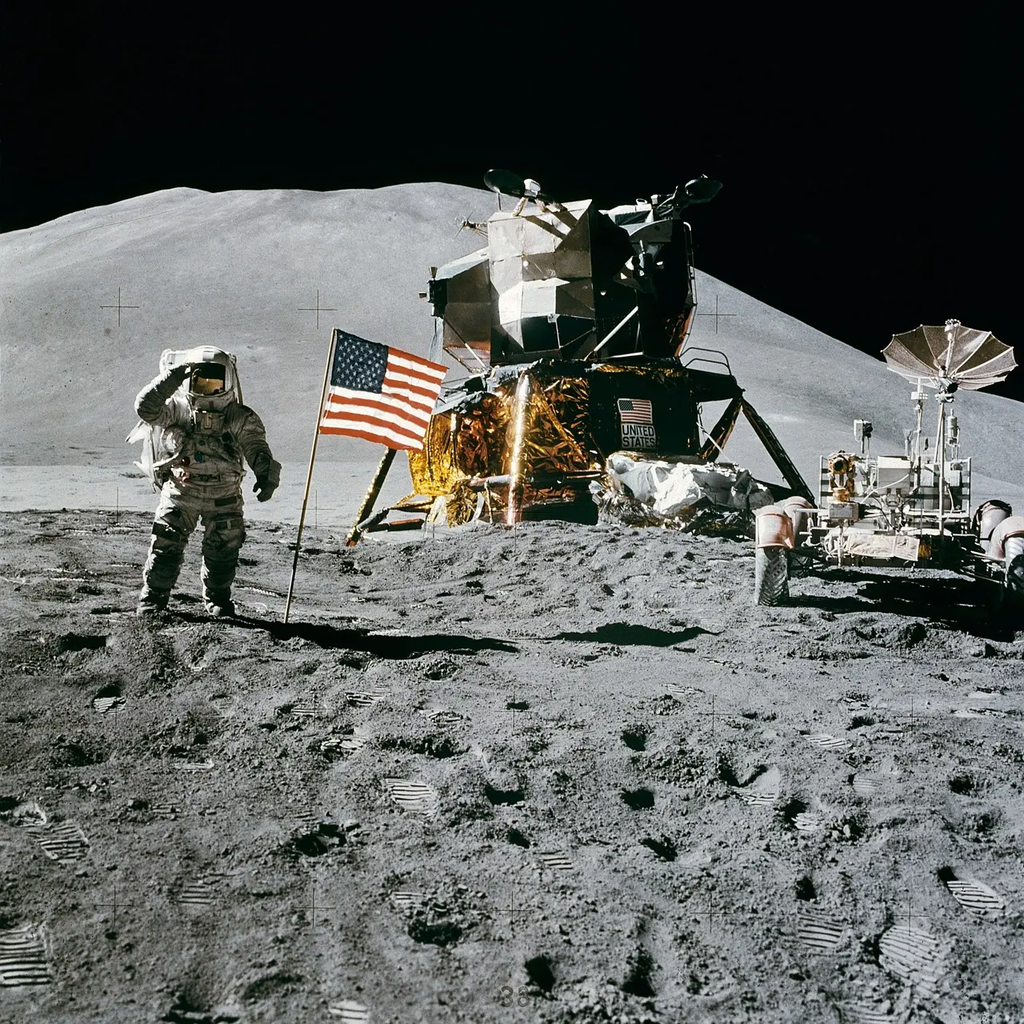
The Apollo Missions, conducted by NASA between 1961 and 1972, were a series of spaceflights aimed at exploring the Moon and advancing human space exploration. Highlighted by Apollo 11’s historic 1969 landing, these missions achieved the first manned lunar landings, scientific experiments, and sample returns. Apollo’s legacy includes technological advancements, international prestige, and significant contributions to our understanding of space and the Moon’s geology.
Apollo Missions Overview
The Apollo Missions, conducted by NASA between 1961 and 1972, were a series of spaceflights aimed at exploring the Moon and advancing human space exploration. Highlighted by Apollo 11’s historic 1969 landing, these missions achieved the first manned lunar landings, scientific experiments, and sample returns. Apollo’s legacy includes technological advancements, international prestige, and significant contributions to our understanding of space and the Moon’s geology.
💡 Key Takeaways
- Understand the main goals of the Apollo program: landing humans on the Moon and returning them safely to Earth.
- Identify key milestones and missions, including Apollo 11's Moon landing and Apollo 13's safe return.
- Explain the mission architecture and major hardware: Saturn V launcher, Command/Service Module, Lunar Module, and lunar orbit rendezvous.
- Appreciate the enduring legacy and scientific/technological impacts of Apollo on space exploration.
❓ Frequently Asked Questions
What was the main goal of NASA's Apollo program?
To land humans on the Moon, explore the lunar surface, and return them safely to Earth, while developing capabilities for long-duration spaceflight.
What are the two main spacecraft in an Apollo mission and what did each do?
The Command/Service Module (CSM) carried the crew and provided propulsion and life support in orbit; the Lunar Module (LM) carried astronauts from lunar orbit down to the surface and back.
Which Apollo missions successfully landed astronauts on the Moon, and which mission had a famous near-disaster?
Lunar landings occurred on Apollo 11, 12, 14, 15, 16, and 17. Apollo 13 experienced an in-flight explosion and did not land, but the crew returned safely.
What was the role of the Saturn V rocket in the Apollo program?
The Saturn V was the heavy-lift launch vehicle used to propel the Apollo spacecraft from Earth toward the Moon, delivering the necessary energy and payload.