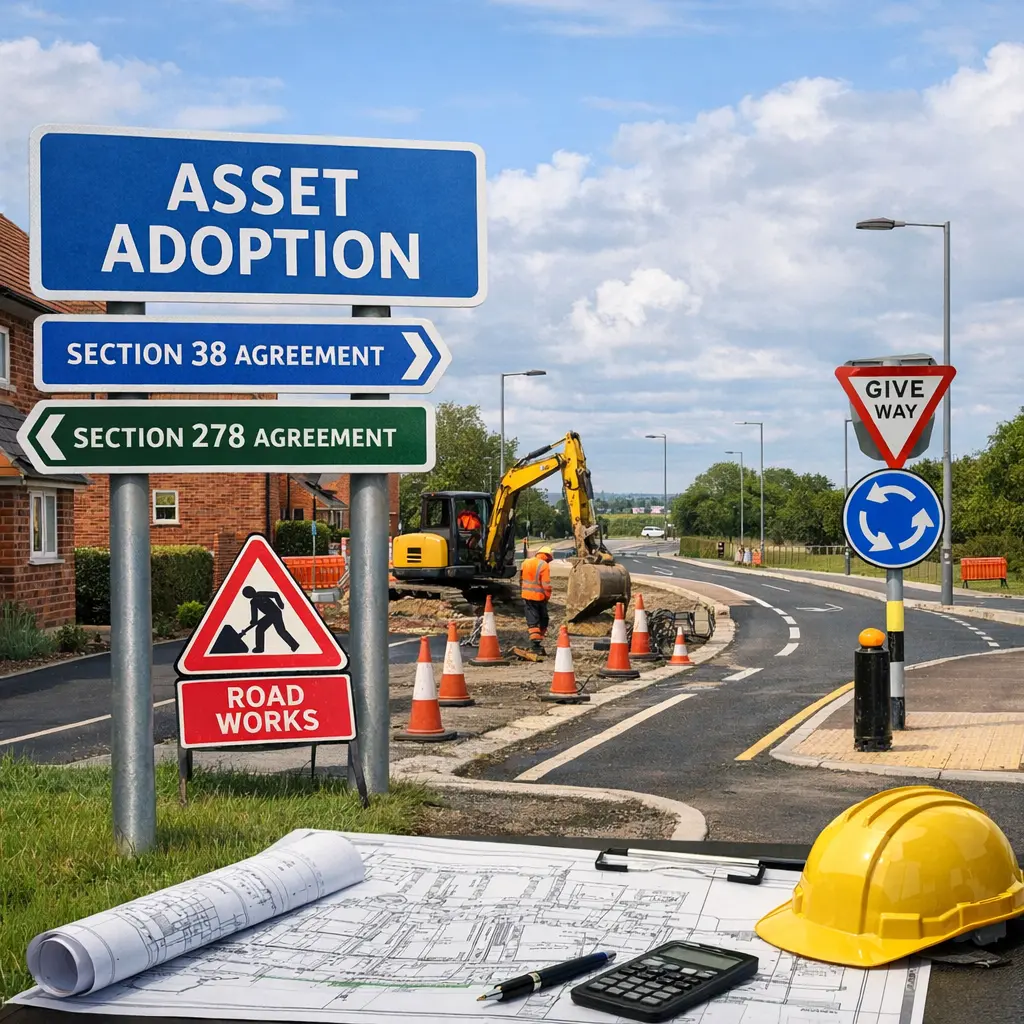
Asset adoption refers to the process where responsibility for infrastructure, such as roads and sewers, is transferred from a developer to a public authority. Section 38 agreements (Highways Act 1980) cover the adoption of new roads, ensuring they are built to standards for public maintenance. Section 278 agreements allow developers to make improvements to existing public highways. Both are essential legal and statutory requirements in property development and infrastructure projects.
Asset adoption and Section 38 and Section 278 agreements
Asset adoption refers to the process where responsibility for infrastructure, such as roads and sewers, is transferred from a developer to a public authority. Section 38 agreements (Highways Act 1980) cover the adoption of new roads, ensuring they are built to standards for public maintenance. Section 278 agreements allow developers to make improvements to existing public highways. Both are essential legal and statutory requirements in property development and infrastructure projects.
💡 Key Takeaways
- Understand what highway asset adoption means and when a new road becomes adopted under a Section 38 agreement.
- Distinguish between Section 38 and Section 278 agreements: purposes, triggers, and who funds and maintains the works.
- Learn the typical steps to achieve highway adoption, including design approvals, construction checks, and drafting the legal agreements.
- Recognize post-adoption responsibilities and risks, including ongoing maintenance, asset records, and financial security where applicable.
❓ Frequently Asked Questions
What is asset adoption in the context of property development?
Asset adoption is when a local highway authority takes ownership and responsibility for a new road, footpath, or other public asset after developers finish the required works, making it part of the public network.
What is a Section 38 agreement?
A Section 38 agreement is a contract under the Highways Act 1980 between a developer and a local highway authority. The developer builds the road to required standards, and once it’s approved, the authority adopts it for ongoing public maintenance.
What is a Section 278 agreement?
A Section 278 agreement is an arrangement under the Highways Act 1980 that lets a developer fund and construct highway works (often off-site) to the authority’s standards; upon completion, the highway is adopted by the authority.
What happens after an asset is adopted by the local authority?
Once adopted, the asset becomes part of the public highway network or asset register and is maintained by the local authority; the developer’s responsibilities end after adoption.