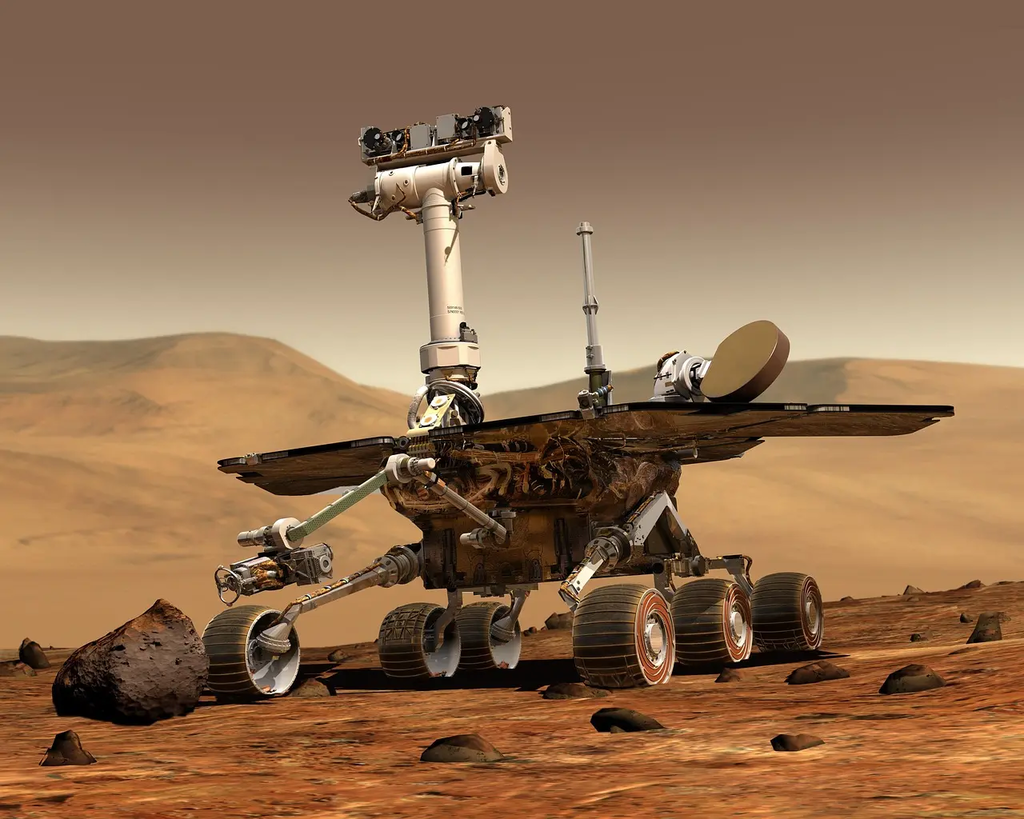
Autonomous navigation for rovers and landers refers to the capability of these robotic vehicles to independently traverse and explore extraterrestrial surfaces, such as the Moon or Mars, without direct human control. Using onboard sensors, artificial intelligence, and real-time data processing, they can detect obstacles, plan safe paths, and adapt to changing environments. This technology enhances mission efficiency, safety, and allows exploration of challenging terrains that would be difficult or impossible to navigate remotely.
Autonomous Navigation for Rovers and Landers
Autonomous navigation for rovers and landers refers to the capability of these robotic vehicles to independently traverse and explore extraterrestrial surfaces, such as the Moon or Mars, without direct human control. Using onboard sensors, artificial intelligence, and real-time data processing, they can detect obstacles, plan safe paths, and adapt to changing environments. This technology enhances mission efficiency, safety, and allows exploration of challenging terrains that would be difficult or impossible to navigate remotely.
💡 Key Takeaways
- Understand what autonomous navigation means for rovers and landers and why it's essential for remote space exploration.
- Identify the main onboard sensors and perception tools used to sense terrain, obstacles, and hazards (e.g., cameras, stereo vision, LiDAR, radar).
- Explain how on-board AI, localization, mapping, and real-time planning enable safe traversal and hazard avoidance without direct human control.
- Discuss the challenges and constraints of autonomous navigation in space, such as communication delays, limited energy, and uncertain terrain.
❓ Frequently Asked Questions
What is autonomous navigation for rovers and landers?
The ability of a robotic vehicle to move and explore without real-time human control, using onboard sensors and AI to plan routes, detect hazards, and achieve science goals.
What sensors support autonomous navigation on rovers and landers?
Onboard cameras (including stereo), depth sensors, radar/LiDAR-like systems, inertial measurement units (IMUs), wheel odometry, and power/thermal sensors help estimate position, map terrain, and spot obstacles.
How do autonomous rovers decide where to go?
They build a terrain map, evaluate multiple route options for safety, energy use, and science value, and select the best path with onboard planning algorithms.
What challenges do autonomous rovers face on Moon or Mars?
Communication delays with Earth, rough or uncertain terrain, dust, extreme temperatures, and limited computing power require robust, efficient algorithms and fail-safes.