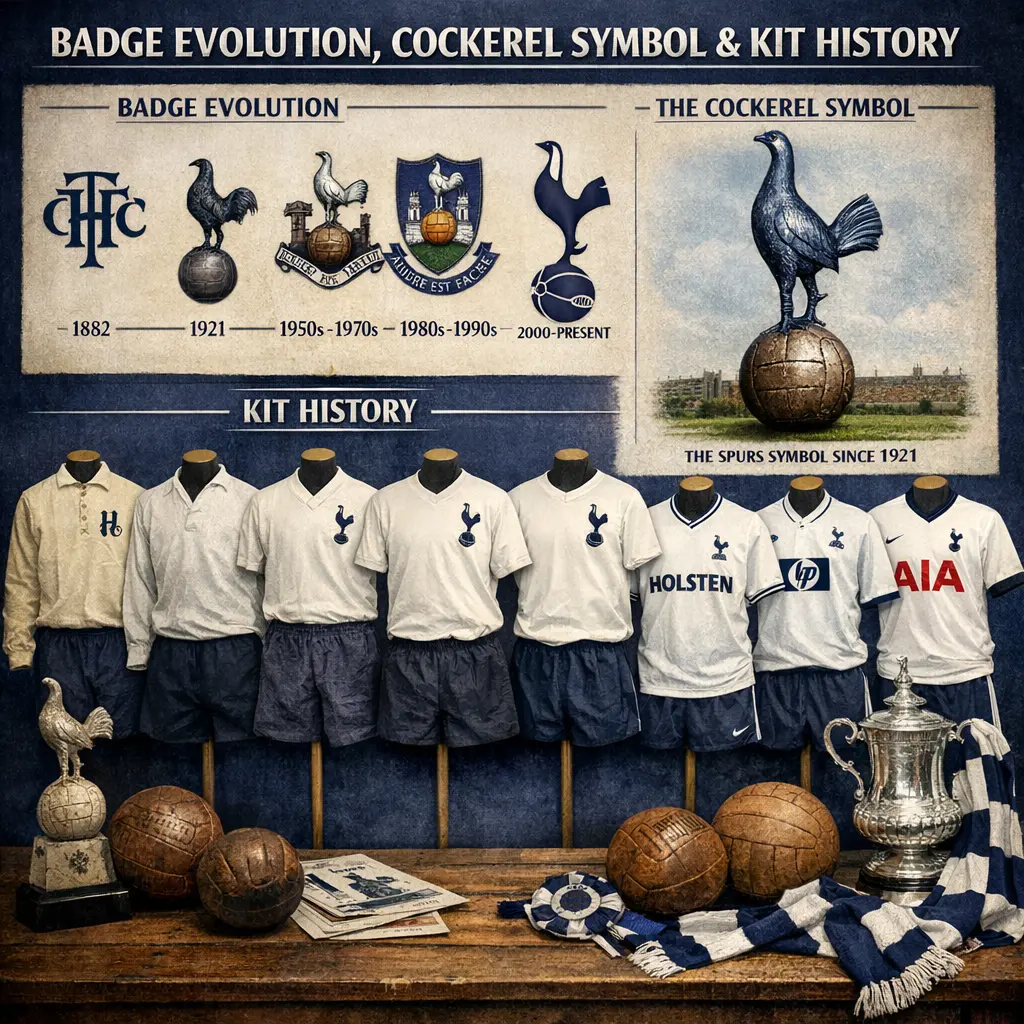
The phrase refers to the historical development of Tottenham Hotspur F.C.’s club badge, particularly the evolution of its iconic cockerel symbol, and the history of the team's kits. Over time, the badge has undergone several redesigns, with the cockerel—standing on a football—becoming a central emblem of the club. The kit history explores changes in design, colors, and manufacturers, reflecting the club’s identity and heritage through the years.
Badge Evolution, Cockerel Symbol & Kit History
The phrase refers to the historical development of Tottenham Hotspur F.C.’s club badge, particularly the evolution of its iconic cockerel symbol, and the history of the team's kits. Over time, the badge has undergone several redesigns, with the cockerel—standing on a football—becoming a central emblem of the club. The kit history explores changes in design, colors, and manufacturers, reflecting the club’s identity and heritage through the years.
💡 Key Takeaways
- Trace the badge’s evolution from its early emblems to the modern crest and understand what each redesign signified
- Learn the origin and significance of the cockerel symbol and why it remains tied to the club’s identity
- Explore how the club’s kit colors, stripes, and logos have changed over time and what drove those design shifts
- Identify key milestones in kit history, including supplier partnerships, material innovations, and iconic match-day moments
❓ Frequently Asked Questions
What is a badge in football and why does it evolve over time?
A badge is the team’s emblem used to identify the club. It evolves to reflect history, ownership changes, branding trends, and a desire to honor heritage or mark milestones.
What is the cockerel symbol and why is it associated with French football?
The rooster (coq) is a national symbol of France and has long been used in French football branding to signal national pride. It appears on badges, kits, and logos connected to French teams and the national side.
How have football kits changed from past eras to today?
Kits evolved from heavy, natural-fiber jerseys to lightweight, moisture-wicking fabrics, with faster dyes and improved stitching. Changes also include colorways, sponsor logos, team badges, and sponsor/manufacturer branding.
How can I read which era a badge or kit belongs to?
Identify features like badge shape and symbols, color schemes, sponsor and manufacturer logos, and any year markers printed on the kit; compare those clues with known period designs.
Why do badge designs sometimes include multiple symbols or change after mergers?
Mergers, relocations, or a desire to honor history can lead to combined symbols or redesigned crests that reflect both sides’ identities and modern branding.