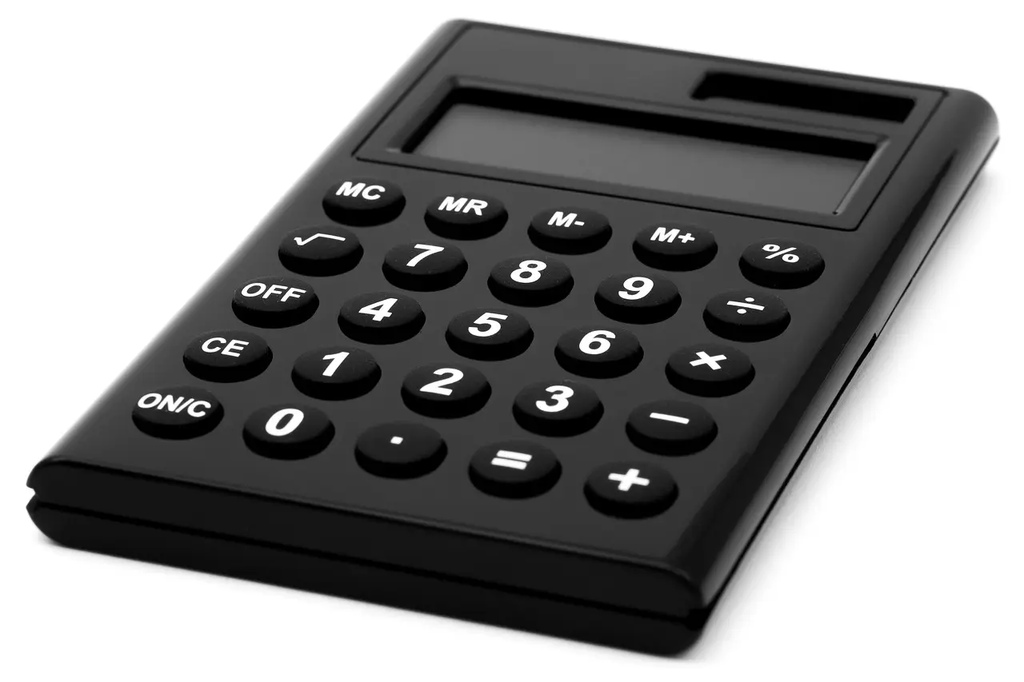
Basic calculator functions refer to essential mathematical operations such as addition, subtraction, multiplication, and division, commonly found in calculator apps and devices. These functions enable users to perform quick and accurate calculations for everyday tasks. In the context of "App Expert: Guess the Apps & Gadgets We Use Daily," recognizing basic calculator features helps identify popular tools and gadgets that simplify daily mathematical needs and enhance productivity.
Basic Calculator Functions+50
Basic calculator functions refer to essential mathematical operations such as addition, subtraction, multiplication, and division, commonly found in calculator apps and devices. These functions enable users to perform quick and accurate calculations for everyday tasks. In the context of "App Expert: Guess the Apps & Gadgets We Use Daily," recognizing basic calculator features helps identify popular tools and gadgets that simplify daily mathematical needs and enhance productivity.
💡 Key Takeaways
- Master basic arithmetic: add, subtract, multiply, and divide.
- Apply the order of operations and use parentheses to control calculation order.
- Use calculator features like memory (M+, M-, MR, MC) and editing options (clear, backspace).
- Compute percentages and square roots with built-in functions for common calculations.
❓ Frequently Asked Questions
How do I perform basic arithmetic (addition, subtraction, multiplication, division) on a calculator?
Enter the first number, press the operator (+, -, ×, ÷), enter the second number, then press = to see the result. Example: 5 + 3 = 8.
How do I use the memory functions (M+, M−, MR, MC) on a calculator?
M+ adds the current display to memory; M− subtracts it from memory; MR recalls the stored value; MC clears memory. Example: with 42 on display, press M+ to store it; press MR to recall later.
What does the % button do, and how should I use it in calculations?
The % button converts a number to a percentage or applies a percentage to a base, depending on the expression. Examples: 50 × 20% = 10 (20% of 50) and 200 × 15% = 30.
What is the difference between AC and C on a calculator?
AC clears everything and resets the calculator; C (or CE) clears only the current entry.
How should I handle order of operations on a basic calculator?
If your calculator supports parentheses, use them to group operations. Otherwise, perform calculations step by step or compute higher-precedence operations first. For example, 2 + 3 × 4 becomes 3 × 4 = 12, then 2 + 12 = 14.