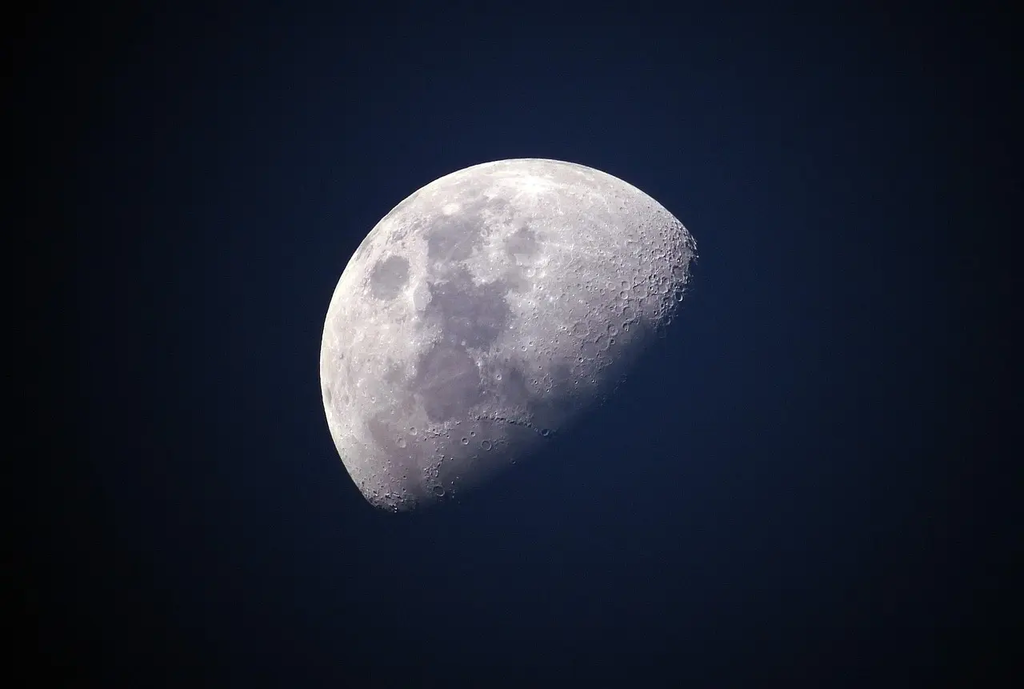
The Moon is Earth's only natural satellite and the fifth largest in our solar system. It orbits Earth at an average distance of about 384,400 kilometers and completes one full orbit every 27.3 days. The Moon has a diameter of 3,474 kilometers, about one-quarter that of Earth. Its surface is covered with craters, mountains, and flat plains called maria. The Moon’s gravitational pull causes tides on Earth.
Basic Moon Facts+50
The Moon is Earth's only natural satellite and the fifth largest in our solar system. It orbits Earth at an average distance of about 384,400 kilometers and completes one full orbit every 27.3 days. The Moon has a diameter of 3,474 kilometers, about one-quarter that of Earth. Its surface is covered with craters, mountains, and flat plains called maria. The Moon’s gravitational pull causes tides on Earth.
💡 Key Takeaways
- The Moon is Earth's natural satellite and completes an orbit around Earth roughly every 27.3 days (sidereal) and about 29.5 days (synodic, the phase cycle).
- It is tidally locked, so the same face always points toward Earth.
- Moon gravity is about one-sixth of Earth's, and the Moon has almost no atmosphere.
- Its surface features include craters and maria (dark plains) from ancient impacts, with water ice detected in some permanently shadowed polar regions.
❓ Frequently Asked Questions
What is the Moon?
The Moon is Earth's natural satellite that orbits our planet; we see different amounts of its sunlit surface as it moves, creating its phases.
Why does the Moon have phases?
As the Moon orbits Earth, the portion lit by the Sun we can see changes, producing new, crescent, quarter, gibbous, and full phases.
Why do we always see the same side of the Moon?
The Moon's rotation is synchronized with its orbit (tidal locking), so the same hemisphere faces Earth at all times.
What causes tides on Earth?
Moon gravity pulls on Earth's oceans, and the Sun's gravity adds to the effect; alignments during full/new Moon cause higher tides (spring tides).