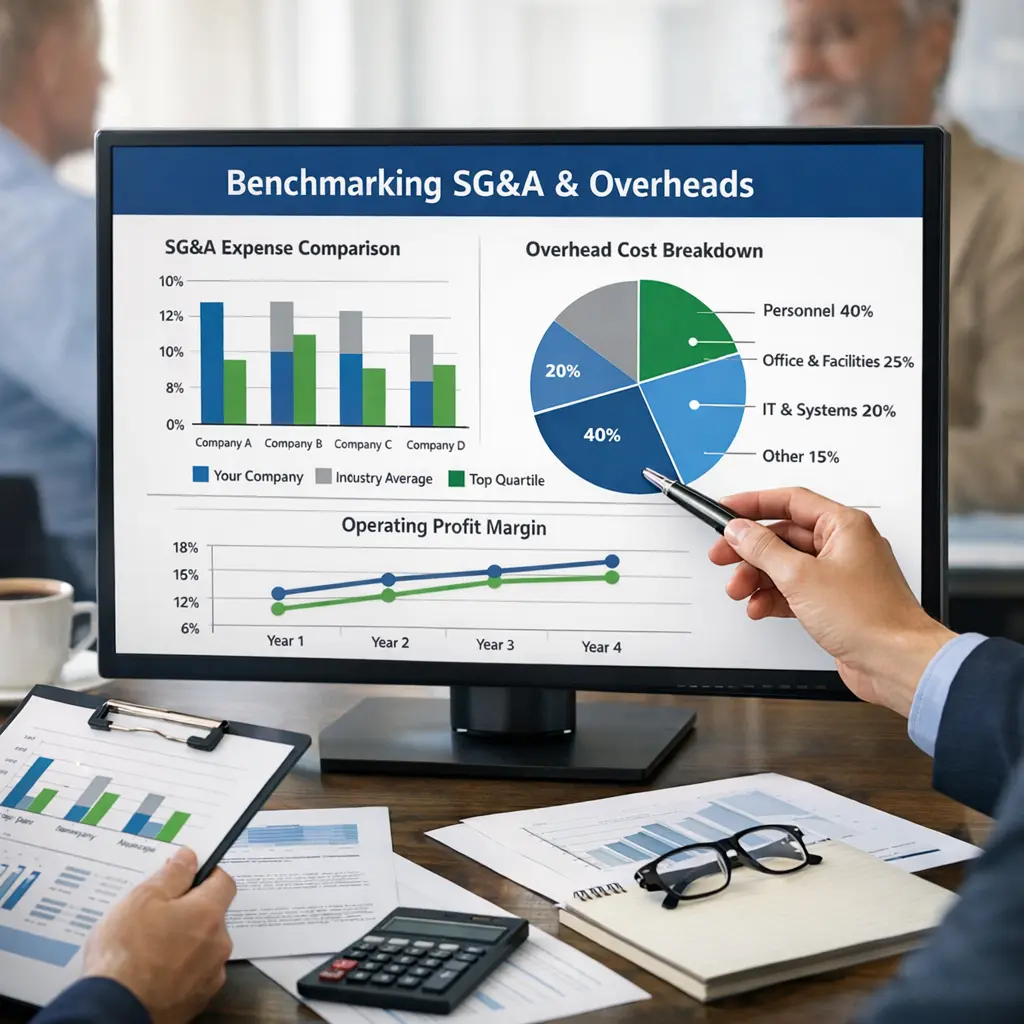
Benchmarking SG&A & Overheads involves comparing a company’s selling, general, and administrative expenses, as well as other overhead costs, against industry standards or best practices. This process helps organizations identify areas where they may be overspending or operating inefficiently. By analyzing these costs relative to peers, companies can set realistic targets, improve cost control, streamline operations, and enhance overall financial performance, supporting more informed decision-making and competitive positioning.
Benchmarking SG&A & Overheads
Benchmarking SG&A & Overheads involves comparing a company’s selling, general, and administrative expenses, as well as other overhead costs, against industry standards or best practices. This process helps organizations identify areas where they may be overspending or operating inefficiently. By analyzing these costs relative to peers, companies can set realistic targets, improve cost control, streamline operations, and enhance overall financial performance, supporting more informed decision-making and competitive positioning.
💡 Key Takeaways
- Understand what SG&A and overheads include (selling, general, and administrative expenses) and how they differ from COGS.
- Learn benchmarking fundamentals: how to choose peers, normalize data, and key metrics like SG&A as a% of revenue and per-employee measures.
- Identify cost drivers and interpret benchmark gaps to spot efficiency opportunities in SG&A/overheads.
- Explore practical strategies to optimize SG&A and overheads (automation, outsourcing, process improvements, and disciplined budgeting) without impacting growth.
❓ Frequently Asked Questions
What does SG&A stand for?
SG&A stands for Selling, General, and Administrative expenses. It includes ongoing operating costs not tied to production.
How is SG&A different from COGS?
COGS are direct costs of producing goods or services (materials, direct labor). SG&A covers indirect costs like sales, marketing, admin, and other overhead.
What are common components of SG&A?
Selling costs (sales salaries, commissions, marketing), general and administrative costs (executive salaries, HR, IT, finance), and overhead (rent, utilities, depreciation).
How is SG&A typically benchmarked?
Benchmark SG&A as a percentage of revenue and compare to industry peers, company size, or historical performance.
What actions can improve SG&A efficiency?
Identify non-value-added costs, consolidate vendors, automate processes, renegotiate contracts, optimize headcount, and enforce spend controls.