Bid/No-Bid Decision Frameworks are structured approaches used by organizations to assess whether to pursue or decline business opportunities, such as project bids or contracts. These frameworks evaluate factors like financial viability, resource availability, strategic alignment, and potential risks. By systematically analyzing these criteria, companies ensure that their efforts and investments are focused on opportunities with the highest chance of success and profitability, thereby optimizing resource allocation and supporting sound financial management practices.
Bid/No-Bid Decision Frameworks
Bid/No-Bid Decision Frameworks are structured approaches used by organizations to assess whether to pursue or decline business opportunities, such as project bids or contracts. These frameworks evaluate factors like financial viability, resource availability, strategic alignment, and potential risks. By systematically analyzing these criteria, companies ensure that their efforts and investments are focused on opportunities with the highest chance of success and profitability, thereby optimizing resource allocation and supporting sound financial management practices.
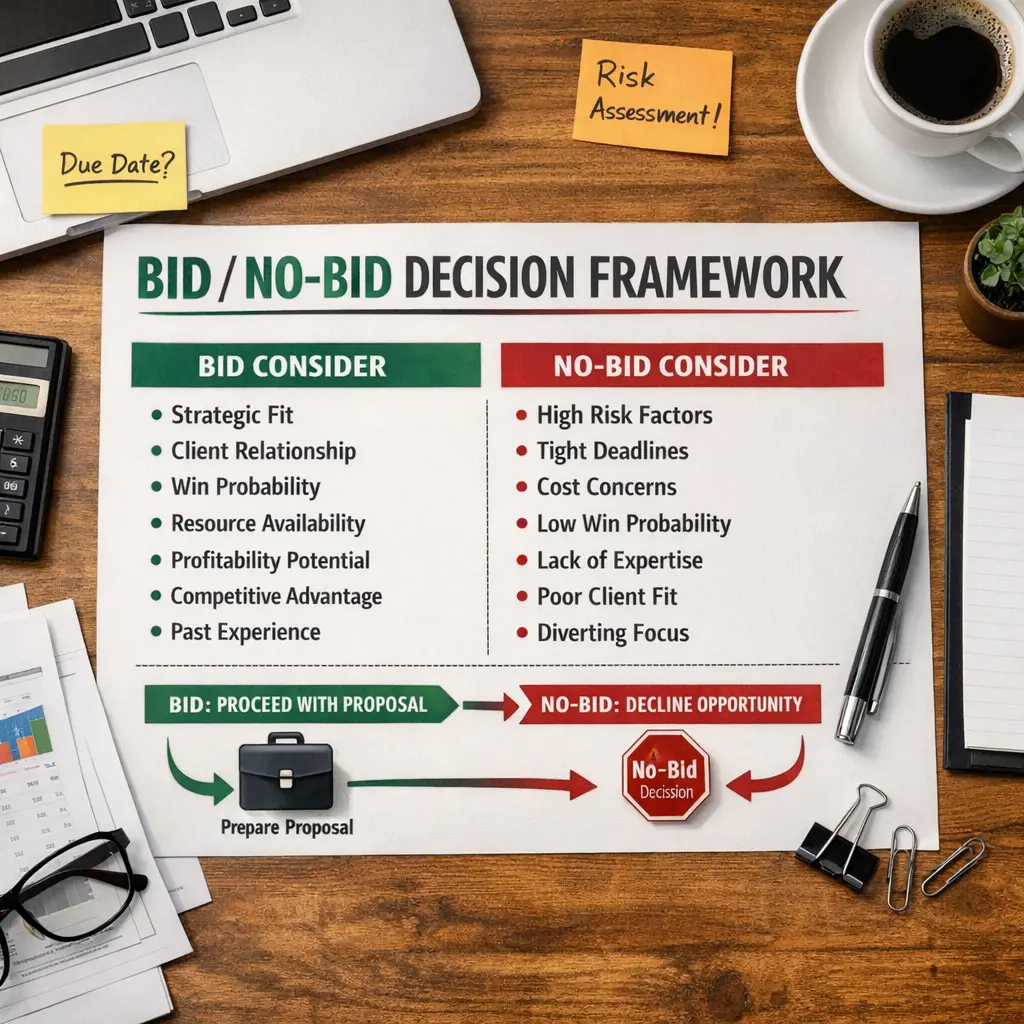
💡 Key Takeaways
- Identify the essential factors that drive bid vs. no-bid decisions.
- Use a structured decision framework to evaluate opportunity fit, risk, and potential profit.
- Assess win probability, margins, competition, and client constraints to inform the decision.
- Document and communicate a formal go/no-go decision to stakeholders.
❓ Frequently Asked Questions
What is a bid/no-bid decision?
A decision to bid on a project or pass, based on evaluating win probability, profitability, and strategic fit to allocate resources wisely.
Which factors should you consider in a bid/no-bid decision?
Profitability, estimated costs, likelihood of winning, competition, strategic value, available resources, schedule, and risk exposure.
What frameworks can you use to make the decision?
Go/no-go gates, weighted scoring models, decision trees, and scenario/risk analyses help structure and justify the choice.
What information do you need before deciding to bid?
Project scope, requirements, cost estimates, pricing strategy, win probability, competitors, resource availability, schedule constraints, and key risks.