Bio-inspired computing refers to the development of computational methods and algorithms inspired by natural biological processes and systems. Drawing from concepts such as evolution, neural networks, swarm intelligence, and immune systems, this approach seeks to solve complex problems by mimicking the adaptive, distributed, and self-organizing behaviors found in nature. Examples include genetic algorithms, artificial neural networks, and ant colony optimization, all of which leverage nature’s problem-solving strategies for innovative technological solutions.
Bio-inspired Computing
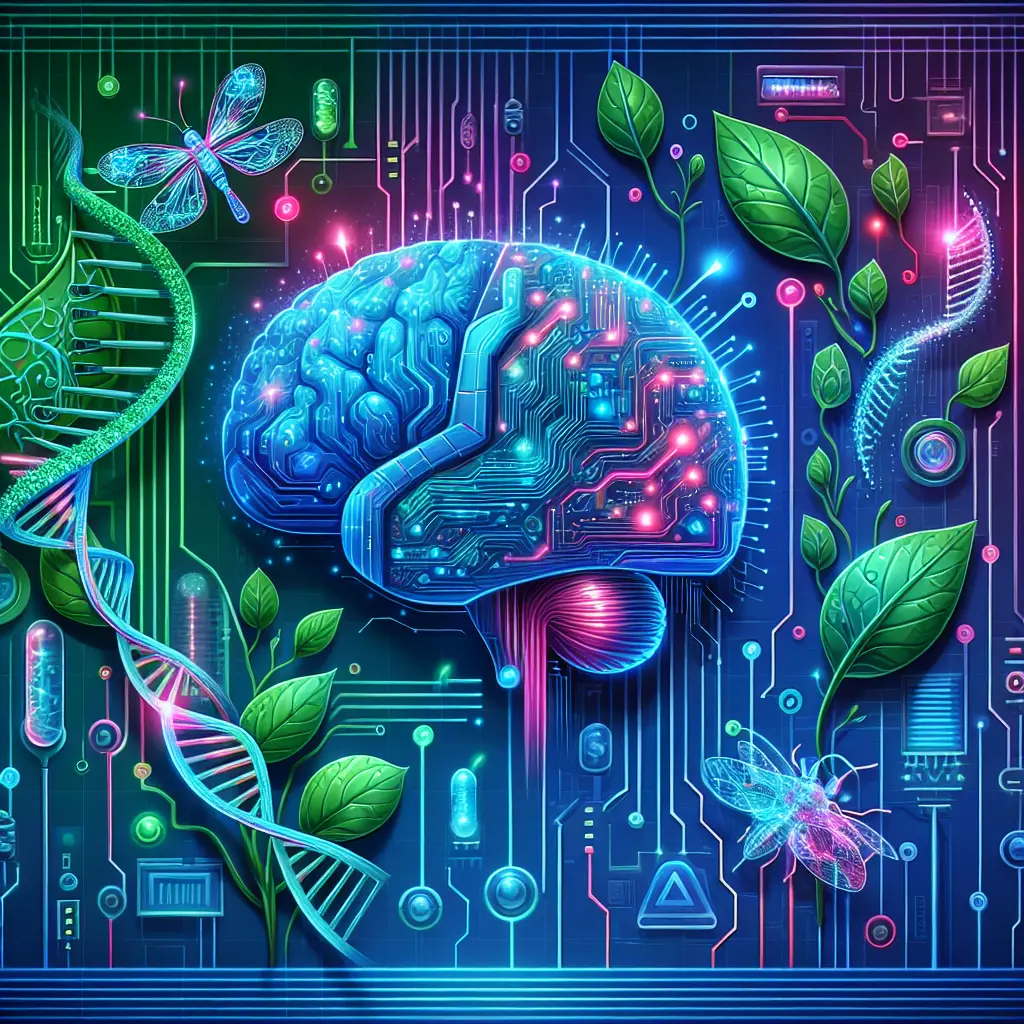
Bio-inspired computing refers to the development of computational methods and algorithms inspired by natural biological processes and systems. Drawing from concepts such as evolution, neural networks, swarm intelligence, and immune systems, this approach seeks to solve complex problems by mimicking the adaptive, distributed, and self-organizing behaviors found in nature. Examples include genetic algorithms, artificial neural networks, and ant colony optimization, all of which leverage nature’s problem-solving strategies for innovative technological solutions.
💡 Key Takeaways
- Understand the main bio-inspired computing paradigms (evolutionary algorithms, neural networks, swarm intelligence, and immune-inspired methods) and how they mimic nature.
- Learn how these methods solve complex problems by exploration, adaptation, and cooperation, inspired by evolution, brains, swarms, and immune systems.
- Explore space and future-tech applications such as autonomous systems, trajectory optimization, fault tolerance, and resource management using bio-inspired approaches.
- Recognize advantages and limitations of bio-inspired computing, including robustness, scalability, and computational cost, to know when to use them.
❓ Frequently Asked Questions
What is bio-inspired computing?
Computational methods and algorithms modeled after natural biological processes and systems, such as evolution, neural networks, swarm behavior, and immune mechanisms.
What is a genetic algorithm?
An optimization technique inspired by natural selection that evolves a population of candidate solutions over generations using selection, crossover, and mutation.
How are neural networks used in bio-inspired computing?
They simulate brain-like neuron connections to learn from data, enabling tasks such as pattern recognition, classification, and prediction.
What is swarm intelligence?
The study of how simple, decentralized agents (like ants or birds) coordinate to solve complex problems, leading to algorithms such as ant colony and particle swarm optimization.
How do immune-inspired methods work?
They borrow ideas from the immune system—memory, adaptation, and diversity—to detect anomalies and optimize solutions.