Bio-interfaces refer to the surfaces or boundaries where biological systems interact with artificial materials or devices, enabling communication between living tissues and engineered components. Wetware describes the biological components, such as the brain or nervous system, that process information similarly to computer hardware. Together, "Bio-interfaces & Wetware" encompasses the study and development of technologies that connect biological organisms with electronic or mechanical systems, facilitating seamless integration and information exchange.
Bio-interfaces & Wetware
Bio-interfaces refer to the surfaces or boundaries where biological systems interact with artificial materials or devices, enabling communication between living tissues and engineered components. Wetware describes the biological components, such as the brain or nervous system, that process information similarly to computer hardware. Together, "Bio-interfaces & Wetware" encompasses the study and development of technologies that connect biological organisms with electronic or mechanical systems, facilitating seamless integration and information exchange.
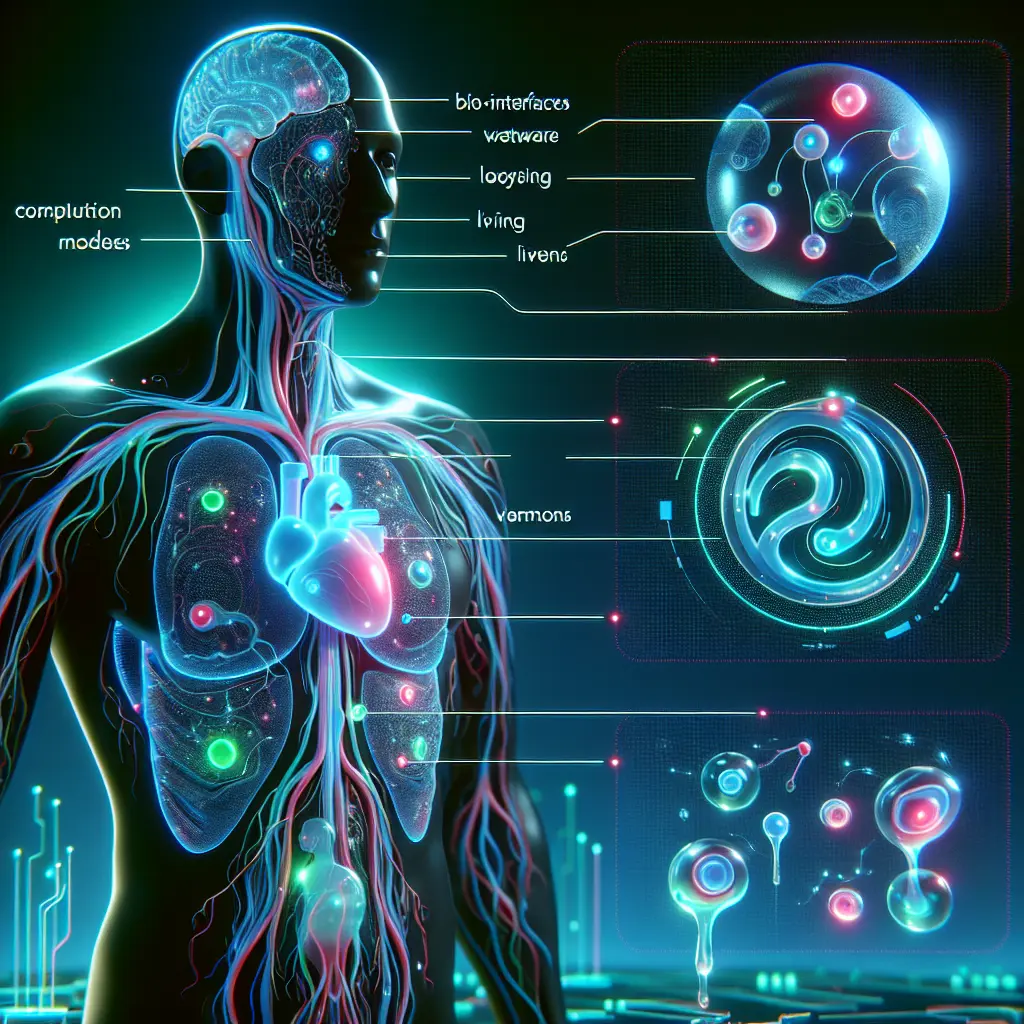
💡 Key Takeaways
- Define bio-interfaces and wetware and how they enable communication between biology and devices.
- Distinguish tissue-device interfaces from biological information processing in wetware.
- Explore real-world and sci-fi examples of bio-interfaces, brain-computer interfaces, and neural augmentation.
- Discuss challenges, ethics, and future implications of integrating biology with technology.
❓ Frequently Asked Questions
What is a bio-interface?
A boundary where living tissue interacts with artificial materials or devices, enabling two-way communication between biology and technology.
What is wetware?
Biological components, such as the brain or nervous system, that process information, often contrasted with hardware and software.
How do bio-interfaces enable communication between biology and machines?
They sense biological signals (like neural activity) and convert them into electrical/optical signals for devices, and can deliver stimulation back to the tissue.
What are common examples or applications of bio-interfaces and wetware?
Neural implants and brain–computer interfaces, cochlear implants, prosthetic control via electrodes, and wearable biosensors.