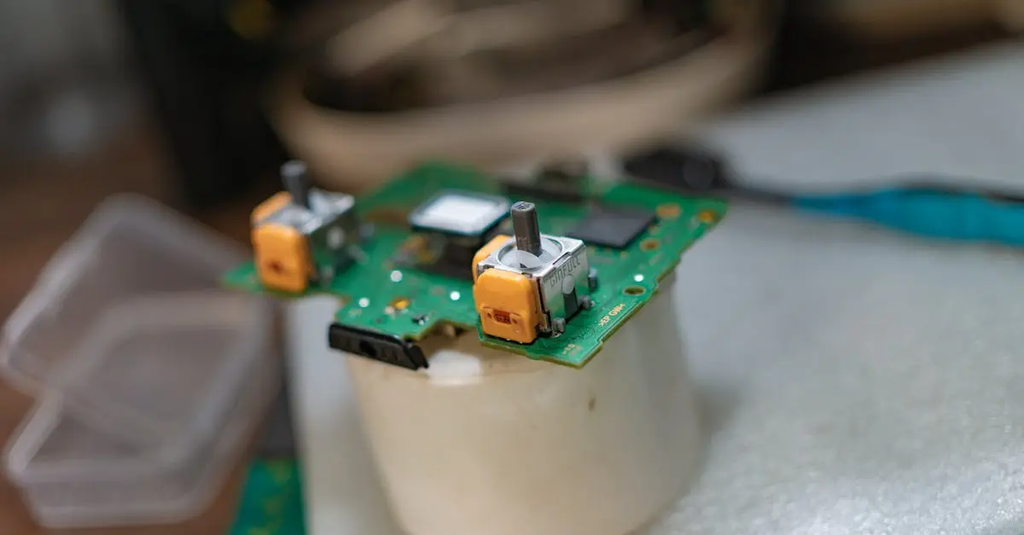
Boost and buck-boost topologies are DC-DC converter circuit configurations used in electronics to regulate voltage levels. A boost converter steps up (increases) the input voltage to a higher output voltage, while a buck-boost converter can either step up or step down the input voltage, providing an output voltage that can be greater or less than the input. Both topologies are essential for efficient power management in various electronic devices and systems.
Boost and buck-boost topologies
Boost and buck-boost topologies are DC-DC converter circuit configurations used in electronics to regulate voltage levels. A boost converter steps up (increases) the input voltage to a higher output voltage, while a buck-boost converter can either step up or step down the input voltage, providing an output voltage that can be greater or less than the input. Both topologies are essential for efficient power management in various electronic devices and systems.

💡 Key Takeaways
- Differentiate boost and buck-boost topologies and explain when each is typically used.
- Explain how duty cycle controls the output voltage in each topology.
- Identify the main components (switch, diode, inductor, capacitor) and describe the energy-transfer cycle during on and off phases.
- Discuss practical considerations such as efficiency, output ripple, control strategies (PWM with feedback), and common applications.
❓ Frequently Asked Questions
What is a boost converter and how does it work?
A boost converter steps up an input voltage by storing energy in an inductor when a switch is on; when the switch turns off, the energy is transferred to the output through a diode and capacitor, yielding a higher output voltage than the input.
What is a buck-boost converter and how is it different from a boost converter?
A buck-boost converter can both raise or lower the input voltage. In the common inverting form it produces a negative output relative to ground; non-inverting variants (like SEPIC or Cuk) can provide a positive output. All use energy transfer via an inductor, switch, diode, and capacitor.
What are the basic voltage relationships for these topologies in continuous conduction mode?
For a CCM boost: Vout ≈ Vin / (1 − D), where D is the duty cycle. For an inverting buck-boost: |Vout| ≈ Vin · D / (1 − D), with Vout negative; increasing D increases the output magnitude.
When should you choose a boost vs a buck-boost topology?
Choose a boost when Vin is always below the needed Vout and a simple step-up is sufficient. Choose a buck-boost when Vin can be either above or below the desired output, or when an inverted (negative) output is acceptable.