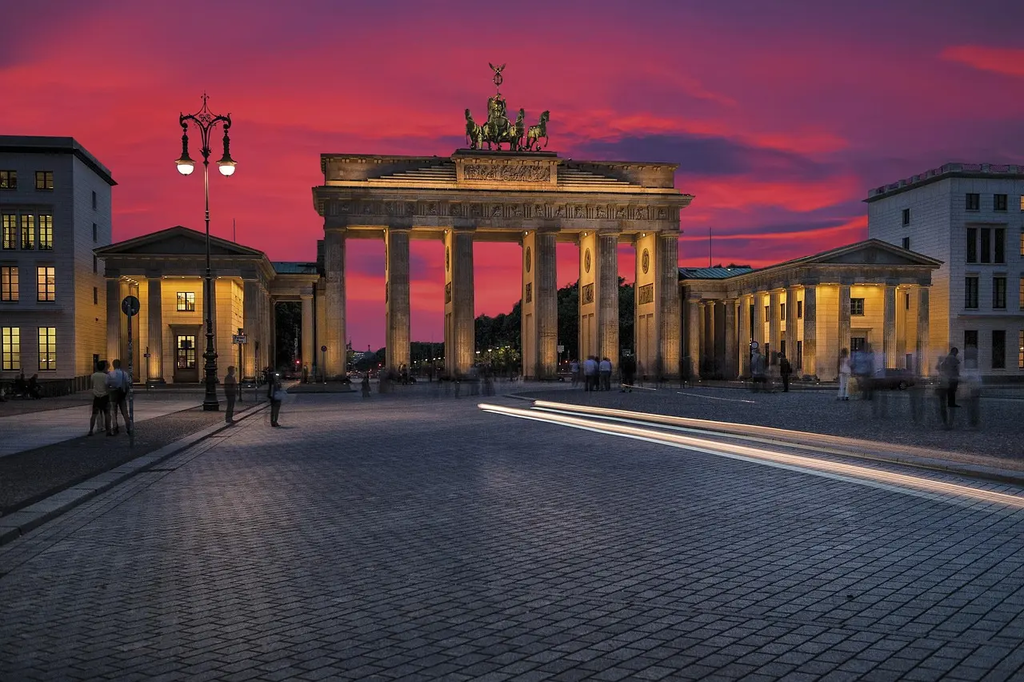
The Brandenburg Gate is a historic neoclassical monument located in Berlin, Germany. Built in the late 18th century, it once marked the entrance to the city and has become a symbol of German unity and peace. The gate features twelve Doric columns and is topped by a chariot drawn by four horses. Today, it is a popular tourist attraction and an iconic landmark representing Berlin’s rich history.
Brandenburg Gate
The Brandenburg Gate is a historic neoclassical monument located in Berlin, Germany. Built in the late 18th century, it once marked the entrance to the city and has become a symbol of German unity and peace. The gate features twelve Doric columns and is topped by a chariot drawn by four horses. Today, it is a popular tourist attraction and an iconic landmark representing Berlin’s rich history.
💡 Key Takeaways
- Locate the Brandenburg Gate in Berlin and its original function as a city gate in the 18th century.
- Describe its neoclassical design and the iconic Quadriga statue crowning the gate.
- Learn how the gate symbolized division during the Cold War and its reunification after the Berlin Wall fell.
- Understand the Brandenburg Gate's enduring significance as a symbol of German history and European unity today.
❓ Frequently Asked Questions
What is the Brandenburg Gate and where is it located?
The Brandenburg Gate is a neoclassical monument in Berlin, Germany, located at the western end of Unter den Linden on Pariser Platz.
When was it built and who designed it?
Construction took place from 1788 to 1791 and was designed by Carl Gotthard Langhans, inspired by classical Greek architecture.
What is the Quadriga and what is its history?
The Quadriga is a sculpture of a chariot drawn by four horses atop the gate, created by Johann Gottfried Schadow. Napoleon took it to Paris in 1806; it was returned in 1814 and has since symbolized resilience and victory.
Why is the Brandenburg Gate significant in modern history?
It stood near the Berlin Wall as a symbol of Germany's division during the Cold War, and after the 1989 fall of the Wall it became a powerful symbol of German reunification and freedom.