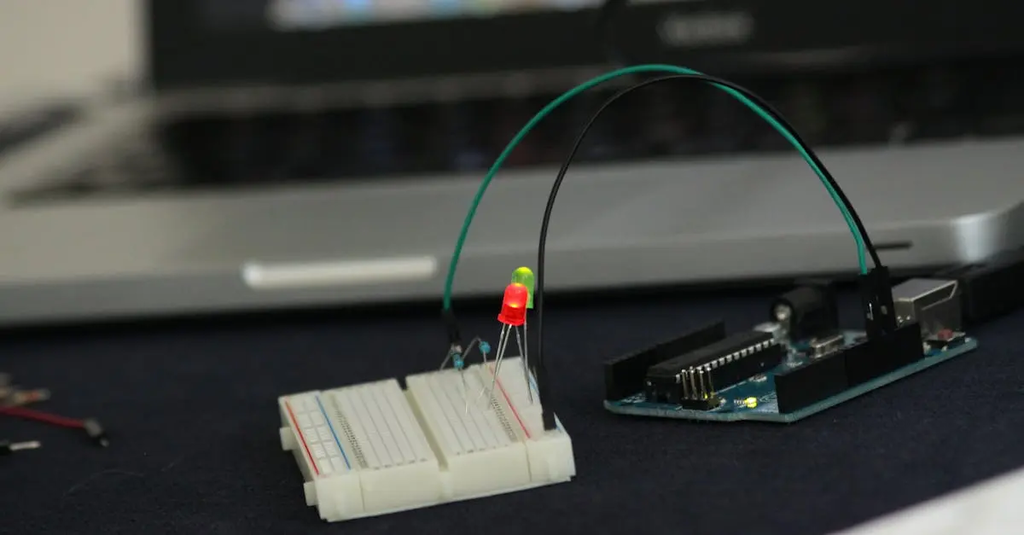
Breadboards and protoboards are essential tools in electronics for building and testing circuits without soldering. A breadboard allows easy insertion and removal of components and wires, making it ideal for prototyping and experimentation. It has interconnected rows and columns for component leads. Protoboards, also called stripboards or perfboards, are used for more permanent prototypes; components are soldered onto copper pads or strips to create lasting connections. Both are fundamental for circuit design and development.
Breadboard and protoboard basics+50
Breadboards and protoboards are essential tools in electronics for building and testing circuits without soldering. A breadboard allows easy insertion and removal of components and wires, making it ideal for prototyping and experimentation. It has interconnected rows and columns for component leads. Protoboards, also called stripboards or perfboards, are used for more permanent prototypes; components are soldered onto copper pads or strips to create lasting connections. Both are fundamental for circuit design and development.
💡 Key Takeaways
- Differentiate breadboard (reusable, no solder) from protoboard (permanent, soldered) for prototyping.
- Read a standard breadboard layout: power rails, central terminal strips, and groups of five holes that connect together.
- Place components and jumpers correctly (ICs across the center, short leads, tidy power rails) to avoid wiring errors.
- Choose the right board for your project and plan layouts with basic checks (multimeter verification) for reliable prototypes.
❓ Frequently Asked Questions
What is a breadboard and why use it for prototyping?
A breadboard is a reusable, solderless board that lets you build and test circuits quickly by inserting components and jumper wires without soldering.
What is a protoboard (perfboard) and how does it differ from a breadboard?
A protoboard is a fixed board with a grid of holes that require soldering to make connections, used for permanent builds. Unlike a breadboard, it has no pre-wired connections.
How are connections organized on a typical breadboard?
Holes are arranged in groups; most groups of five holes share the same node in the central area, and there are separate power rails on the sides for supply distribution.
When should you switch from breadboard to protoboard?
Move to a protoboard when your circuit works reliably and you want a durable, permanent build that won’t come apart with repeated testing.