British satire from Swift to Waugh refers to the tradition of sharp, witty social and political criticism in British literature, spanning from the 18th-century works of Jonathan Swift, such as "Gulliver’s Travels," to the early 20th-century novels of Evelyn Waugh, like "Decline and Fall." This period showcases the evolution of satire as a tool to expose hypocrisy, mock societal norms, and provoke thought through humor, irony, and exaggeration.
British satire from Swift to Waugh
British satire from Swift to Waugh refers to the tradition of sharp, witty social and political criticism in British literature, spanning from the 18th-century works of Jonathan Swift, such as "Gulliver’s Travels," to the early 20th-century novels of Evelyn Waugh, like "Decline and Fall." This period showcases the evolution of satire as a tool to expose hypocrisy, mock societal norms, and provoke thought through humor, irony, and exaggeration.
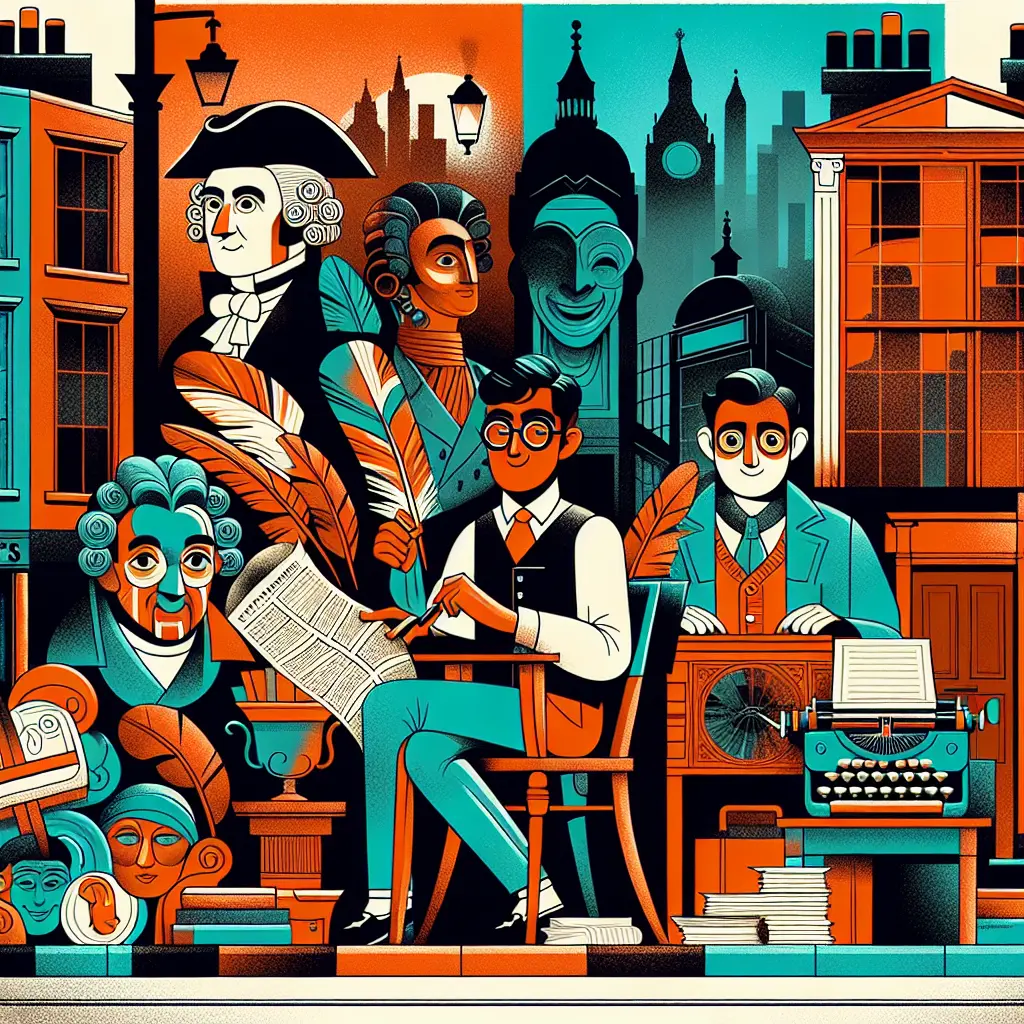
💡 Key Takeaways
- Identify the main targets of British satire from Swift to Waugh (politics, religion, class, empire) and what they critique in their eras.
- Describe common satirical techniques used across the period—irony, parody, understatement, and travelogue/manners satire—and how they convey critique.
- Explain how Swift's Gulliver's Travels and Waugh's Decline and Fall use form and voice to shape satirical impact.
- Trace the historical shift from 18th-century Enlightenment critique to early 20th-century social portraiture and postwar cynicism.
- Compare how authors expose hypocrisy and pretension in different social classes and institutions, noting changes in tone and targets.
❓ Frequently Asked Questions
What is satire and how does it work in Gulliver's Travels?
Satire uses humor, irony, and exaggeration to critique society, politics, and human folly. In Gulliver's Travels, Swift targets empire, politics, and religious pretensions by placing Gulliver in absurd situations that reveal real-world flaws.
Which authors and time periods are linked in the Swift to Waugh satire tradition?
The tradition spans from Jonathan Swift in the 18th century to Evelyn Waugh in the early 20th century, emphasizing sharp social and political critique across generations.
How does Evelyn Waugh's Decline and Fall exemplify British satire?
Decline and Fall mocks the British class system, politics, and moral vanity through Paul Pennyfeather's misadventures, exposing the vanity and hypocrisy of institutions.
What are common techniques used in British satire from Swift to Waugh?
Techniques include irony, parody, exaggeration, witty narration, and critical depictions of institutions such as government, church, and class.