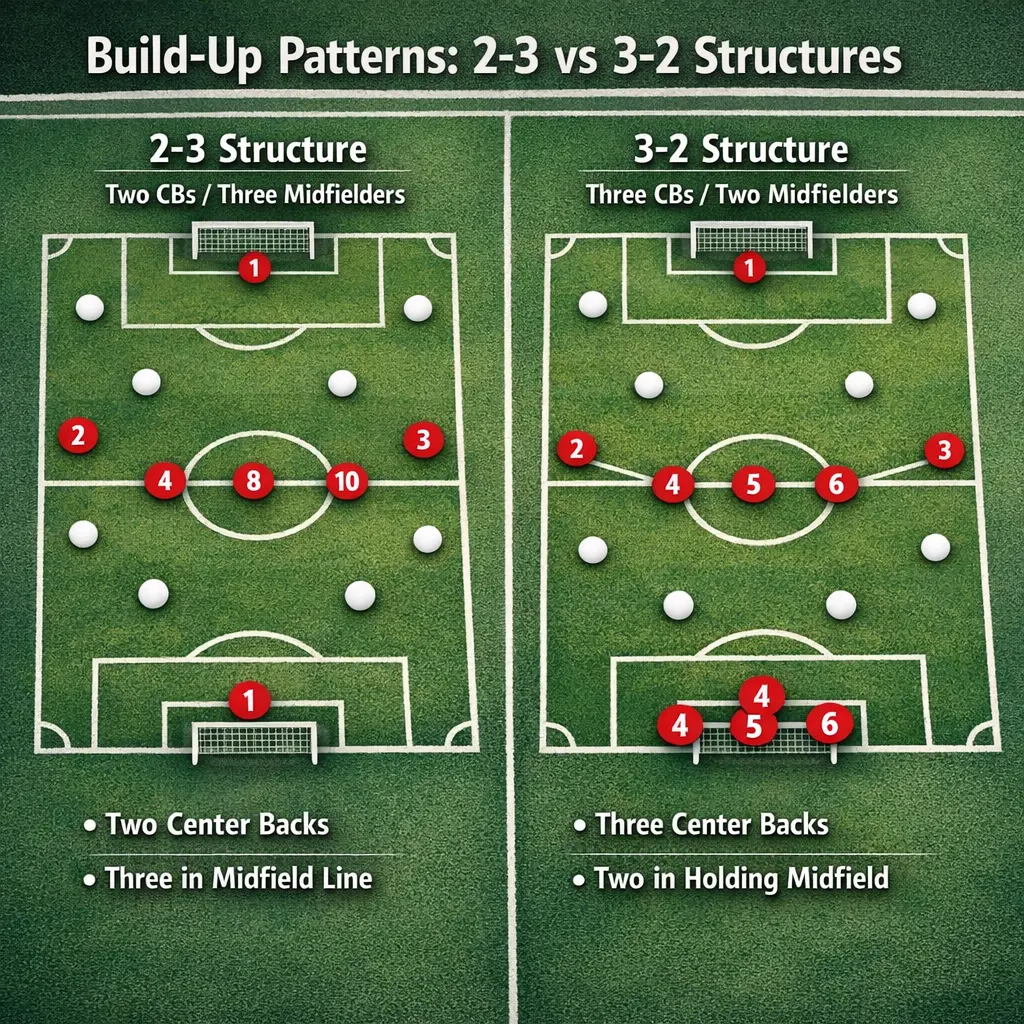
Build-up patterns refer to how a team organizes its players during the initial phases of possession. Manchester City often alternates between 2-3 and 3-2 structures. In a 2-3, two center-backs stay deep while three midfielders form a line ahead, aiding ball progression and width. In a 3-2, a full-back or midfielder drops alongside center-backs, creating a back three, with two midfielders ahead, enhancing stability and control in transitions.
Build-Up Patterns: 2-3 vs 3-2 Structures
Build-up patterns refer to how a team organizes its players during the initial phases of possession. Manchester City often alternates between 2-3 and 3-2 structures. In a 2-3, two center-backs stay deep while three midfielders form a line ahead, aiding ball progression and width. In a 3-2, a full-back or midfielder drops alongside center-backs, creating a back three, with two midfielders ahead, enhancing stability and control in transitions.
💡 Key Takeaways
- Understand what 2-3 and 3-2 build-up structures are and how they differ in sequence progression.
- Compare how starting with two steps followed by three versus starting with three steps followed by two affects pace and flow.
- Identify real-world contexts where each pattern works best and why.
- Practice creating a short build-up example using each pattern and evaluate its impact on tension and release.
❓ Frequently Asked Questions
What are '2-3' and '3-2' build-up patterns?
They are rhythmic groupings used to grow intensity in a phrase: 2-3 means two notes (or beats) followed by three, while 3-2 means three then two. The sequence shapes tension and release.
How do these patterns influence feel and energy?
2-3 creates a quicker rise with steady push, whereas 3-2 often yields a longer pull before the peak, producing a more dramatic payoff.
When should you choose 2-3 vs 3-2 in a composition or quiz context?
Choose based on groove and tempo: use 2-3 for tight, forward momentum; use 3-2 for suspenseful or expansive phrasing.
Can these patterns apply to melodies and dynamics as well as rhythms?
Yes. The grouping idea can guide melodic motifs and dynamic layers, shaping where accents land to build anticipation.
What are common mistakes to avoid when using these patterns?
Overusing the pattern, forcing it into the groove, or neglecting harmony and phrasing. Ensure each group aligns with the beat and musical goal.