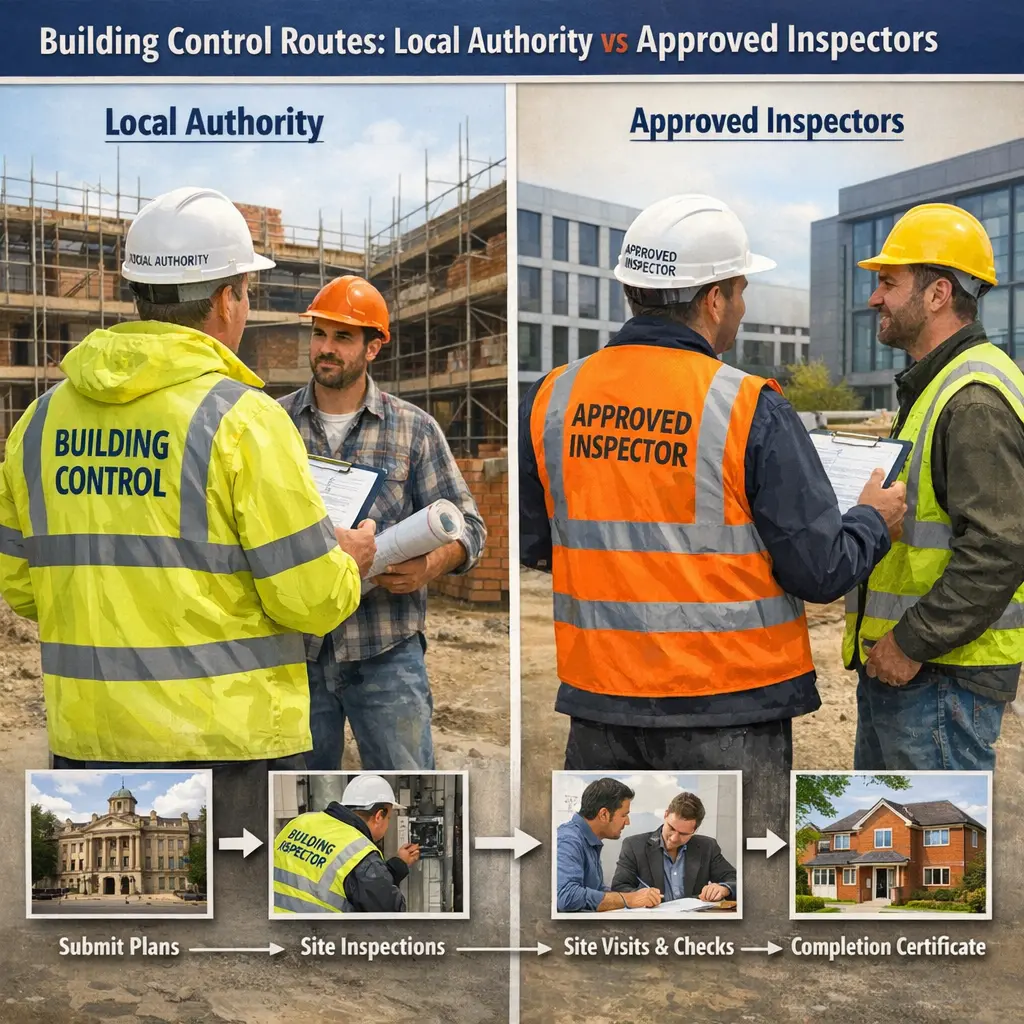
Building control routes refer to the two main options for ensuring construction projects comply with legal and statutory requirements in the UK: local authority building control and approved inspectors. Local authorities are public bodies responsible for enforcing building regulations, while approved inspectors are private sector professionals authorized to carry out inspections. Both routes require adherence to safety and quality standards, but differ in their processes, fees, and levels of flexibility offered to developers and builders.
Building control routes: local authority vs approved inspectors
Building control routes refer to the two main options for ensuring construction projects comply with legal and statutory requirements in the UK: local authority building control and approved inspectors. Local authorities are public bodies responsible for enforcing building regulations, while approved inspectors are private sector professionals authorized to carry out inspections. Both routes require adherence to safety and quality standards, but differ in their processes, fees, and levels of flexibility offered to developers and builders.
💡 Key Takeaways
- Understand what 'building control routes' are and why they exist under building regulations.
- Identify the two main routes—local authority building control and approved inspectors—and who operates each.
- Learn the typical process flow (plan checking, site inspections, and final certificate) and how it differs between routes.
- Know how to choose the right route for a project by considering factors such as complexity, fees, timelines, and service quality.
❓ Frequently Asked Questions
What are the two main routes for Building Control?
Local authority building control and private Approved Inspectors (AIs); both check compliance with Building Regulations, approve plans, and carry out site inspections.
What does the local authority route involve?
A council building control team reviews plans, conducts site inspections during construction, and issues the final certificate when work complies.
What is an Approved Inspector and how do they differ from the local authority route?
An Approved Inspector is a private company authorized to enforce Building Regulations. They can offer faster or more flexible plan checks and inspections and are paid by the client; they must be registered and comply with regulations.
How should you decide which route to use?
Consider project size and complexity, timeline, budget, inspector availability, and the reputation/track record of the provider.
What happens at the end of the process with either route?
Both routes provide a final Building Regulations compliance or completion certificate once all inspections are satisfactorily completed.