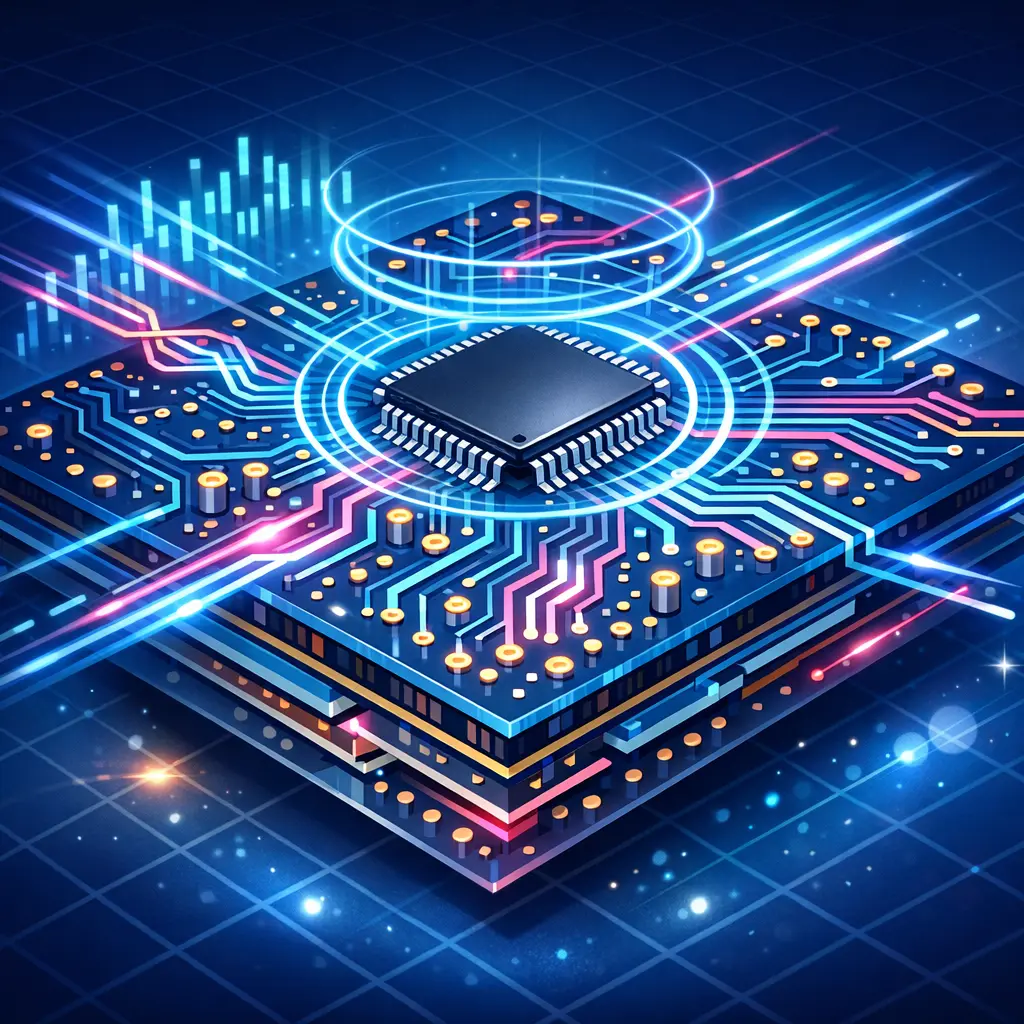
Bus interfaces in digital electronics and computing are systems that enable communication between components within a computer. They consist of three main types of lines: address, data, and control. The address bus carries information about where data should be sent or retrieved, the data bus transfers the actual data, and the control bus manages signals that coordinate operations, ensuring proper timing and direction of data flow between the processor, memory, and peripherals.
Bus Interfaces: Address, Data, Control
Bus interfaces in digital electronics and computing are systems that enable communication between components within a computer. They consist of three main types of lines: address, data, and control. The address bus carries information about where data should be sent or retrieved, the data bus transfers the actual data, and the control bus manages signals that coordinate operations, ensuring proper timing and direction of data flow between the processor, memory, and peripherals.

💡 Key Takeaways
- Define what a bus interface is and the purpose of its address, data, and control lines.
- Explain how the address bus selects a memory or I/O target during a bus cycle.
- Describe how the data bus transfers the payload between components and why bus width matters.
- Describe how control lines (read, write, enable) coordinate timing, sequencing, and handshaking on the bus.
❓ Frequently Asked Questions
What is a bus interface in a computer system?
A bus interface is the set of physical lines that connect a processor, memory, and peripherals, allowing them to transfer data, addresses, and control signals. It typically comprises separate address, data, and control buses.
What does the address bus do?
The address bus carries the location (address) of the memory or I/O device to access. Its width defines how much address space can be addressed.
What does the data bus do?
The data bus carries the actual data being transferred between devices. Its width determines how much data can move in one transfer, and it may carry data in both directions.
What is the control bus and what signals are common?
The control bus carries signals that coordinate operations, such as read (RD), write (WR), chip select (CS), and timing/enable signals. These tell devices when to drive or sample the data bus and when a transfer starts or ends.
How do address, data, and control buses work together during a read or write?
For a read, the address is placed on the address bus and RD is asserted; the target drives data onto the data bus for the master to latch. For a write, the address is placed on the address bus, WR is asserted, and the master drives data onto the data bus for the target to latch. The cycle ends when signals return to idle.