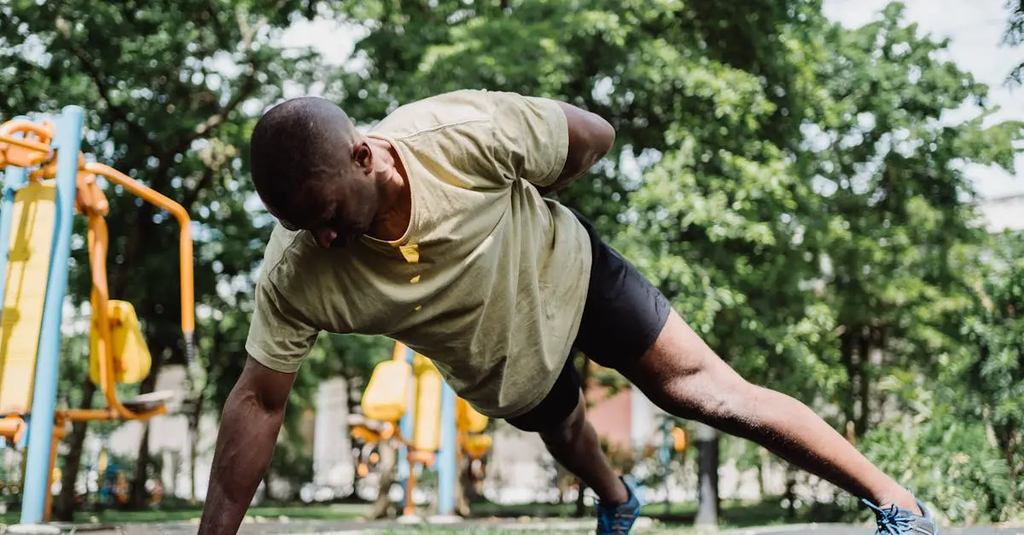
Calisthenics progressions from push-up to one-arm variations involve gradually increasing the difficulty of push-ups to build strength, stability, and control. Starting with standard push-ups, athletes advance through incline, decline, archer, and pseudo-planche push-ups, progressively shifting more weight onto one arm. This systematic approach develops the necessary muscle coordination, core engagement, and upper body strength required to perform challenging one-arm push-ups safely and effectively.
Calisthenics Progressions: Push-up to One-Arm Variations
Calisthenics progressions from push-up to one-arm variations involve gradually increasing the difficulty of push-ups to build strength, stability, and control. Starting with standard push-ups, athletes advance through incline, decline, archer, and pseudo-planche push-ups, progressively shifting more weight onto one arm. This systematic approach develops the necessary muscle coordination, core engagement, and upper body strength required to perform challenging one-arm push-ups safely and effectively.
💡 Key Takeaways
- Follow a stepwise progression from standard push-ups to one-arm variations to build strength, stability, and control.
- Understand how incline, standard, decline, archer, and pseudo-planche push-ups shift load and target different muscle groups.
- Prioritize form, tempo, and gradual overload to increase difficulty safely as you progress.
- Plan, assess, and set milestones to safely transition between stages and measure progress.
❓ Frequently Asked Questions
What is the goal of calisthenics progressions from push-ups to one-arm variations?
To safely build strength, stability, and control by gradually increasing push-up difficulty and loading toward more challenging, unilateral variations.
What is the progression order described in the article?
Starting with standard push-ups, then incline push-ups, followed by decline push-ups, then archer push-ups, and finally pseudo-planche push-ups, progressively shifting more load toward one arm.
What are the main benefits of using this progression?
Develops upper-body and core strength, improves shoulder stability and balance, and reduces injury risk by training in manageable, incremental steps.
What are key form cues to follow at each stage?
Keep a straight head-to-toe line, engage the core, maintain controlled movements, keep elbows from flaring, and progress only when the current variation can be done with good form.