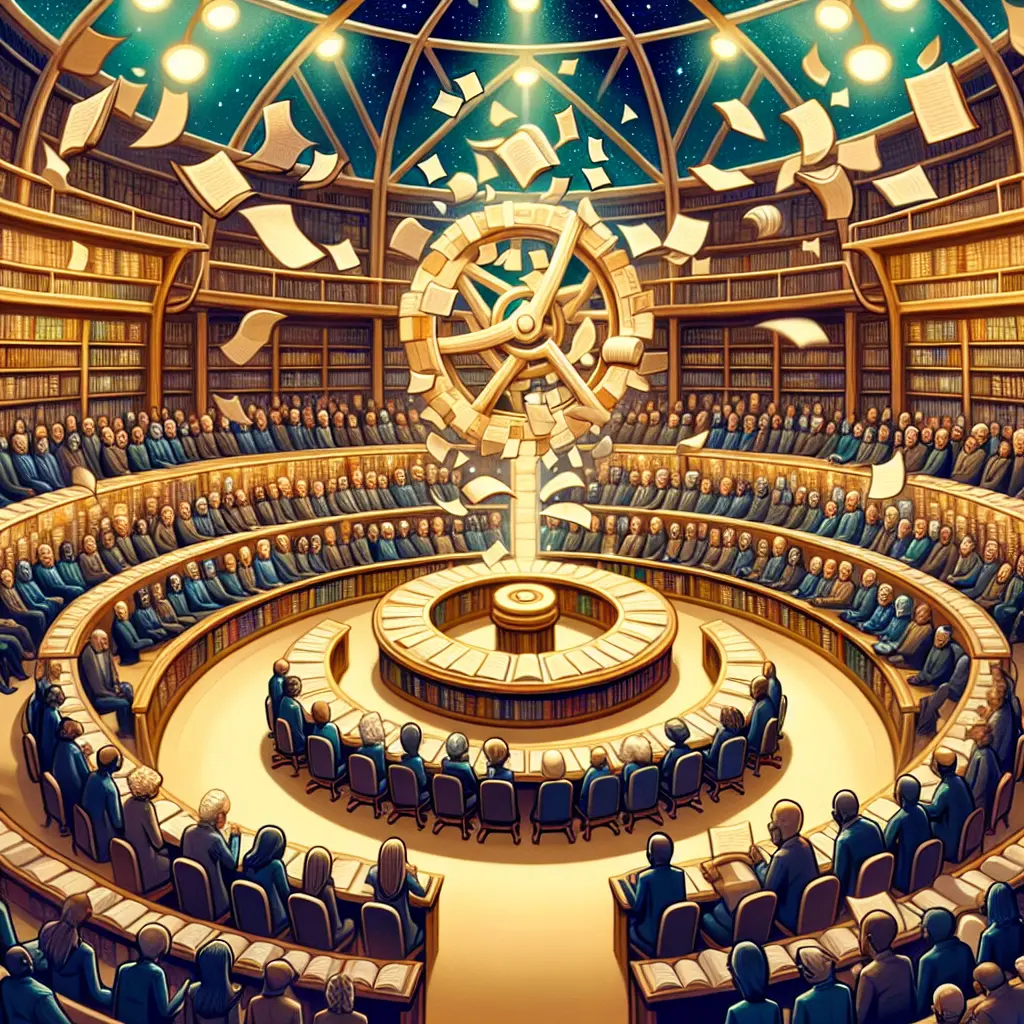
Canon formation refers to the process by which certain texts, works, or ideas are selected and recognized as authoritative or essential within a particular field, tradition, or community. Debates surrounding canon formation often involve discussions about inclusion, exclusion, cultural values, and power dynamics, questioning whose voices are represented and whose are marginalized. These debates can reshape understandings of tradition, identity, and what is considered significant or legitimate knowledge.
Canon Formation and Debates
Canon formation refers to the process by which certain texts, works, or ideas are selected and recognized as authoritative or essential within a particular field, tradition, or community. Debates surrounding canon formation often involve discussions about inclusion, exclusion, cultural values, and power dynamics, questioning whose voices are represented and whose are marginalized. These debates can reshape understandings of tradition, identity, and what is considered significant or legitimate knowledge.
💡 Key Takeaways
- Define canon formation and why certain texts are considered essential in a field or tradition.
- Identify criteria (impact, longevity, influence, and cultural significance) used to determine canonicity.
- Explore debates over inclusion, exclusion, bias, and representation in the canon.
- Understand how canon debates reflect and shape cultural values, and how canons evolve over time.
❓ Frequently Asked Questions
What is canon formation in books and reading?
Canon formation is the process by which certain texts are recognized as authoritative or essential within a field, tradition, or community, establishing what is read and valued.
How does a canon get formed or updated?
It develops through scholarly discussion, teaching, publishing, awards, and community consensus; canons evolve as new works gain prominence and cultural values shift.
What criteria influence inclusion in a canon?
Common criteria include literary quality, historical influence, and ongoing readership or scholarly interest; criteria vary across fields and can reflect power dynamics.
What are common debates about canon formation?
Debates often focus on inclusion vs. exclusion of marginalized voices, representation across cultures, and balancing tradition with new or diverse perspectives.