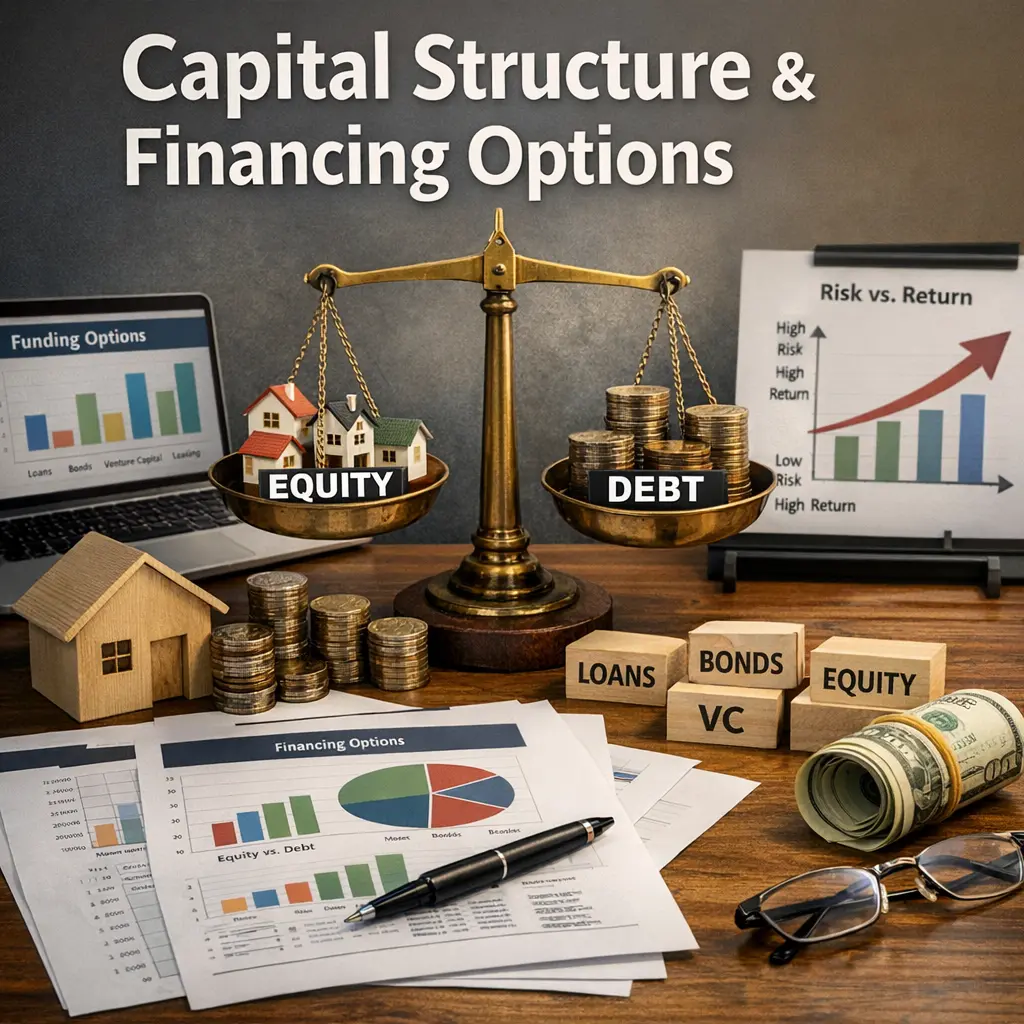
Capital structure refers to the mix of debt and equity a company uses to finance its operations and growth. Financing options are the various methods available for raising capital, such as issuing shares, taking loans, or using retained earnings. Effective management of capital structure and financing options is essential in financial management, as it impacts a business’s risk, cost of capital, and overall financial stability, influencing both short-term operations and long-term strategic goals.
Capital Structure & Financing Options
Capital structure refers to the mix of debt and equity a company uses to finance its operations and growth. Financing options are the various methods available for raising capital, such as issuing shares, taking loans, or using retained earnings. Effective management of capital structure and financing options is essential in financial management, as it impacts a business’s risk, cost of capital, and overall financial stability, influencing both short-term operations and long-term strategic goals.
💡 Key Takeaways
- Identify the main components of capital structure: debt, equity, and hybrid instruments.
- Compare debt and equity financing: costs, risk, and impact on control.
- Review common financing options (bank loans, bonds, venture capital, mezzanine financing, leases) and when to use them.
- Discuss factors that influence the optimal capital structure (tax considerations, market conditions, cash flow stability, growth objectives) and basic trade-off concepts.
❓ Frequently Asked Questions
What is capital structure?
The mix of a company's long-term funding sources (primarily debt and equity) used to finance assets and operations. The balance affects risk and the cost of capital.
What is the difference between debt financing and equity financing?
Debt financing borrows funds to be repaid with interest and does not dilute ownership; equity financing raises funds by selling ownership stakes, which dilutes control and shares profits.
What is the weighted average cost of capital (WACC) and why does it matter?
WACC is the average rate a company pays for its financing, weighted by each source's share. It reflects the costs of debt (net of tax) and equity and is used to judge investment profitability.
What financing options exist beyond plain debt and equity?
Hybrid and alternative options include convertible debt (can convert to equity), preferred stock, mezzanine financing, and lease or asset-backed financing, which can balance cost, control, and flexibility.