Carbon Capture, Hydrogen & Energy Transition (Engineering & Technology Careers) refers to specialized roles focused on developing and implementing technologies that reduce carbon emissions, produce and utilize hydrogen as a clean energy source, and facilitate the shift from fossil fuels to sustainable energy systems. Professionals in this field design, optimize, and manage innovative solutions supporting global climate goals, making significant contributions to cleaner industries and advancing the transition to a low-carbon future.
Carbon Capture, Hydrogen & Energy Transition
Carbon Capture, Hydrogen & Energy Transition (Engineering & Technology Careers) refers to specialized roles focused on developing and implementing technologies that reduce carbon emissions, produce and utilize hydrogen as a clean energy source, and facilitate the shift from fossil fuels to sustainable energy systems. Professionals in this field design, optimize, and manage innovative solutions supporting global climate goals, making significant contributions to cleaner industries and advancing the transition to a low-carbon future.
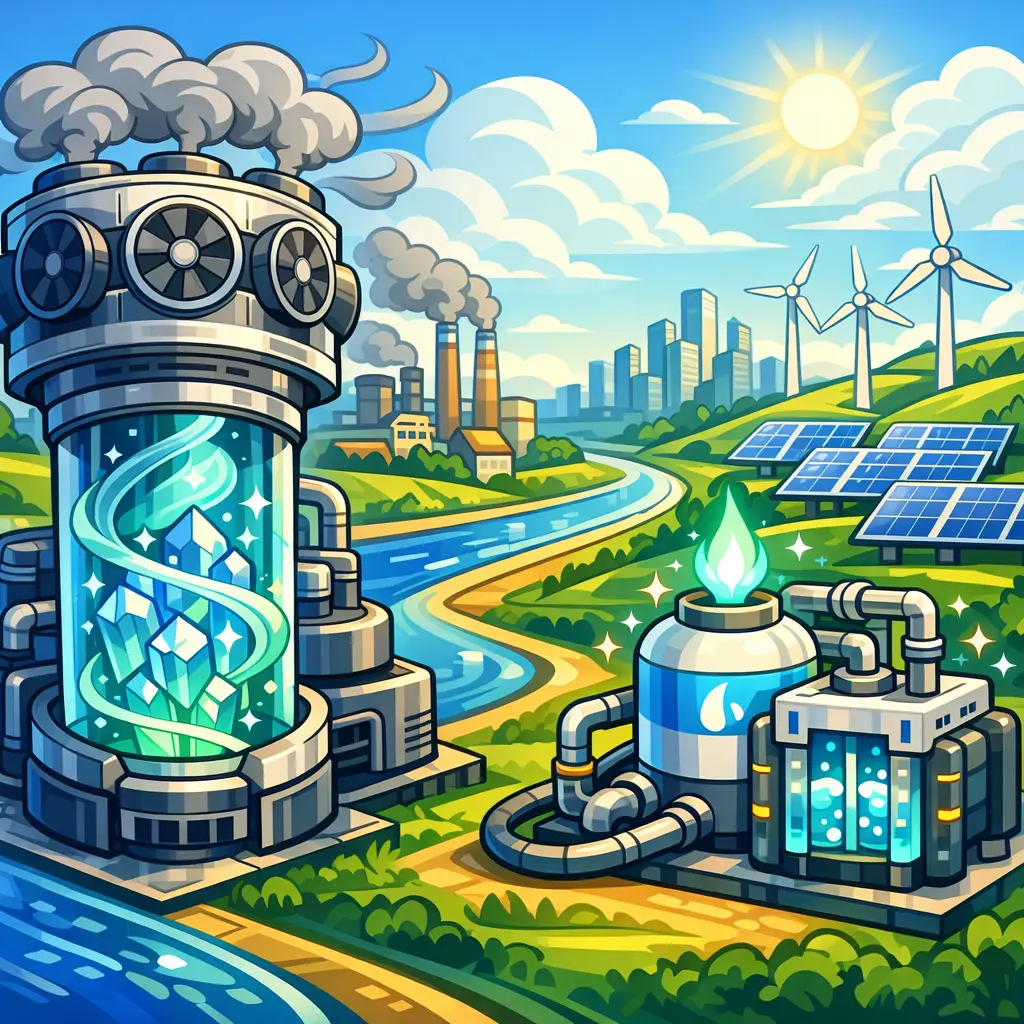
💡 Key Takeaways
- Understand what carbon capture, utilization, and storage (CCUS) is and why it matters for decarbonizing heavy industry and power generation.
- Learn how hydrogen serves as a clean energy carrier and the differences between gray, blue, and green hydrogen.
- Identify the key challenges to scaling CCUS and hydrogen, including cost, energy requirements, and the need for new infrastructure.
- See how CCUS, hydrogen, and other technologies fit into broader energy transition pathways and policy strategies.
❓ Frequently Asked Questions
What is carbon capture and storage (CCS)?
CCS captures CO2 from industrial sources or the air, transports it (often by pipeline), and stores it underground or uses it in products. It aims to prevent CO2 from reaching the atmosphere; CCUS includes utilization of captured CO2.
What is green hydrogen vs blue hydrogen?
Green hydrogen is produced by electrolysis powered by renewable energy, resulting in near-zero emissions. Blue hydrogen is produced from natural gas with CCS to capture the CO2, lowering emissions but not eliminating them.
What are the main methods of carbon capture?
Post-combustion captures CO2 from flue gases; pre-combustion removes CO2 before burning fuel; oxy-fuel burns fuel in pure oxygen to produce a CO2-rich stream for capture.
How does hydrogen fit into the energy transition?
Hydrogen can power hard-to-electrify sectors, enable long-term energy storage, and help decarbonize heavy industry and transport, complementing electricity in a low-carbon system.
What are common challenges to deploying CCS and hydrogen at scale?
High costs, energy requirements, need for extensive infrastructure (pipelines, storage sites), regulatory and public acceptance hurdles, and ensuring real emissions reductions (especially for blue hydrogen).