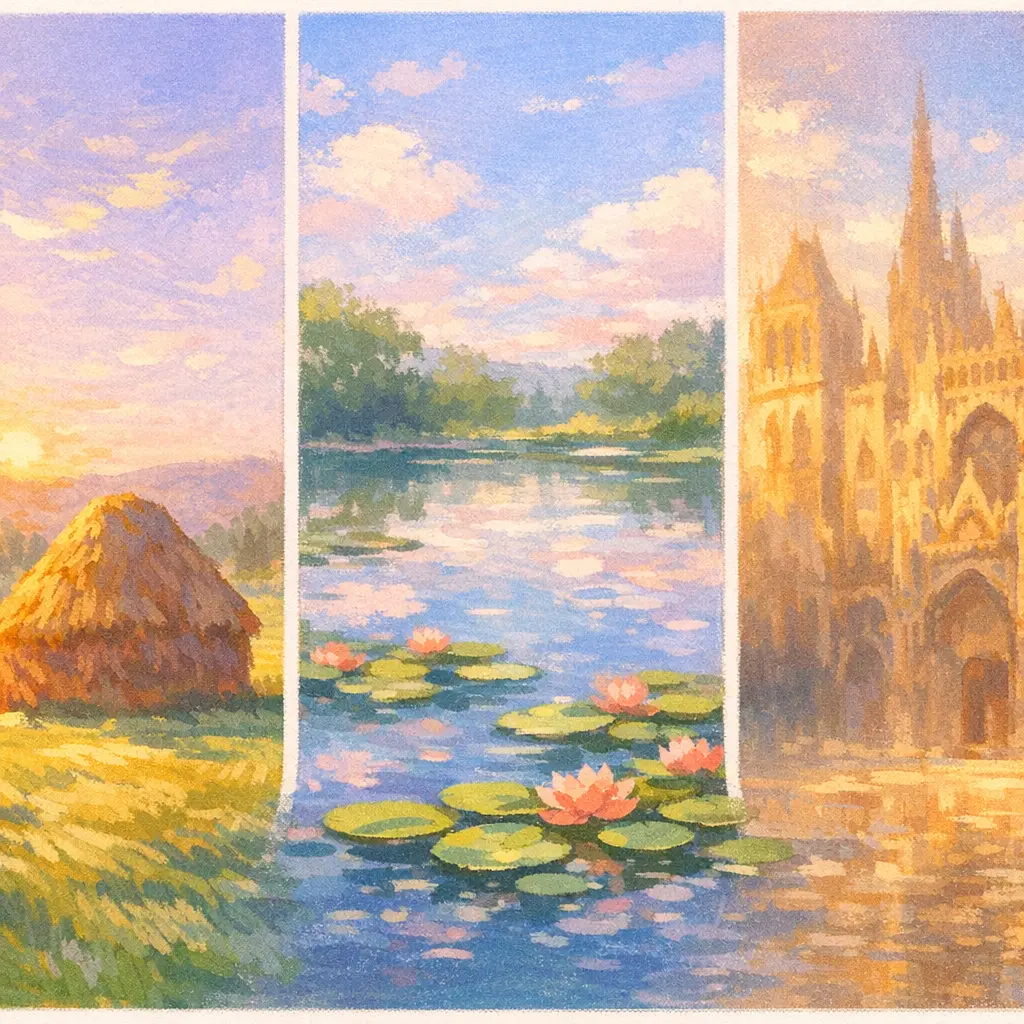
Monet’s series paintings, such as his haystacks, water lilies, and Rouen Cathedral, exemplify his exploration of light, atmosphere, and changing conditions over time. By painting the same subject repeatedly under different lighting and weather, Monet captured fleeting visual effects and emphasized perception over realism. These series played a crucial role in the development of Impressionism, showcasing Monet’s innovative approach and influencing subsequent art movements focused on capturing the transient nature of reality.
Case Study: Monet’s Series Paintings
Monet’s series paintings, such as his haystacks, water lilies, and Rouen Cathedral, exemplify his exploration of light, atmosphere, and changing conditions over time. By painting the same subject repeatedly under different lighting and weather, Monet captured fleeting visual effects and emphasized perception over realism. These series played a crucial role in the development of Impressionism, showcasing Monet’s innovative approach and influencing subsequent art movements focused on capturing the transient nature of reality.
💡 Key Takeaways
- Understand what defines a series painting and why Monet painted the same subjects in multiple versions.
- See how light, season, and weather change the color and mood across Monet's series.
- Spot key stylistic traits in Monet's series, such as loose brushwork and emphasis on light over detail.
- Learn how Monet's series contributed to Impressionism and ideas about perception and time.
❓ Frequently Asked Questions
What is a Monet series?
A group of paintings of the same subject created by Claude Monet to study how light, weather, and time of day change its appearance.
Why did Monet paint the same subjects in different lighting and seasons?
To capture transient effects of light and atmosphere rather than a single moment.
Name two famous Monet series and a defining feature of each.
Haystacks — haystacks shown under varying light and seasons; Water Lilies — expansive pond scenes with reflections and soft, luminous color.
How did Monet's technique evolve across his series?
From more defined brushwork to looser, more luminous strokes and color that emphasizes perception over detail.