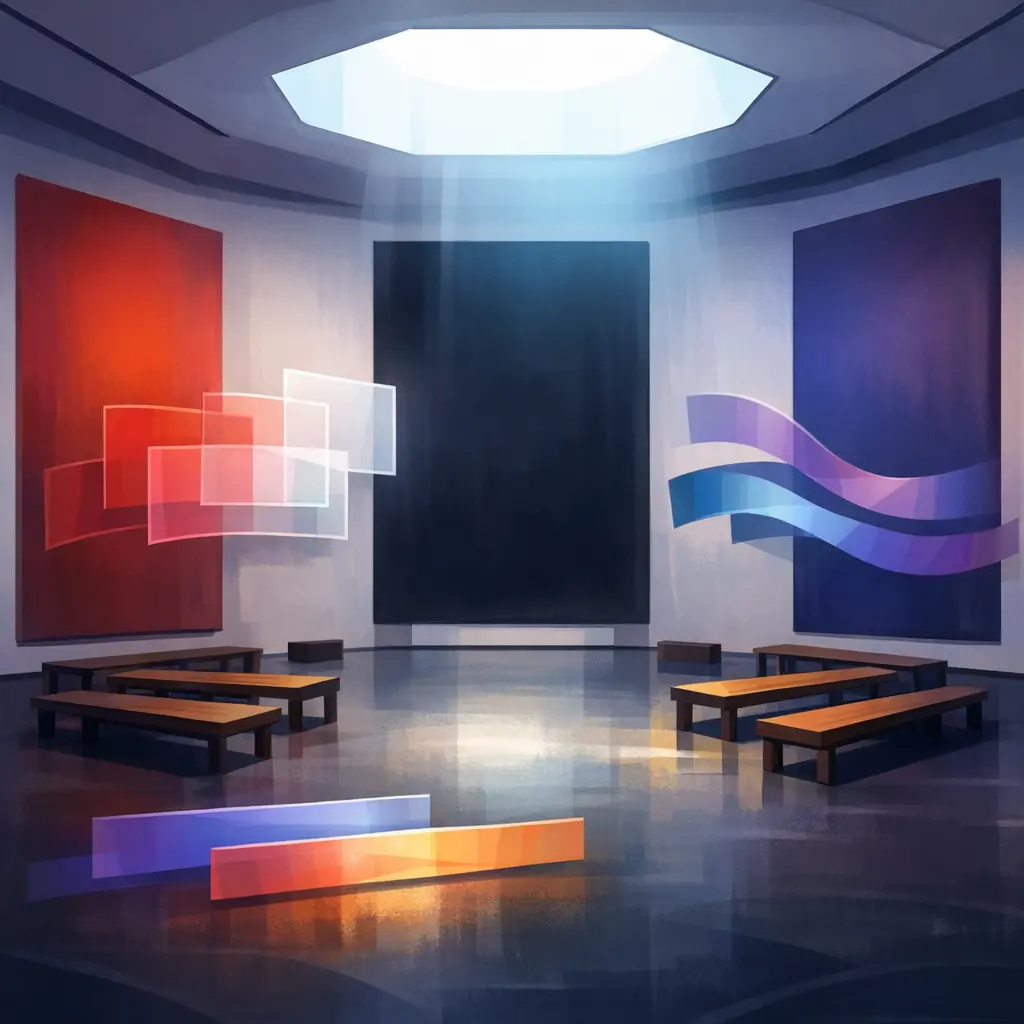
The Rothko Chapel exemplifies the essence of Color Field painting, a movement characterized by large areas of solid color intended to evoke deep emotional responses. Mark Rothko’s monumental canvases within the chapel create a meditative, spiritual environment, encouraging viewers to contemplate color as a vehicle for transcendence and introspection. This case study highlights how Rothko’s use of color and abstraction redefines traditional religious spaces, emphasizing personal experience over explicit iconography.
Case Study: Rothko Chapel and Color Field Meaning
The Rothko Chapel exemplifies the essence of Color Field painting, a movement characterized by large areas of solid color intended to evoke deep emotional responses. Mark Rothko’s monumental canvases within the chapel create a meditative, spiritual environment, encouraging viewers to contemplate color as a vehicle for transcendence and introspection. This case study highlights how Rothko’s use of color and abstraction redefines traditional religious spaces, emphasizing personal experience over explicit iconography.
💡 Key Takeaways
- Understand how Rothko Chapel uses expansive color fields to foster contemplation and emotional response.
- Learn how the chapel’s architecture, lighting, and minimal design interact with color to shape meaning.
- Explore how color, scale, and simplicity convey themes of mortality, transcendence, and spirituality in this case study.
- Compare color-field painting ideas in this context to broader Abstract Expressionist approaches to mood and perception.
❓ Frequently Asked Questions
What is the Rothko Chapel?
A non-denominational contemplative space in Houston, Texas, housing Mark Rothko’s color-field murals. It’s designed for quiet reflection on life and the human condition, welcoming visitors of all backgrounds.
What is color field painting?
A mid-20th-century abstract style that uses large, flat areas of color to evoke mood and meaning, focusing on color and scale rather than figurative form.
How do Rothko's murals convey meaning?
Through large-scale, subtle color fields and the spatial arrangement of panels, inviting personal interpretation and meditative contemplation rather than explicit narratives.
Why is the Rothko Chapel significant in color field art?
It situates color-field paintings in a sacred, architectural space, showing how color, light, and atmosphere can foster contemplation and cross-cultural resonance.