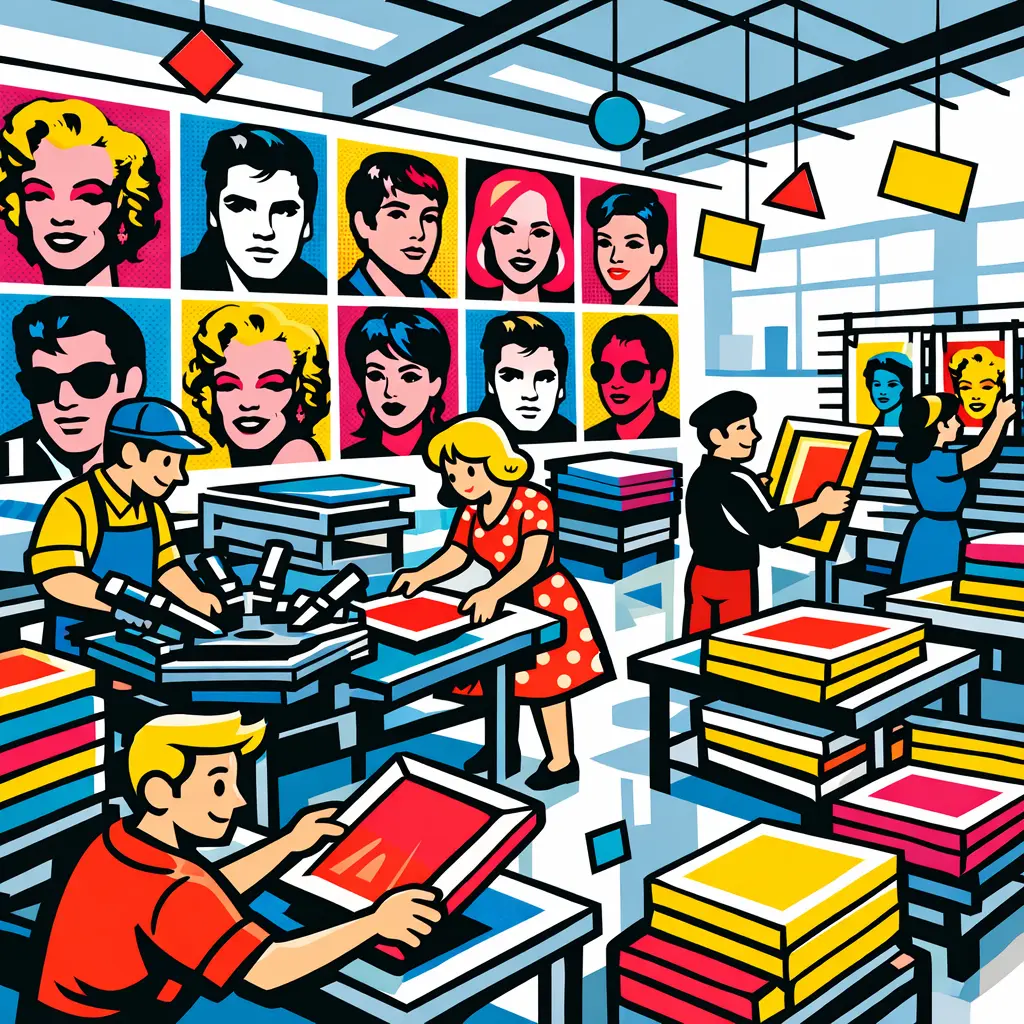
This case study examines Andy Warhol’s Factory as a hub for artistic innovation and collaboration, central to the Pop Art movement. Warhol’s Factory blurred boundaries between commercial culture and fine art, employing mass-production techniques and embracing celebrity culture. The Factory’s collaborative environment fostered experimentation with media, transforming traditional art practices. Warhol’s pop strategies, such as repetition and appropriation, challenged notions of originality and authorship, significantly influencing contemporary art and redefining the relationship between art, society, and commerce.
Case Study: Warhol’s Factory and Pop Strategies
This case study examines Andy Warhol’s Factory as a hub for artistic innovation and collaboration, central to the Pop Art movement. Warhol’s Factory blurred boundaries between commercial culture and fine art, employing mass-production techniques and embracing celebrity culture. The Factory’s collaborative environment fostered experimentation with media, transforming traditional art practices. Warhol’s pop strategies, such as repetition and appropriation, challenged notions of originality and authorship, significantly influencing contemporary art and redefining the relationship between art, society, and commerce.
💡 Key Takeaways
- Understand how Warhol’s Factory used mass production, collaboration, and a studio atmosphere to create art.
- Learn how silkscreen printing and repetition define Warhol’s iconic pop imagery.
- Explore how Warhol integrated celebrity culture, consumer products, and advertising to critique mass media.
- Examine how Warhol blurred the line between high art and commerce, raising questions about authorship and originality in Pop Art.
❓ Frequently Asked Questions
What was Warhol's Factory?
Warhol's Factory was his New York studio and collaborative workspace where artists, assistants, and visitors produced works, blending creation with social events and media.
What are Warhol's pop strategies?
Utilizing everyday consumer imagery, serial repetition, mass-production techniques like silkscreen, and collaboration with assistants to blur the line between art and commerce.
How did silkscreen printing and repetition affect his art?
Silkscreen enabled rapid, multiple copies of an image, turning art into a commodity and reflecting advertising's reproducibility while challenging ideas of originality.
How did Warhol's Factory influence art and culture?
It popularized collaborative studios, merged celebrity culture with fine art, and solidified Pop Art's focus on consumerism and media in galleries and museums.
Name a famous Warhol work that uses repetitive consumer imagery.
Marilyn Diptych (repetition of Marilyn Monroe) and Campbell's Soup Cans are iconic examples from the Factory era.